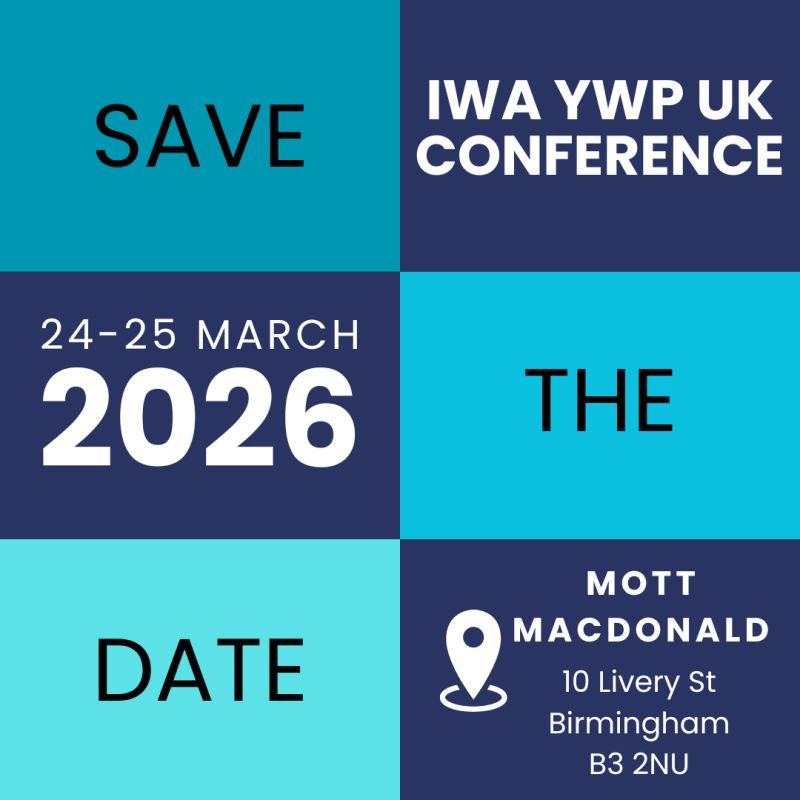
IWA Young Professionals Birmingham March 2026
Event: International Water Association (IWA) – Young Water Professionals (YWP) UK Event 2026
Date: March 2026
Location: Birmingham, UK
Role: Attendee & Senior Mentor / Sector Leader
Type of CPD: Mentoring / capability development / innovation and professional growth
Duration: Full‑day event (keynotes + workshops + mentoring sessions + networking)
Summary of the Event
I attended the IWA Young Water Professionals (YWP) Event 2026 in Birmingham, a national gathering designed to support early‑career professionals across the water sector. The event brought together young engineers, scientists, digital specialists, researchers, utility representatives and industry mentors to explore the future of water, innovation pathways and professional development.
The programme included keynote presentations, technical sessions, interactive workshops and structured mentoring activities. Discussions focused on environmental performance, digital transformation, climate resilience, leadership development, and the skills needed to deliver the sector’s long‑term goals.
As a senior sector mentor, I engaged with YWPs throughout the day, offering guidance on innovation adoption, career development and the importance of cross‑disciplinary collaboration.
My Contribution – Mentor & Sector Leader
- Provided mentoring to early‑career professionals on career pathways, leadership skills and navigating the water‑sector landscape.
- Shared insights on innovation adoption, digital capability and the role of real‑time monitoring in improving environmental performance.
- Supported workshop discussions on climate resilience, data‑driven decision‑making and future skills needs.
- Encouraged YWPs to engage with IWA specialist groups, international programmes and cross‑sector collaboration opportunities.
- Offered feedback on technical ideas and project concepts presented by YWP teams.
- Helped build connections between young professionals and senior leaders across utilities, academia and industry.
Key Themes Covered
International collaboration Opportunities through IWA networks, specialist groups and global events.
Professional development and leadership Skills for future leaders, mentoring, communication and sector engagement.
Digital transformation and real‑time monitoring Sensors, biological and chemical data, digital twins and predictive analytics.
Environmental performance and river health Pollution reduction, transparency, compliance and ecological outcomes.
Climate resilience and adaptation Extreme weather, drought, flooding and long‑term planning.
Innovation and capability building Adoption pathways, cross‑sector learning, regulatory alignment and pilot programmes.
United Utilities Supplier Day Blackpool March 2026
Event: United Utilities Supplier Day 2026
Date: March 2026
Location: Blackpool, UK
Role: Attendee
Type of CPD: Utility–supplier engagement / innovation and capability development / environmental performance
Duration: Full‑day event (plenary sessions + workshops + supplier engagement + networking)
Summary of the Event
I attended the United Utilities Supplier Day 2026 in Blackpool, an annual event designed to strengthen collaboration between the utility and its supply chain. The day brought together technology providers, engineering consultancies, contractors, innovators, regulators and United Utilities leadership teams.
The programme focused on PR24 delivery, environmental performance, digital transformation, innovation adoption, supply‑chain capability, and the role of collaborative partnerships in achieving long‑term outcomes for customers, communities and the environment.
United Utilities outlined its strategic priorities for the 2025–2030 period, including storm‑overflow reduction, treatment‑works optimisation, climate resilience, nature‑based solutions and the integration of real‑time monitoring across networks and assets.
Key Themes Covered
- Environmental performance and river health Pollution reduction, compliance, transparency and ecological outcomes.
- Digital transformation and real‑time monitoring Biological, chemical and physical sensors, digital twins, predictive analytics and automation.
- PR24 delivery and long‑term planning Investment priorities, regulatory expectations and customer outcomes.
- Innovation adoption and scaling Procurement pathways, pilot opportunities, capability building and data governance.
- Supply‑chain collaboration Partnership models, shared accountability, safety, quality and performance improvement.
- Climate resilience and nature‑based solutions Flood mitigation, drought planning, wetlands, catchment management and carbon reduction.
Greater Manchester Green Summit Manchester March 2026
Event: Greater Manchester Green Summit 2026
Date: March 2026
Location: Manchester, UK
Role: Attendee
Type of CPD: Climate resilience / environmental performance / sustainability and innovation
Duration: Full‑day summit (keynotes + panels + workshops + networking)
Summary of the Event
I attended the Greater Manchester Green Summit 2026, a flagship regional event convening local authorities, utilities, environmental organisations, technology innovators, community groups, academic institutions and industry partners. The summit explored Greater Manchester’s progress toward its 2038 carbon‑neutral target, focusing on climate resilience, environmental protection, sustainable infrastructure and community‑driven action.
The programme highlighted the importance of data‑driven environmental management, nature‑based solutions, innovation adoption, and cross‑sector collaboration in delivering regional climate and environmental goals. Discussions also emphasised the role of digital technologies and real‑time monitoring in supporting transparent, evidence‑based decision‑making.
Key Themes Covered
- Climate resilience and adaptation Flood risk, drought resilience, extreme‑weather planning and catchment‑scale strategies.
- Environmental performance and river health Pollution reduction, transparency, ecological restoration and regulatory expectations.
- Digital transformation and real‑time monitoring Sensors, biological and chemical data, digital twins and predictive analytics.
- Net‑zero and decarbonisation pathways Low‑carbon infrastructure, renewable energy, circular‑economy approaches and behaviour change.
- Nature‑based and community‑led solutions Urban greening, wetlands, biodiversity enhancement and local engagement.
- Cross‑sector collaboration Partnerships between utilities, local government, academia, innovators and community groups.
Sustainable Chemicals Incubator UK Innovate Manchester February 2026
Event: Innovate UK – Sustainable Chemicals Incubator Showcase & Innovation Forum
Date: February 2026
Location: Manchester, UK
Role: Attendee
Type of CPD: Innovation and technology showcase / sustainability / cross‑sector collaboration
Duration: Full‑day event (presentations + demonstrations + networking)
Summary of the Event
I attended the Innovate UK Sustainable Chemicals Incubator Event in Manchester, a cross‑sector innovation forum focused on accelerating the development and commercialisation of sustainable chemical technologies. The event brought together researchers, start‑ups, industrial partners, utilities, environmental specialists and Innovate UK programme leads.
The programme explored how emerging sustainable‑chemistry solutions—ranging from bio‑based materials to low‑carbon process technologies—can support environmental performance, circular‑economy strategies and industrial decarbonisation. Discussions also highlighted opportunities to integrate sustainable chemicals with digital monitoring, advanced sensing, and real‑time optimisation across water and environmental systems.
Key Themes Covered
- Sustainable and low‑carbon chemical technologies Bio‑based alternatives, green solvents, low‑energy processes and circular‑resource strategies.
- Environmental performance and pollution reduction Treatment optimisation, chemical‑use minimisation and nature‑positive approaches.
- Digital transformation and monitoring Real‑time sensing, data analytics and digital twins for chemical‑process optimisation.
- Innovation adoption and scaling Funding pathways, pilot programmes, regulatory alignment and industry partnerships.
- Cross‑sector collaboration Lessons from manufacturing, pharmaceuticals, water, energy and materials science.
- Decarbonisation and climate resilience Low‑carbon processes, emissions reduction and sustainable supply chains.
World Water Tech London February 2026
Event: World Water-Tech Innovation Summit 2026
Date: February 2026
Location: Online (virtual attendance)
Role: Attendee
Type of CPD: Innovation conference / digital transformation / environmental performance
Duration: Two‑day virtual summit (keynotes + panels + innovation showcases)
Summary of the Event
I attended the World Water-Tech Innovation Summit 2026 online, joining global utilities, regulators, technology innovators, investors, engineering consultancies and research institutions for one of the sector’s leading annual innovation events. The virtual format provided access to all plenary sessions, technical panels, innovation pitches and networking rooms.
The summit focused on the accelerating need for digital transformation, real‑time monitoring, AI‑enabled optimisation, environmental performance, and climate resilience, with strong emphasis on the technologies and strategies shaping the next decade of water management.
Key Themes Covered
- Digital transformation and AI Predictive analytics, digital twins, automation and integrated data ecosystems.
- Environmental performance and river health Pollution reduction, transparency, storm overflow monitoring and ecological outcomes.
- Advanced sensing and real‑time monitoring Biological, chemical and physical sensors for operational and environmental intelligence.
- Innovation adoption and scaling Procurement, capability building, regulatory alignment and investment pathways.
- Climate resilience and adaptation Extreme weather, drought, flooding and long‑term planning.
- Utility transformation and customer trust Transparency, performance reporting and public engagement.
British Water International Reception IOD London February 2026
Event: British Water International Reception 2026
Date: February 2026
Location: Institute of Directors (IoD), Pall Mall, London
Role: Attendee
Type of CPD: International collaboration / sector leadership / innovation and environmental performance
Duration: Evening reception (presentations + networking + bilateral discussions)
Summary of the Event
I attended the British Water International Reception 2026 at the Institute of Directors in London, an annual high‑profile gathering designed to strengthen international collaboration across the global water sector. The event brought together UK utilities, international delegations, government representatives, technology innovators, investors, engineering consultancies and British Water members.
The reception provided a platform for discussing shared challenges around environmental performance, climate resilience, digital transformation, innovation adoption, and global partnership development. It also highlighted the UK’s role in convening international expertise and promoting cross‑border collaboration.
Key Themes Covered
- International collaboration and diplomacy Strengthening relationships with global utilities, ministries, regulators and innovation partners.
- Environmental performance and river health Pollution reduction, transparency, compliance and ecological outcomes.
- Digital transformation and real‑time monitoring AI, automation, digital twins, predictive analytics and integrated data ecosystems.
- Innovation and technology exchange Advanced sensing, treatment optimisation, circular‑economy solutions and low‑carbon operations.
- Climate resilience and adaptation Extreme weather, drought, flooding and long‑term planning.
- Investment and global market opportunities Infrastructure development, funding models and cross‑border commercial partnerships.
British Water International Forum London February 2026
Event: British Water International Forum 2026
Date: February 2026
Location: London, UK
Role: Session Chair – Middle East & Asia Session
Type of CPD: International collaboration / leadership / innovation and environmental performance
Duration: Full‑day forum (session chairing + plenaries + networking)
Summary of the Event
I participated in the British Water International Forum 2026 in London, serving as Session Chair for the Middle East & Asia Session. The Forum brought together international utilities, government representatives, technology innovators, investors, engineering consultancies and British Water members to explore global opportunities for collaboration, innovation deployment and environmental improvement.
The Middle East & Asia Session focused on water scarcity, desalination, reuse, digital transformation, climate resilience, and infrastructure investment across rapidly developing and water‑stressed regions. The session highlighted the increasing demand for advanced monitoring, operational optimisation and nature‑positive strategies across diverse climatic and regulatory contexts.
My Contribution – Session Chair
- Opened and chaired the Middle East & Asia Session, setting the strategic context and facilitating a high‑quality discussion.
- Introduced speakers from utilities, ministries, technology companies and research institutions across the Middle East and Asia.
- Guided the session narrative around innovation adoption, digital optimisation, desalination performance, and climate‑resilient water management.
- Led Q&A discussions, drawing out insights on regulatory drivers, investment priorities and operational challenges.
- Highlighted the role of real‑time biological monitoring and integrated data ecosystems in improving treatment stability, environmental performance and transparency.
- Supported British Water’s mission to strengthen international partnerships and promote UK capability globally.
Key Themes Covered
International partnerships and capability building Knowledge exchange, pilot programmes and technology transfer.
Water scarcity and climate resilience Drought management, long‑term planning, and adaptation strategies in arid regions.
Desalination and reuse technologies Energy efficiency, membrane optimisation, brine management and circular‑resource strategies.
Digital transformation and real‑time monitoring AI, automation, digital twins, predictive analytics and integrated data ecosystems.
Environmental performance and regulatory expectations Pollution control, compliance, transparency and ecological outcomes.
Investment and infrastructure development Funding models, PPPs, innovation scaling and cross‑border collaboration.
Innovate UK NDT Technologies Manchester February 2026
Event: Innovate UK – Non‑Destructive Testing (NDT) Technologies Showcase & Innovation Forum
Date: February 2026
Location: Manchester, UK
Role: Attendee
Type of CPD: Innovation and technology showcase / cross‑sector engineering insight / digital and sensing technologies
Duration: Full‑day event (presentations + demonstrations + networking)
Summary of the Event
I attended the Innovate UK NDT Technologies Event in Manchester, a cross‑sector innovation forum focused on the latest advances in non‑destructive testing (NDT), sensing technologies, digital inspection methods and asset‑integrity solutions. The event brought together researchers, technology developers, utilities, infrastructure operators, engineering consultancies and Innovate UK programme leads.
The programme highlighted how emerging NDT technologies—ranging from advanced imaging to AI‑enabled defect detection—are transforming asset management across water, energy, transport and manufacturing sectors. Discussions explored opportunities to integrate NDT with real‑time monitoring, digital twins, and predictive maintenance strategies.
Key Themes Covered
- Advanced NDT technologies Ultrasonics, acoustic imaging, electromagnetic testing, fibre‑optic sensing and robotics.
- Digital inspection and AI‑enabled analytics Automated defect detection, pattern recognition and predictive maintenance.
- Asset integrity and resilience Condition assessment, risk‑based maintenance and lifecycle optimisation.
- Cross‑sector innovation transfer Lessons from aerospace, energy and manufacturing applicable to water infrastructure.
- Real‑time monitoring and data integration Combining NDT outputs with continuous sensing, SCADA and digital‑twin platforms.
- Innovation funding and collaboration pathways Innovate UK programmes, pilot opportunities and industry–research partnerships.
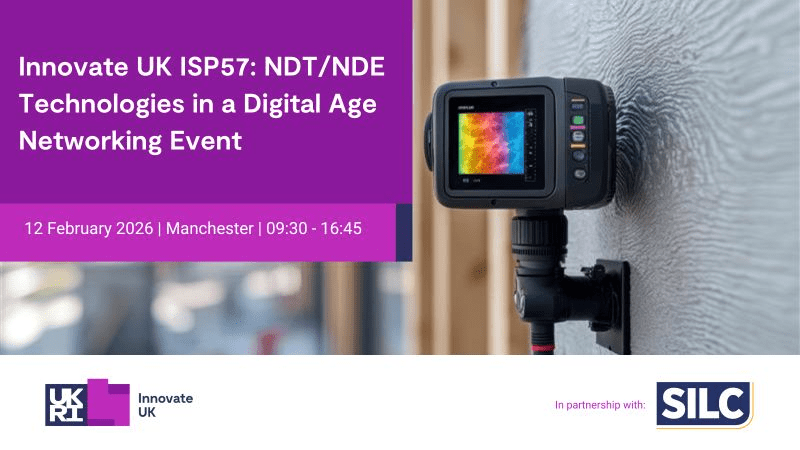
Sheffield University Global Engineering Challenge January 2026
Event: University of Sheffield – Global Engineering Challenge (GEC) 2026
Date: January 2026
Location: University of Sheffield, UK
Role: Mentor
Type of CPD: Mentoring / capability development / engineering innovation / academic–industry collaboration
Duration: Full‑day mentoring engagement (team support + presentations + feedback sessions)
Summary of the Event
I participated as a Mentor in the University of Sheffield’s Global Engineering Challenge (GEC) 2026, an interdisciplinary programme where engineering students collaborate to solve real‑world global challenges. The initiative brings together students from civil, mechanical, chemical, environmental and digital engineering disciplines to develop practical, sustainable and socially responsible solutions.
The 2026 challenge themes focused on water security, climate resilience, infrastructure sustainability, community impact, and innovation for low‑resource settings. My role involved supporting student teams as they developed concepts, assessed feasibility, and prepared final presentations.
My Contribution – Mentor
- Provided guidance to student teams on problem framing, systems thinking and engineering design approaches.
- Supported teams in exploring water‑sector challenges, including treatment optimisation, environmental monitoring and climate resilience.
- Offered feedback on technical feasibility, innovation potential and real‑world applicability.
- Encouraged students to consider social, environmental and economic impacts in their proposed solutions.
- Shared insights from industry on digital transformation, real‑time monitoring, and sustainable infrastructure.
- Helped students strengthen their communication, teamwork and presentation skills ahead of final judging.
Key Themes Covered
Interdisciplinary collaboration Bringing together engineering, environmental science and digital capability.
Water security and sustainable supply Treatment, distribution, resilience and community‑scale solutions.
Climate adaptation and resilience planning Flooding, drought, extreme weather and infrastructure vulnerability.
Innovation and digital engineering Sensors, data analytics, automation and integrated monitoring.
Sustainable and low‑carbon design Resource efficiency, circularity and nature‑based solutions.
Global development and community impact Equity, accessibility and culturally appropriate engineering.

Rethinking Water UK 2025 The Royal Institute November 2025
Event: Rethinking Water UK 2025
Date: November 2025
Location: The Royal Institution, London
Role: Attendee
Type of CPD: Innovation and policy conference / environmental performance / digital transformation
Duration: Full‑day conference (keynotes + panels + innovation showcases + networking)
Summary of the Event
I attended Rethinking Water UK 2025 at The Royal Institution in London, a high‑profile national event bringing together policymakers, utilities, regulators, innovators, investors, environmental NGOs and academic leaders. The conference explored the future of the UK water sector in the context of rising environmental expectations, climate pressures, public scrutiny and the need for accelerated innovation.
The programme focused on environmental performance, digital transformation, nature‑positive strategies, investment and infrastructure renewal, and the role of science and technology in delivering long‑term resilience. The Royal Institution setting emphasised the importance of evidence‑based decision‑making and scientific leadership in shaping the sector’s future.
Key Themes Covered
- Environmental performance and river health Pollution reduction, transparency, ecological outcomes and regulatory expectations.
- Digital transformation and real‑time monitoring AI, automation, digital twins, predictive analytics and integrated data ecosystems.
- Innovation adoption and scaling Barriers, enablers, procurement pathways and capability building.
- Climate resilience and adaptation Extreme weather, drought, flooding and long‑term planning.
- Investment and infrastructure renewal Funding models, asset optimisation and long‑term value.
- Nature‑positive and catchment‑scale approaches Biodiversity, ecological restoration and community engagement.
IWA Road to Glasgow One Year To Go Event October 2025
Event: International Water Association (IWA) – Road to Glasgow: One Year To Go Event
Date: October 2025
Location: Hybrid (UK-hosted event with international participation)
Role: Keynote Speaker
Type of CPD: International collaboration / innovation leadership / environmental performance
Duration: Half‑day event (keynote + panel engagement + stakeholder discussions)
Summary of the Event
I delivered a keynote address at the IWA “Road to Glasgow – One Year To Go” Event, marking the final year of preparation for the IWA World Water Congress & Exhibition in Glasgow in 2026. The event brought together global water leaders, utilities, researchers, policymakers, technology innovators and IWA specialist groups to explore the major themes that will shape the Congress and the future of the global water sector.
The programme focused on climate resilience, digital transformation, environmental performance, innovation scaling, and the role of global collaboration in accelerating progress toward sustainable, nature‑positive water management.
My keynote centred on the importance of real‑time biological monitoring, high‑resolution environmental data, and digital optimisation in delivering improved operational resilience, regulatory compliance and ecological outcomes.
My Contribution – Keynote Speaker
- Delivered a keynote presentation on the role of real‑time biological monitoring and microbial activity sensing in strengthening treatment stability, early‑warning capability and environmental protection.
- Highlighted how integrating biological, chemical and physical datasets into digital optimisation platforms supports predictive operations and transparent reporting.
- Provided insight into global regulatory and environmental trends, including the rising demand for evidence‑based environmental performance.
- Discussed the importance of innovation adoption, capability building and cross‑sector collaboration in delivering climate‑resilient water systems.
- Engaged in panel discussions with international delegates on the future of digital water, environmental intelligence and global knowledge exchange.
- Supported IWA’s mission to convene global expertise ahead of the 2026 Congress in Glasgow.
Key Themes Covered
Road to Glasgow 2026
Climate resilience and adaptation Extreme weather, drought, flooding, infrastructure vulnerability and long‑term planning.
Digital transformation and AI‑enabled optimisation Digital twins, automation, predictive analytics and integrated data ecosystems.
Environmental performance and river health Pollution reduction, transparency, compliance and ecological outcomes.
Advanced sensing and real‑time monitoring Biological, chemical and physical sensors for operational and environmental intelligence.
Innovation adoption and global collaboration Pilots, capability building, regulatory alignment and cross‑border partnerships.
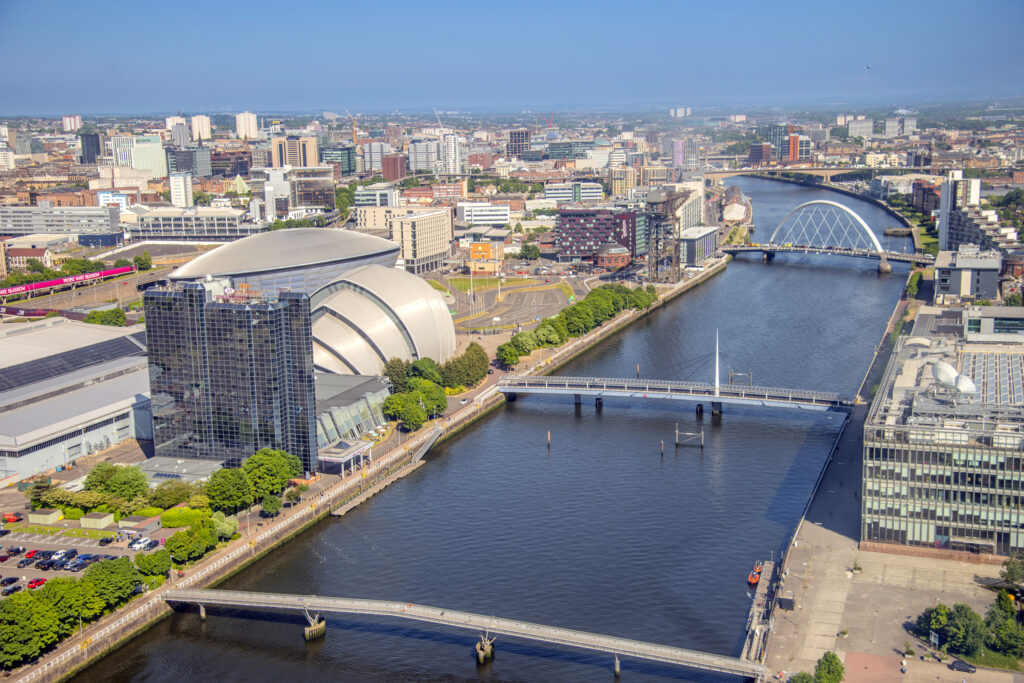
The Infrastructure Podcast: Water Investment Realities British Water Non-Exec Director July 2024
Event: The Infrastructure Podcast – Water Investment Realities
Date: July 2024
Location: Recorded in the UK (released online)
Role: Featured Guest / British Water Non‑Executive Director
Type of CPD: Public engagement / sector leadership / communication and influence
Duration: 45–60 minute podcast recording + preparation and follow‑up engagement
Podcast Link: Episode 76: Tom Williams
Summary of the Event
I was invited as a featured guest on The Infrastructure Podcast to discuss my role as a British Water Non‑Executive Director and to explore the major challenges and opportunities shaping the UK water sector. The conversation focused on innovation, environmental performance, digital transformation, regulatory expectations, and the role of leadership in driving long‑term sector improvement.
The episode provided a platform to highlight the importance of real‑time monitoring, biological insight, data transparency, and cross‑sector collaboration, as well as the strategic role British Water plays in connecting utilities, innovators, policymakers and the supply chain.
Key Themes Covered
- Innovation and digital transformation The role of advanced sensing, AI, automation and integrated data ecosystems.
- Environmental performance and public trust Pollution reduction, transparency, river‑health improvement and regulatory scrutiny.
- Leadership and governance in the water sector The role of Non‑Executive Directors in challenge, oversight and strategic direction.
- Supply‑chain capability and collaboration Supporting SMEs, accelerating innovation adoption and strengthening partnerships.
- Real‑time biological monitoring Microbial activity sensing, early‑warning systems and treatment optimisation.
- Future sector priorities PR24 delivery, climate resilience, affordability and long‑term investment.
My Contribution
Provided a strategic overview of the UK water‑sector landscape, including regulatory drivers, environmental expectations and innovation needs.
Explained the role of real‑time biological monitoring in improving treatment stability, compliance and environmental protection.
Discussed the importance of data transparency, digital capability and integrated monitoring in rebuilding public trust.
Highlighted British Water’s role in sector convening, supply‑chain development and international collaboration.
Shared insights on leadership, governance and culture change, including the responsibilities of Non‑Executive Directors.
Spanish Embassy Commercial Office UK Water Infrastructure Investment Event July 2024
Event: Spanish Embassy Commercial Office UK – Water Infrastructure Investment & Innovation Forum
Date: July 2024
Location: Spanish Embassy Commercial Office, London
Role: Keynote Speaker
Type of CPD: International collaboration / investment and innovation / environmental performance
Duration: Half‑day event (keynote + panel engagement + bilateral discussions)
Summary of the Event
I was invited as a Keynote Speaker at the Spanish Embassy Commercial Office UK Water Infrastructure Investment Event, held in London in July 2024. The event brought together Spanish and UK utilities, technology companies, investors, engineering consultancies, government representatives and international partners to explore opportunities for cross‑border collaboration, infrastructure investment, and innovation deployment across the water sector.
The programme focused on shared challenges around climate resilience, water scarcity, environmental performance, digital transformation, and advanced monitoring, with Spain’s leadership in reuse, desalination and drought management providing a strong international reference point.
My keynote addressed the role of real‑time biological monitoring, microbial activity sensing, and digital optimisation in strengthening treatment stability, environmental protection and investment value.
My Contribution – Keynote Speaker
- Delivered a keynote presentation on the role of real‑time biological monitoring in improving operational resilience, environmental performance and regulatory compliance.
- Highlighted how microbial activity sensing provides early‑warning capability, supports treatment optimisation and reduces pollution risk.
- Demonstrated how integrating biological, chemical and physical data into digital optimisation platforms enhances asset performance and investment outcomes.
- Provided insight into UK regulatory drivers (including PR24) and how innovation can support long‑term environmental and financial resilience.
- Engaged in panel discussions on innovation adoption, cross‑border investment, and technology transfer between Spain and the UK.
- Participated in bilateral conversations with Spanish utilities, technology providers and investors exploring pilot opportunities and collaborative programmes.
Key Themes Covered
International collaboration and technology exchange Strengthening UK–Spain cooperation across utilities, academia and industry.
Climate resilience and drought management Spanish expertise in reuse, desalination and long‑term water‑resource planning.
Digital transformation and real‑time monitoring AI, automation, digital twins, predictive analytics and integrated data ecosystems.
Environmental performance and river health Pollution reduction, transparency, compliance and ecological outcomes.
Investment and innovation scaling Funding models, cross‑border partnerships, procurement pathways and capability building.
Advanced sensing and biological monitoring High‑resolution data, early‑warning systems and treatment optimisation.
Spanish Embassy UK Event London October 2025
Event: Spanish Embassy UK – Water, Environment & Innovation Engagement Event
Date: October 2025
Location: Spanish Embassy, London
Role: Attendee
Type of CPD: International collaboration / diplomacy and sector engagement / innovation and environmental performance
Duration: Evening event (presentations + networking + bilateral discussions)
Summary of the Event
I attended a Spanish Embassy UK event in London focused on strengthening collaboration between the UK and Spain across the water, environment and innovation sectors. The event brought together representatives from Spanish utilities, technology companies, research institutions, UK water companies, British Water members, policymakers and international partners.
Discussions centred on shared challenges around climate resilience, water scarcity, digital transformation, advanced monitoring, and environmental performance, with Spain’s extensive experience in drought management and reuse providing valuable international insight.
The event also highlighted opportunities for bilateral cooperation, including innovation pilots, academic partnerships, technology exchange and joint research programmes.
Key Themes Covered
- Climate resilience and drought management Spanish approaches to water scarcity, reuse, desalination and long‑term planning.
- Digital transformation and real‑time monitoring AI, automation, digital twins and integrated data ecosystems.
- Environmental performance and regulatory expectations River health, pollution reduction, transparency and compliance.
- Innovation and technology exchange Advanced sensing, treatment optimisation, circular‑economy solutions and low‑carbon operations.
- International collaboration and diplomacy Strengthening UK–Spain partnerships across utilities, academia and industry.
- Sustainable infrastructure and nature‑positive strategies Catchment management, ecological restoration and resilience planning.
Learning Outcomes
- Strengthened understanding of Spanish water‑sector expertise, particularly in drought resilience, reuse and desalination.
- Improved insight into how real‑time biological monitoring and digital optimisation can support environmental performance in water‑stressed regions.
- Broadened awareness of international innovation pathways, including cross‑border pilots and research collaboration.
- Enhanced appreciation of the role of diplomatic engagement in fostering sector partnerships and knowledge exchange.
- Expanded network across Spanish utilities, technology providers, embassy representatives and UK sector partners.
KIT DLE Symposium Karlsruhe, Germany October 2025
Event: Karlsruhe Institute of Technology (KIT) – Digital Life & Environment (DLE) Symposium 2025
Date: October 2025
Location: Karlsruhe, Germany
Role: Attendee
Type of CPD: International research symposium / digital innovation / environmental monitoring and analytics
Duration: Full‑day symposium (keynotes + technical sessions + research showcases + networking)
Summary of the Event
I attended the KIT Digital Life & Environment (DLE) Symposium 2025 at the Karlsruhe Institute of Technology, a leading European research event exploring the intersection of digital technologies, environmental systems, biological insight, and data‑driven sustainability.
The symposium brought together researchers, environmental scientists, digital‑technology specialists, utilities, and industry partners to discuss advances in AI‑enabled environmental monitoring, real‑time sensing, ecosystem modelling, digital twins, and climate‑resilience analytics.
Sessions highlighted the growing importance of integrating biological, chemical and physical datasets to support predictive environmental management and evidence‑based decision‑making across water, energy and ecological systems.
Key Themes Covered
- AI and environmental intelligence Machine learning, pattern detection, anomaly identification and predictive modelling.
- Real‑time sensing and biological monitoring High‑resolution data, microbial activity sensing, and early‑warning systems.
- Digital twins and ecosystem modelling Simulating environmental processes, scenario testing and resilience planning.
- Climate adaptation and environmental resilience Extreme‑weather impacts, hydrological modelling and risk‑based planning.
- Data integration and digital ecosystems Interoperability, data governance, cloud architectures and cross‑domain analytics.
- Sustainable and nature‑positive innovation Biodiversity monitoring, ecological restoration and circular‑resource strategies.
British Water Innovation Summit September 2025
Event: British Water Innovation Summit 2025
Date: September 2025
Location: London, UK
Role: Attendee
Type of CPD: Innovation conference / digital transformation / environmental performance
Duration: Full‑day summit (keynotes + panels + innovation showcases + networking)
Summary of the Event
I attended the British Water Innovation Summit 2025, a flagship annual event bringing together utilities, regulators, technology innovators, investors, engineering consultancies and academic partners to explore the future of water‑sector innovation. The summit focused on accelerating the adoption of digital technologies, advanced monitoring, AI‑enabled optimisation, and nature‑positive solutions to meet rising environmental expectations and deliver PR24 and long‑term outcomes.
The programme included keynote presentations, panel discussions, case studies, innovation pitches and cross‑sector dialogues, highlighting the technologies and strategies shaping the next decade of water management.
Key Themes Covered
- Digital transformation and AI Predictive analytics, digital twins, automation and integrated data ecosystems.
- Environmental performance and river health Pollution reduction, transparency, storm overflow monitoring and ecological outcomes.
- Advanced sensing and real‑time monitoring Biological, chemical and physical sensors for operational and environmental intelligence.
- Innovation adoption and scaling Pilots, procurement, capability building and regulatory alignment.
- Climate resilience and adaptation Infrastructure vulnerability, extreme weather and long‑term planning.
- Investment and commercialisation pathways Funding models, partnerships and scaling strategies for emerging technologies.
National Highways Water Conference Birmingham September 2025
Event: National Highways Water Conference 2025
Date: September 2025
Location: Birmingham, UK
Role: Attendee
Type of CPD: Infrastructure and environment conference / cross‑sector collaboration / water quality and resilience
Duration: Full‑day conference (plenary sessions + technical workshops + networking)
Summary of the Event
I attended the National Highways Water Conference 2025 in Birmingham, a cross‑sector event bringing together highways authorities, environmental regulators, water companies, engineering consultancies, technology providers and academic specialists. The conference explored how the UK’s strategic road network interacts with water systems, focusing on surface‑water management, pollution control, climate resilience, catchment protection, and digital monitoring.
The programme highlighted the increasing importance of integrated planning between transport infrastructure and the water environment, particularly in the context of extreme weather, regulatory expectations and public scrutiny of environmental performance.
Key Themes Covered
- Surface‑water management and flood resilience Drainage design, runoff control, SuDS, and climate‑adaptation strategies.
- Pollution prevention and water‑quality protection Spill response, sediment control, treatment assets and regulatory compliance.
- Digital monitoring and real‑time environmental intelligence Sensors, telemetry, predictive analytics and automated alerts for pollution risk.
- Highways–water sector collaboration Shared catchment responsibilities, joint planning, and integrated environmental outcomes.
- Nature‑based and low‑carbon solutions Wetlands, vegetated systems, and sustainable drainage approaches.
- Regulatory expectations and environmental accountability EA requirements, reporting frameworks and transparency.
IWA Governing Assembly September 2025
Event: International Water Association (IWA) Governing Assembly 2025
Date: September 2025
Location: Hybrid
Role: Attendee
Type of CPD: International governance / strategic sector leadership / global collaboration
Duration: Half‑day assembly (formal proceedings + strategic updates + voting/consultation items)
Summary of the Event
I attended the IWA Governing Assembly 2025, the annual formal meeting of IWA’s global governance body. The Assembly brings together representatives from national committees, specialist groups, utilities, research institutions and industry partners to review the Association’s strategic direction, approve governance matters and shape priorities for the coming years.
The 2025 Assembly focused on strengthening IWA’s role in global water leadership, advancing science‑based practice, supporting young water professionals, and accelerating innovation adoption across utilities and cities worldwide. Updates were provided on IWA’s programmes, membership, financial position, upcoming congresses and thematic priorities.
Key Themes Covered
- Global water governance and strategic direction IWA’s mission, long‑term priorities, and alignment with global water challenges.
- Climate resilience and environmental performance The role of IWA in supporting adaptation, nature‑positive strategies and pollution reduction.
- Innovation, science and digital transformation Strengthening the global community of practice around sensing, analytics and optimisation.
- Young Water Professionals (YWP) development Expanding leadership pathways, mentoring and international mobility.
- Membership, partnerships and financial sustainability Ensuring IWA remains a strong, globally connected organisation.
- International events and knowledge exchange Updates on World Water Congresses, specialist conferences and regional programmes.
Institute of Water Plymouth Mayflower Visit September 2025
Event: Institute of Water – Technical Site Visit to Plymouth Mayflower Water Treatment Works
Date: September 2025
Location: Plymouth, UK
Role: Attendee
Type of CPD: Technical site visit / operational insight / innovation and treatment optimisation
Duration: Half‑day visit (tour + technical briefing + Q&A)
Summary of the Event
I attended the Institute of Water technical visit to the Mayflower Water Treatment Works in Plymouth, one of the most advanced drinking‑water treatment facilities in the UK. Operated by South West Water, Mayflower is the first plant in the country to use a cutting‑edge ceramic membrane and suspended ion exchange (SIX®) process, representing a major step forward in treatment resilience, water quality and operational efficiency.
The visit included a technical briefing from site engineers, a guided tour of the treatment process, and discussions on the plant’s design philosophy, performance, digital systems and long‑term operational strategy.
Key Themes Covered
- Advanced drinking‑water treatment technologies Ceramic membrane filtration, SIX® ion exchange, and high‑resilience process design.
- Operational optimisation and resilience Managing variable raw‑water quality, process stability and asset reliability.
- Digital monitoring and automation Real‑time data, control systems, alarms, optimisation tools and remote monitoring.
- Water quality and regulatory compliance Achieving high standards for turbidity, organics removal and microbiological safety.
- Sustainability and energy efficiency Low‑chemical treatment, reduced waste streams and long‑term environmental performance.
- Innovation adoption and lessons learned Commissioning challenges, operator training, and the transition from legacy assets.
IWA IChemE Conference Bath University September 2025
Event: IWA–IChemE Water Conference 2025
Date: September 2025
Location: University of Bath, UK
Role: Attendee
Type of CPD: Technical conference / academic–industry knowledge exchange / innovation and environmental performance
Duration: Full‑day attendance
Summary of the Event
I attended the IWA–IChemE Water Conference 2025 at the University of Bath, a joint event bringing together chemical engineers, water scientists, utilities, regulators, technology innovators and academic researchers. The conference explored the latest developments in water and wastewater treatment, environmental monitoring, digital optimisation, and emerging contaminants, with a strong focus on bridging academic research and industry application.
The programme included keynote presentations, technical sessions, panel discussions and research showcases, highlighting advances in biological process engineering, real‑time sensing, low‑carbon treatment, and nature‑based solutions.
Key Themes Covered
- Advanced biological and chemical process engineering Nutrient removal, process stability, energy efficiency and treatment resilience.
- Digital transformation and real‑time monitoring Data integration, automation, digital twins and predictive analytics.
- Environmental performance and river health Pollution reduction, transparency, compliance and ecological outcomes.
- Emerging contaminants and regulatory change PFAS, microplastics, pharmaceuticals and evolving compliance frameworks.
- Innovation and research translation Pathways from academic research to industry adoption and commercialisation.
- Sustainable and low‑carbon treatment technologies Resource recovery, circularity and energy‑efficient processes.
World Water Week Stockholm August 2025
Event: Stockholm World Water Week (SIWI) 2025 – Virtual Participation
Date: August 2025
Location: Online (Stockholm-hosted hybrid event)
Type of CPD: International policy and innovation conference / digital participation / environmental and climate resilience
Duration: Multi‑day online attendance (plenary sessions + thematic streams + virtual networking)
Summary of the Event
I attended World Water Week 2025 online, joining the global community of policymakers, researchers, utilities, innovators, NGOs and development organisations participating virtually in Stockholm’s flagship annual water conference.
The 2025 theme focused on “Water for a Secure and Resilient Future”, exploring the intersection of climate adaptation, environmental protection, digital transformation, equity and global cooperation. The virtual format enabled access to high‑level plenaries, technical sessions, innovation showcases and policy dialogues across multiple time zones.
My participation centred on sessions related to real‑time monitoring, digital water ecosystems, climate resilience, nature‑positive strategies, and innovation adoption, with a particular focus on how biological insight can strengthen environmental and operational outcomes.
Key Themes Covered
- Climate resilience and global adaptation strategies Extreme weather, drought, flooding, infrastructure vulnerability and long‑term planning.
- Water security and geopolitical stability Transboundary cooperation, conflict prevention and sustainable development.
- Digital water and real‑time environmental intelligence AI, digital twins, automation, integrated data ecosystems and predictive operations.
- Nature‑positive and catchment‑scale approaches Biodiversity, ecological restoration, pollution prevention and community engagement.
- Innovation and technology scaling Advanced sensing, environmental intelligence, circularity and low‑carbon operations.
- SDG6 acceleration and global policy alignment Financing, governance, capacity building and multi‑stakeholder partnerships.
Water UK Skills Summit QEII Westminster July 2025
Event: Water UK Skills Summit 2025
Date: July 2025
Location: QEII Centre, Westminster, London
Type of CPD: Workforce development / sector leadership / digital and environmental capability
Duration: Full‑day summit (plenary sessions + workshops + stakeholder engagement)
Summary of the Event
I attended the Water UK Skills Summit 2025 at the QEII Centre in Westminster, a national gathering focused on addressing the critical skills challenges facing the UK water sector. The summit brought together utility CEOs, regulators, training providers, academic institutions, technology innovators, trade bodies and government representatives to explore how the sector can build the workforce required for a digitally enabled, environmentally ambitious and customer‑focused future.
The 2025 programme centred on the skills needed to deliver PR24 outcomes, environmental improvement, digital transformation, climate resilience and long‑term asset planning. Discussions highlighted the urgency of developing capability in data science, automation, environmental monitoring, process optimisation, systems thinking and cross‑disciplinary collaboration.
Throughout the summit, I contributed insights on the growing importance of real‑time biological monitoring, high‑resolution environmental data, and the digital skills required to integrate biological, chemical and physical datasets into operational decision‑making.
Key Themes Covered
- Digital capability and data literacy AI, automation, digital twins, analytics and integrated data ecosystems.
- Environmental performance and river health Monitoring transparency, compliance, pollution reduction and ecological outcomes.
- Technical skills for future operations Process optimisation, advanced sensing, biological monitoring and early‑warning systems.
- Workforce planning and recruitment Talent pipelines, apprenticeships, diversity, retention and sector attractiveness.
- Climate resilience and long‑term planning Skills required to manage extreme weather, asset vulnerability and sustainability.
- Cross‑sector collaboration and training pathways Partnerships between utilities, academia, innovators and training providers.
Cranfield Water Conference June 2025
Event: Cranfield Water Conference 2025 – IWA Young Water Professionals (YWP) Pitch Session
Date: June 2025
Location: Cranfield University, UK
Role: Host and Facilitator – IWA YWP Pitch Session
Type of CPD: Mentoring / innovation leadership / academic–industry engagement
Duration: Half‑day (pitch session + conference participation + networking)
Summary of the Event
I attended and hosted the IWA Young Water Professionals Pitch Session at the Cranfield Water Conference 2025, a major annual event showcasing cutting‑edge research and innovation across drinking water, wastewater, environmental monitoring and digital optimisation.
The conference brought together researchers, utilities, regulators, technology innovators and environmental specialists. The YWP pitch session provided a platform for early‑career researchers to present high‑impact ideas, emerging technologies and applied research with potential to shape the future of water management.
As host, I facilitated the session, introduced speakers, guided discussions and supported the judging process, helping to create a constructive, inclusive and professionally challenging environment for emerging talent.
My Contribution: Host of the IWA YWP Pitch Session
- Opened and chaired the session, setting expectations and emphasising the importance of communication, innovation and cross‑sector collaboration.
- Introduced each presenter, ensuring smooth transitions and maintaining momentum and engagement throughout the session.
- Provided constructive feedback to participants, focusing on clarity of impact, scalability, innovation pathways and real‑world application.
- Encouraged presenters to articulate the practical relevance of their research to utilities, regulators and the wider sector.
- Supported the judging panel, offering insights on innovation adoption, digital transformation and environmental performance.
- Fostered a positive, supportive environment that empowered early‑career professionals to share their ideas confidently.
- Strengthened links between Cranfield University, IWA YWP networks and industry partners.
Key Themes Covered
Skills and capability development Communication, innovation readiness and early‑career leadership.
Drinking water and wastewater treatment optimisation Biological process stability, emerging contaminants, resilience and energy efficiency.
Digital transformation and real‑time monitoring Data integration, automation, digital twins and predictive analytics.
Environmental performance and river health Pollution reduction, transparency, compliance and ecological outcomes.
Innovation and research translation Pathways from academic research to industry adoption and commercialisation.
Advanced sensing and biological monitoring Microbial activity sensing, high‑resolution data and early‑warning systems.
British Water House of Lords Reception April 2025
Event: British Water – Annual House of Lords Reception 2025
Date: April 2025
Location: House of Lords, Palace of Westminster, London
Type of CPD: Policy engagement / sector leadership / strategic networking
Duration: Evening reception (1–2 hours)
Summary of the Event
I attended the British Water House of Lords Reception 2025, an annual parliamentary gathering that brings together peers, MPs, senior utility leaders, regulators, technology innovators and environmental organisations. The reception provides a high‑level forum for discussing the strategic challenges and opportunities facing the UK water sector, particularly in the context of rising environmental expectations, regulatory scrutiny and the need for accelerated innovation.
The 2025 event focused on environmental performance, storm overflow reform, PR24 delivery, digital transformation, and the role of the UK supply chain in supporting long‑term resilience. Parliamentary speakers emphasised the importance of transparency, public trust and evidence‑based decision‑making, while industry leaders highlighted the need for scalable innovation and strong cross‑sector collaboration.
Throughout the evening, I engaged with policymakers, utilities and innovators on the role of real‑time biological monitoring and high‑resolution environmental data in strengthening compliance, improving river health and supporting PR24 outcomes.
Key Themes Covered
- Environmental performance and river health Pollution reduction, transparency, ecological outcomes and public trust.
- Storm overflow reform Monitoring requirements, enforcement expectations and targeted interventions.
- Digital transformation and real‑time monitoring Data integration, digital twins, predictive analytics and automation.
- Innovation adoption and scaling Pilots, procurement, capability building and regulatory alignment.
- PR24 and long‑term delivery strategies Resilience, affordability, customer expectations and environmental accountability.
- Collaboration across the supply chain Utilities, innovators, regulators and policymakers working together to accelerate progress.
Aquatech Innovation Day Amsterdam March 2025
Event: Aquatech Innovation Day 2025
Date: March 2025
Location: Amsterdam, Netherlands
Type of CPD: International innovation forum / digital transformation / environmental performance
Duration: Full‑day event (sessions + innovation showcases + bilateral meetings)
Summary of the Event
I attended Aquatech Innovation Day 2025 in Amsterdam, a focused, high‑impact gathering of utilities, technology innovators, investors, researchers and policy leaders exploring the next wave of global water‑sector innovation. Positioned as a strategic extension of the Aquatech ecosystem, the Innovation Day provided a platform for deep‑dive discussions on digital water, advanced sensing, climate resilience, circularity, and scaling breakthrough technologies.
The 2025 programme highlighted the accelerating demand for real‑time data, AI‑enabled optimisation, nature‑positive solutions, and evidence‑driven environmental performance. Start‑ups and established technology providers showcased new tools across biological monitoring, analytics, automation, treatment optimisation and environmental intelligence.
Throughout the event, I engaged with utilities and innovators on the role of real‑time biological monitoring and microbial activity sensing in strengthening treatment stability, environmental protection and regulatory transparency.
Key Themes Covered
- Digital transformation and AI Predictive analytics, digital twins, automation and integrated data ecosystems.
- Advanced sensing and real‑time monitoring Biological, chemical and physical sensors for operational and environmental insight.
- Environmental performance and river health Pollution reduction, transparency, compliance and ecological outcomes.
- Climate resilience and adaptation Infrastructure vulnerability, extreme weather, drought and long‑term planning.
- Circular economy and resource recovery Water reuse, nutrient recovery, low‑carbon operations and sustainable manufacturing.
- Innovation adoption and scaling Pilots, procurement, capability building and investment pathways.
World Water Tech February 2025
Event: World Water-Tech Innovation Summit 2025
Date: February 2025
Location: London, UK
Type of CPD: International innovation conference / digital transformation / environmental performance
Duration: Two‑day summit (attendee + contributor + bilateral meetings)
Summary of the Event
I attended the World Water-Tech Innovation Summit 2025 in London, a leading global gathering of utilities, technology innovators, investors, regulators and sustainability leaders. The summit explored the future of water management through the lenses of digital transformation, climate resilience, advanced monitoring, AI‑enabled optimisation, and innovation scaling.
The 2025 programme placed strong emphasis on environmental performance, storm overflow reform, nature‑positive strategies, and the integration of real‑time data into operational and regulatory decision‑making. Start‑ups, utilities and global technology providers showcased new tools across sensing, analytics, automation, treatment optimisation and environmental intelligence.
Throughout the summit, I contributed to discussions on real‑time biological monitoring, microbial activity sensing, and the role of biological insight in strengthening treatment stability, compliance and environmental transparency.
Key Themes Covered
- Digital transformation and AI Predictive analytics, digital twins, automation and integrated data ecosystems.
- Environmental performance and river health Pollution reduction, transparency, storm overflow monitoring and ecological outcomes.
- Advanced sensing and real‑time monitoring Biological, chemical and physical sensors for operational and environmental insight.
- Climate resilience and adaptation Infrastructure vulnerability, extreme weather, drought and long‑term planning.
- Innovation adoption and scaling Pilots, procurement, capability building and investment pathways.
- Utility transformation and customer trust Data transparency, communication and evidence‑based decision‑making.
British Water International Reception IOD London February 2025
Event: British Water International Reception 2025
Date: February 2025
Location: Institute of Directors (IoD), Pall Mall, London
Role: Keynote Contributor / Senior Industry Representative
Type of CPD: International collaboration / sector leadership / innovation and environmental performance
Duration: Evening reception (speaker + networking + bilateral discussions)
Summary of the Event
I attended the British Water International Reception 2025 at the Institute of Directors in London, an annual high‑level gathering designed to strengthen global partnerships across the water sector. The event brought together international delegations, UK utilities, technology innovators, engineering consultancies, government representatives, investors and British Water members.
The 2025 reception focused on global water resilience, innovation adoption, digital transformation, and the role of the UK supply chain in supporting international water‑sector development. Delegations from Europe, the Middle East, Asia and Africa shared perspectives on climate pressures, infrastructure investment, environmental performance and the growing need for real‑time data to support operational and regulatory outcomes.
Throughout the evening, I contributed insights on real‑time biological monitoring, microbial activity sensing, and the integration of biological data into digital optimisation platforms—areas of increasing interest for international partners seeking to improve treatment stability, environmental protection and transparency.
My Contribution
- Delivered a keynote contribution highlighting the role of real‑time biological monitoring in strengthening global water resilience and environmental performance.
- Demonstrated how microbial activity sensing supports early‑warning detection, treatment optimisation and compliance reporting.
- Engaged with international delegations on opportunities for pilots, capability building and technology transfer.
- Provided insight into the integration of biological, chemical and physical data into digital optimisation ecosystems, including predictive analytics and automated alerts.
- Supported British Water’s mission to expand international collaboration and showcase UK innovation leadership.
- Participated in bilateral discussions with utilities, regulators and technology partners exploring applications across wastewater, drinking water and environmental systems.
Key Themes Covered
- Global water resilience and climate adaptation Extreme weather, water scarcity, infrastructure vulnerability and long‑term planning.
- Digital transformation and real‑time monitoring AI, digital twins, automation, data integration and predictive operations.
- Environmental performance and transparency River health, pollution reduction, compliance expectations and public trust.
- Innovation adoption and scaling Pilots, procurement, capability building and cross‑border collaboration.
- International partnerships and knowledge exchange Strengthening ties between UK innovators and global utilities, regulators and research institutions.
- Sustainable development and circularity Water reuse, resource recovery and low‑carbon operations.
Malaysian Water Association British Water Liaison Meeting Kuala Lumpur January 2025
Event: Malaysian Water Association (MWA) – British Water Liaison Meeting
Date: January 2025
Location: Kuala Lumpur, Malaysia
Role: UK Industry Representative / Innovation and Environmental Monitoring Lead
Type of CPD: International collaboration / sector leadership / innovation and environmental performance
Duration: Half‑day formal meeting + bilateral discussions + site/partner engagements
Summary of the Event
I participated in the Malaysian Water Association – British Water Liaison Meeting in Kuala Lumpur, a strategic bilateral engagement designed to strengthen collaboration between the UK and Malaysian water sectors. The meeting brought together senior representatives from utilities, regulators, technology providers, research institutions and government agencies from both countries.
Discussions focused on shared challenges around water security, climate resilience, non‑revenue water, wastewater treatment performance, digital transformation, and innovation adoption. Malaysia’s rapid urbanisation, climate pressures and investment in digital infrastructure provided a strong backdrop for exploring opportunities for partnership and knowledge exchange.
Throughout the meeting, I contributed insights on real‑time biological monitoring, microbial activity sensing, and the integration of biological data into digital optimisation platforms—areas of growing interest for Malaysian utilities seeking to improve treatment stability, environmental performance and operational resilience.
Key Themes Covered
- Water security and climate resilience Drought, flooding, infrastructure vulnerability and long‑term planning.
- Non‑revenue water and network optimisation Leakage reduction, pressure management and digital monitoring.
- Wastewater treatment performance Biological process stability, nutrient removal, compliance and environmental outcomes.
- Digital transformation and real‑time monitoring Data integration, automation, digital twins and predictive analytics.
- Innovation adoption and capability building Pilots, procurement, training and cross‑border collaboration.
- Regulatory frameworks and environmental expectations Transparency, compliance, public trust and nature‑positive outcomes.
Greater Manchester Green Summit December 2024
Event: Greater Manchester Green Summit 2024
Date: December 2024
Location: Manchester, UK
Type of CPD: Climate resilience / regional policy engagement / sustainability and innovation
Duration: Full‑day summit (plenary sessions + workshops + stakeholder engagement)
Summary of the Event
I attended the Greater Manchester Green Summit 2024, a flagship regional event convened by the Greater Manchester Combined Authority (GMCA) to accelerate progress toward the city‑region’s environmental and climate goals. The summit brought together local authorities, utilities, environmental organisations, technology innovators, community groups, academics and business leaders to explore pathways to a net‑zero, climate‑resilient and nature‑positive Greater Manchester.
The 2024 programme focused on climate adaptation, clean growth, nature recovery, air and water quality, digital innovation, and community‑led environmental action. Discussions highlighted the region’s ambition to lead the UK in environmental innovation, green skills and integrated infrastructure planning.
Throughout the summit, I engaged with regional leaders and partners on the role of real‑time environmental monitoring, biological insight and digital optimisation in supporting climate resilience, river health and sustainable growth.
Key Themes Covered
- Climate resilience and adaptation Flood risk, drought management, infrastructure vulnerability and long‑term planning.
- Net‑zero and clean growth Decarbonisation pathways, low‑carbon technologies and regional investment priorities.
- Nature recovery and biodiversity River health, habitat restoration, catchment‑scale approaches and community engagement.
- Digital innovation and environmental intelligence Real‑time monitoring, digital twins, predictive analytics and integrated data ecosystems.
- Water quality and environmental performance Pollution reduction, transparency, storm overflow reform and ecological outcomes.
- Green skills and workforce development Building capability in digital, environmental and technical disciplines.
Cranfield Wastewater Conference November 2024
Event: Cranfield Wastewater Conference 2024 – IWA Young Water Professionals Pitch Session
Date: November 2024
Location: Cranfield University, UK
Role: Host and Facilitator – IWA YWP Pitch Session
Type of CPD: Mentoring / innovation leadership / academic–industry engagement
Duration: Half‑day (pitch session + conference participation + networking)
Summary of the Event
I attended and hosted the IWA Young Water Professionals (YWP) Pitch Session at the Cranfield Wastewater Conference 2024, an annual technical gathering bringing together researchers, utilities, technology innovators and environmental specialists.
The conference showcased cutting‑edge research in wastewater treatment, digital optimisation, environmental monitoring, emerging contaminants and nature‑based solutions. The YWP pitch session provided a platform for early‑career researchers to present high‑impact ideas, novel technologies and applied research relevant to the future of wastewater management.
As host, I facilitated the session, introduced speakers, guided discussions and supported the judging process, helping to create an encouraging and professional environment for emerging talent.
My Contribution: Host of the IWA YWP Pitch Session
- Opened and chaired the pitch session, setting expectations and framing the importance of innovation, communication and cross‑sector collaboration.
- Introduced each presenter, ensuring smooth transitions and maintaining energy and engagement throughout the session.
- Provided constructive feedback to participants, focusing on clarity of impact, scalability, innovation pathways and real‑world application.
- Encouraged presenters to articulate the practical relevance of their research to utilities, regulators and the wider water sector.
- Supported the judging panel, contributing insights on innovation adoption, digital transformation and environmental performance.
- Promoted a positive, inclusive environment that empowered early‑career professionals to share their ideas confidently.
- Strengthened links between Cranfield University, IWA YWP networks and industry partners.
Key Themes Covered
Skills and capability development Communication, innovation readiness and early‑career leadership.
Wastewater treatment optimisation Biological process stability, nutrient removal, energy efficiency and resilience.
Digital transformation and real‑time monitoring Data integration, automation, digital twins and predictive analytics.
Emerging contaminants and regulatory change PFAS, microplastics, pharmaceuticals and evolving compliance frameworks.
Innovation and research translation Pathways from academic research to industry adoption.
Environmental performance and river health Monitoring transparency, pollution reduction and ecological outcomes.
Greater Manchester All-party parliamentary group: powering up the North November 2024
Event: Greater Manchester All‑Party Parliamentary Group (GM APPG) – Powering Up the North Parliamentary Session
Date: November 2024
Location: UK Parliament / Greater Manchester Combined Authority (hybrid format)
Type of CPD: Policy engagement / regional development / innovation and infrastructure strategy
Duration: 1–2 hours (plus preparation and follow‑up)
Summary of the Event
I attended the Greater Manchester All‑Party Parliamentary Group (GM APPG) session on Powering Up the North, held in November 2024. The meeting brought together MPs, peers, local authority leaders, utilities, infrastructure specialists, technology innovators and business representatives to discuss the strategic priorities for accelerating economic growth, environmental improvement and digital transformation across the North of England.
The session focused on the region’s ambitions around infrastructure investment, innovation ecosystems, skills development, climate resilience, and public service transformation. Water, energy, transport and digital connectivity were highlighted as critical enablers of long‑term regional prosperity.
Discussions also explored how Greater Manchester can leverage its strengths in research, advanced manufacturing, environmental technology and data‑driven public services to deliver inclusive, sustainable growth.
Key Themes Covered
- Levelling Up and regional economic development Investment priorities, productivity, innovation clusters and long‑term funding models.
- Infrastructure and environmental resilience Water, energy, transport and digital systems supporting sustainable regional growth.
- Climate action and nature‑positive development Net‑zero pathways, environmental monitoring, biodiversity and community resilience.
- Digital transformation and data ecosystems AI, real‑time monitoring, digital twins and integrated public‑service platforms.
- Skills, workforce and future capability Talent pipelines, technical skills, apprenticeships and cross‑sector collaboration.
- Partnerships across public, private and academic sectors Strengthening regional innovation ecosystems and accelerating technology adoption.

WWEM NEC, Birmingham October 2024
Event: WWEM – Water, Wastewater & Environmental Monitoring Exhibition & Conference 2024
Date: October 2024
Location: NEC Birmingham, UK
Role: Keynote Speaker
Type of CPD: Technical leadership / environmental monitoring / digital transformation / innovation
Duration: Full‑day participation (keynote + technical sessions + exhibition engagement)
Summary of the Event
I delivered a keynote address at WWEM 2024, the UK’s largest and most influential event dedicated to water, wastewater and environmental monitoring. The conference brought together utilities, regulators, technology innovators, environmental scientists, consultants and instrumentation specialists to explore the latest developments in monitoring, analytics, compliance and digital optimisation.
The 2024 programme placed strong emphasis on real‑time data, advanced sensing, storm overflow monitoring, PR24 environmental expectations, and the integration of biological, chemical and physical data into digital platforms. The exhibition showcased cutting‑edge instrumentation, online analysers, IoT solutions, data platforms and environmental intelligence tools.
My keynote focused on the transformative role of real‑time biological monitoring and microbial activity sensing in strengthening environmental performance, improving treatment stability and supporting regulatory transparency.
My Contribution: Keynote Speaker
Keynote Title: From Insight to Impact: Real‑Time Biological Monitoring for a New Era of Environmental Performance
Key messages delivered:
- Demonstrated how real‑time biological monitoring provides early‑warning capability and supports stable, compliant wastewater treatment.
- Highlighted the role of microbial activity sensing in reducing pollution risk, improving resilience and strengthening environmental transparency.
- Positioned biological data as the essential missing layer in digital twins, predictive analytics and automated optimisation.
- Emphasised the importance of integrated monitoring ecosystems combining biological, chemical and physical parameters.
- Encouraged utilities and regulators to adopt evidence‑driven innovation pathways aligned with PR24 and long‑term delivery strategies.
- Reinforced the need for strong collaboration between utilities, innovators and regulators to scale monitoring technologies that deliver measurable environmental outcomes.
Additional engagement:
- Participated in panel discussions on digital transformation, environmental monitoring and regulatory expectations.
- Held technical discussions with utilities, regulators and technology providers exploring biological monitoring pilots and deployment strategies.
- Engaged with instrumentation specialists on data quality, interoperability and integration into digital optimisation platforms.
Key Themes Covered
Innovation scaling and capability building Pilots, procurement, validation, workforce skills and cross‑sector collaboration.
Environmental monitoring and compliance Storm overflow monitoring, river health, transparency and regulatory expectations.
Real‑time sensing and analytics Biological, chemical and physical sensors; data quality; early‑warning systems.
Digital transformation and predictive operations Digital twins, AI‑enabled optimisation, automation and integrated data ecosystems.
PR24 and long‑term delivery strategies Environmental performance, resilience, affordability and innovation adoption.
Instrumentation and environmental intelligence Online analysers, IoT devices, cloud platforms and environmental data integration.
European Water Tech Week Leuwarden, Netherlands September 2024
Event: European Water Tech Week (EWTW) 2024
Date: September 2024
Location: Leeuwarden, Netherlands (WaterCampus / Wetsus)
Role: Keynote Speaker
Type of CPD: International innovation leadership / digital transformation / environmental performance
Duration: Multi‑day event (keynote + sessions + bilateral meetings)
Summary of the Event
I delivered a keynote address at European Water Tech Week 2024, held in Leeuwarden—Europe’s recognised hub for water technology research, innovation and entrepreneurship. The event brought together utilities, technology companies, researchers, investors, policymakers and international organisations to explore the future of water technology, digital transformation and climate‑resilient infrastructure.
The 2024 programme focused on breakthrough sensing technologies, AI‑enabled optimisation, nature‑positive water systems, circularity, and scaling innovation across Europe and globally. The event also showcased cutting‑edge research from Wetsus and the WaterCampus ecosystem, highlighting the region’s role as a leading centre for applied water‑technology development.
My keynote centred on the role of real‑time biological monitoring, microbial activity sensing, and integrated digital ecosystems in improving treatment performance, environmental outcomes and operational resilience.
My Contribution: Keynote Speaker
Keynote Title: Biological Intelligence in a Digital Water Future: Real‑Time Insight for Resilient Systems
Key messages delivered:
- Demonstrated how real‑time biological monitoring provides early‑warning capability and strengthens wastewater and drinking‑water resilience.
- Highlighted the role of microbial activity sensing in improving treatment stability, reducing pollution risk and supporting compliance.
- Positioned biological data as a critical missing layer in digital twins, predictive analytics and automated optimisation.
- Emphasised the importance of integrated data ecosystems combining biological, chemical and physical parameters.
- Encouraged cross‑border collaboration to accelerate innovation adoption and scale solutions across Europe.
- Reinforced the value of partnerships between utilities, innovators, research institutions and regulators.
Additional engagement:
- Participated in panel discussions on digital transformation, environmental monitoring and innovation scaling.
- Held bilateral meetings with European utilities, research groups and technology partners exploring biological monitoring pilots.
- Contributed to discussions on EU regulatory trends, circularity and climate‑resilient infrastructure.
Key Themes Covered
Climate resilience and long‑term planning Managing extreme weather, asset vulnerability and sustainability.
Digital transformation and predictive operations AI, automation, digital twins and integrated data platforms.
Advanced sensing and real‑time monitoring Biological, chemical and physical sensors for operational and environmental insight.
Environmental performance and river health Transparency, compliance, ecological outcomes and public trust.
Circular economy and resource recovery Water reuse, nutrient recovery, low‑carbon operations and sustainable manufacturing.
Innovation adoption and scaling Pilots, validation, procurement, capability building and cross‑border collaboration.
Institute of Water Annual Conference Lincoln September 2024
Event: Institute of Water Annual Conference 2024
Date: September 2024
Location: Lincoln, UK
Role: Invited Speaker (IWA Session)
Type of CPD: Sector leadership / innovation and environmental performance / professional engagement
Duration: Full‑day conference (speaking + participation + networking)
Summary of the Event
I participated as an IWA Speaker at the Institute of Water Annual Conference 2024 in Lincoln, a flagship UK event bringing together utilities, regulators, technology innovators, environmental organisations and supply‑chain partners. The conference explored the sector’s response to increasing expectations around environmental performance, digital transformation, customer trust and PR24 delivery.
The 2024 programme focused on river health, storm overflow reform, climate resilience, innovation adoption, and the role of high‑resolution data in strengthening operational and environmental outcomes. The event provided a platform for sharing best practice, showcasing new technologies and discussing the future direction of the UK water sector.
My session contributed to the IWA’s focus on innovation, digital capability and environmental improvement.
My Contribution: IWA Speaker
Presentation Title: Biological Insight for Better Outcomes: Real‑Time Data Driving Environmental Performance
Key messages delivered:
- Demonstrated how real‑time biological monitoring provides early‑warning capability and supports stable, compliant wastewater treatment.
- Highlighted the role of microbial activity sensing in improving treatment resilience, reducing pollution risk and strengthening environmental transparency.
- Positioned biological data as a critical missing layer in digital optimisation, predictive analytics and automated decision‑making.
- Emphasised the importance of integrated data ecosystems combining biological, chemical and physical parameters.
- Encouraged utilities to adopt evidence‑driven innovation pathways aligned with PR24 and long‑term delivery strategies.
- Reinforced the value of collaboration between utilities, innovators and regulators in scaling technologies that deliver measurable environmental outcomes.
Engagement with delegates:
- Participated in Q&A on digital transformation, environmental monitoring and innovation adoption.
- Held follow‑up discussions with utilities exploring biological monitoring pilots and capability building.
- Supported IWA’s mission to strengthen professional development and knowledge exchange across the sector.
Key Themes Covered
Climate resilience and long‑term planning Managing extreme weather, asset vulnerability and sustainability.
Environmental performance and river health Monitoring transparency, compliance expectations and ecological outcomes.
Storm overflow reform Data requirements, enforcement, investment and targeted interventions.
Digital transformation and predictive operations AI, automation, digital twins and integrated data platforms.
Advanced sensing and real‑time monitoring Biological, chemical and physical sensors for operational and environmental insight.
Innovation adoption and scaling Pilots, procurement, capability building and cross‑sector collaboration.
Stockholm International Water Week August 2024
Event: Stockholm World Water Week (SIWI) 2024
Date: August 2024
Location: Stockholm, Sweden
Type of CPD: International conference / global policy engagement / innovation and environmental transformation
Duration: Multi‑day event (attendee + contributor + bilateral meetings)
Summary of the Event
I attended Stockholm World Water Week 2024, one of the world’s most influential platforms for global water policy, innovation, climate resilience and sustainable development. The event convened ministers, UN agencies, utilities, researchers, technology innovators, NGOs, investors and youth leaders from more than 150 countries.
The 2024 theme centred on “Bridging Borders: Water for a Peaceful and Sustainable Future”, with a strong focus on climate adaptation, nature‑positive solutions, digital transformation, equity, and the role of innovation in accelerating progress toward SDG6.
Throughout the week, I participated in technical sessions, high‑level dialogues, innovation showcases and bilateral meetings, contributing insights on real‑time biological monitoring, microbial activity sensing, and the integration of biological data into digital water strategies.
Key Themes Covered
- Climate resilience and global adaptation strategies Managing extreme weather, drought, flooding and infrastructure vulnerability.
- Water governance and international cooperation Transboundary water management, diplomacy, equity and community resilience.
- Digital water and real‑time monitoring AI, digital twins, automation, integrated data ecosystems and predictive operations.
- Nature‑positive and catchment‑scale approaches Biodiversity, ecological restoration, pollution prevention and community‑led solutions.
- Innovation and technology scaling Advanced sensing, environmental intelligence, circularity and low‑carbon operations.
- SDG6 acceleration and global policy alignment Financing, capacity building, regulatory frameworks and multi‑stakeholder partnerships.
IWA World Water Congress Toronto August 2024
Event: IWA World Water Congress & Exhibition 2024
Date: August 2024
Location: Toronto, Canada
Type of CPD: International conference / global innovation leadership / environmental and digital transformation
Duration: Multi‑day event (attendee + contributor + bilateral meetings)
Summary of the Event
I attended the IWA World Water Congress & Exhibition 2024 in Toronto, one of the world’s most influential gatherings for water professionals, researchers, utilities, technology innovators, policymakers and international organisations. The Congress provided a global platform to explore the future of water management, environmental protection, digital transformation and climate resilience.
The 2024 programme focused on nature‑positive water systems, advanced monitoring, AI‑enabled optimisation, climate adaptation, circular economy pathways, and utility transformation. The exhibition showcased cutting‑edge technologies across sensing, treatment, digital water, resource recovery and integrated environmental management.
Throughout the Congress, I engaged in technical sessions, innovation forums, bilateral meetings and international networking events, contributing insights on real‑time biological monitoring, microbial activity sensing, and the integration of biological data into digital platforms.
Key Themes Covered
- Climate resilience and adaptation Extreme weather, drought, flooding, infrastructure vulnerability and long‑term planning.
- Digital water and AI‑driven optimisation Digital twins, predictive analytics, automation and integrated data ecosystems.
- Advanced monitoring and sensing technologies Biological, chemical and physical sensors for real‑time operational and environmental insight.
- Nature‑positive and catchment‑scale approaches Biodiversity, ecological outcomes, integrated water management and community engagement.
- Circular economy and resource recovery Water reuse, nutrient recovery, biosolids valorisation and low‑carbon operations.
- Utility leadership and innovation culture Capability building, governance, risk management and scaling innovation.
IWA Young Professionals Conference Manchester July 2024
Event: IWA Young Water Professionals (YWP) UK Conference 2024 – Meet the Leader Session
Date: July 2024
Location: Manchester, UK
Role: Meet‑the‑Leader Speaker / Senior Industry Mentor
Type of CPD: Leadership development / mentoring / sector engagement
Duration: Meet‑the‑Leader session (plus networking and follow‑up discussions)
Summary of the Event
I participated in the Meet‑the‑Leader session at the IWA Young Water Professionals Conference 2024 in Manchester, an event dedicated to supporting early‑career professionals across the water sector. The conference brought together young engineers, scientists, operators, researchers, policy specialists and innovators from across the UK and Europe.
The Meet‑the‑Leader format provided an informal but high‑impact platform for emerging professionals to engage directly with senior sector leaders. Discussions focused on career development, leadership pathways, innovation adoption, and the future skills needed to deliver environmental improvement, digital transformation and sector resilience.
My contribution centred on sharing insights from my career journey, lessons learned from international collaboration, and the importance of real‑time data, biological insight and digital capability in shaping the future of the water sector.
My Contribution: Meet‑the‑Leader Speaker
Key messages shared:
- Reflected on my career path and the importance of curiosity, resilience and cross‑disciplinary thinking in navigating the water sector.
- Highlighted the growing importance of real‑time biological monitoring, digital optimisation and environmental transparency in future water careers.
- Encouraged participants to embrace innovation, systems thinking and international collaboration as core professional competencies.
- Discussed the value of mentoring, networking and continuous learning in accelerating career progression.
- Provided practical advice on influencing change, building credibility and working effectively with utilities, regulators and technology partners.
Engagement with participants:
- Answered questions on leadership, innovation adoption, technical development and career strategy.
- Provided guidance on navigating the transition from technical roles to strategic or leadership positions.
- Supported discussions on how young professionals can contribute to PR24 delivery, environmental improvement and digital transformation.
- Connected with early‑career professionals interested in sensing technologies, environmental monitoring and digital water.
Key Themes Covered
- Leadership development and career pathways Building influence, developing expertise and navigating organisational structures.
- Innovation and digital transformation The role of advanced sensing, analytics and automation in shaping future roles.
- Environmental performance and river health The importance of data transparency, compliance and ecological outcomes.
- Skills for the future water sector Digital literacy, interdisciplinary collaboration, communication and systems thinking.
- Mentoring and professional growth The value of networks, role models and continuous CPD.
Northumbrian Water Innovation Festival July 2024
Event: Northumbrian Water Innovation Festival (NWG IF) 2024
Date: July 2024
Location: Newcastle upon Tyne, UK
Role: Keynote Sprint Speaker
Type of CPD: Innovation leadership / digital transformation / collaborative problem‑solving
Duration: Full‑day participation (keynote + sprint engagement + stakeholder discussions)
Summary of the Event
I participated in the Northumbrian Water Innovation Festival 2024 as a Keynote Sprint Speaker, contributing to one of the UK water sector’s most dynamic and collaborative innovation events. The festival brings together utilities, technology innovators, regulators, academics, data scientists, designers and cross‑sector partners to co‑create solutions to some of the industry’s most pressing challenges.
The 2024 festival focused on digital transformation, environmental performance, customer trust, climate resilience, and the future of wastewater and drinking water operations. Sprints explored real‑world challenges through design thinking, rapid prototyping and collaborative problem‑solving.
My keynote set the tone for the sprint I supported, emphasising the role of real‑time biological monitoring, microbial activity sensing, and high‑resolution data in enabling predictive operations, environmental protection and PR24 delivery.
My Contribution: Keynote Sprint Speaker
Keynote Title: Real‑Time Insight for Real‑World Impact: Biological Data as the Next Frontier in Water Innovation
Key messages delivered:
- Demonstrated how real‑time biological monitoring provides early‑warning capability and strengthens treatment resilience.
- Highlighted the role of microbial activity sensing in improving wastewater stability, reducing pollution risk and supporting environmental compliance.
- Positioned biological data as a critical missing layer in digital twins, predictive analytics and automated optimisation.
- Encouraged sprint participants to consider biological, chemical and physical data integration when designing future solutions.
- Reinforced the importance of cross‑sector collaboration in scaling innovation and delivering measurable environmental outcomes.
Sprint engagement:
- Supported a multi‑disciplinary sprint team exploring digital optimisation, environmental monitoring and operational resilience.
- Provided technical insight on biological data integration, sensor deployment and analytics workflows.
- Helped shape sprint outputs, including prototype concepts and recommendations for utility adoption.
- Engaged with participants from utilities, academia and technology companies to explore practical pathways for innovation scaling.
Key Themes Covered
Customer trust and transparency Data‑driven communication and evidence‑based reporting.
Digital transformation and predictive operations AI, automation, digital twins and integrated data ecosystems.
Environmental performance and river health Monitoring transparency, compliance expectations and ecological outcomes.
Advanced sensing and real‑time monitoring Biological, chemical and physical sensors for operational insight.
Innovation adoption and scaling Pilots, procurement, capability building and cross‑sector collaboration.
Climate resilience and future planning Managing extreme weather, asset vulnerability and long‑term sustainability.
European Wastewater Management Event Manchester July 2024
Event: European Wastewater Management Conference (EWMC) 2024
Date: July 2024
Location: Manchester, UK
Type of CPD: Technical conference / innovation insight / sector engagement
Duration: Two‑day conference (attendee + contributor)
Summary of the Event
I attended the European Wastewater Management Conference 2024 in Manchester, one of the UK’s leading technical forums for wastewater professionals. The event brought together utilities, regulators, technology innovators, consultants, researchers and environmental specialists to discuss the latest developments in wastewater treatment, monitoring, regulation and operational performance.
The 2024 programme placed particular emphasis on storm overflow reform, PR24 delivery expectations, digital optimisation, advanced monitoring, and nature‑based solutions. There was also a strong focus on the role of real‑time data, including biological, chemical and physical monitoring, in strengthening environmental performance and regulatory compliance.
Throughout the event, I engaged with utilities and technology partners on the role of real‑time biological monitoring and microbial activity sensing in improving treatment stability, early‑warning capability and environmental protection.
Key Themes Covered
- Wastewater treatment optimisation Biological process stability, nutrient removal, energy efficiency and operational resilience.
- Storm overflow and environmental performance Monitoring requirements, transparency expectations and targeted interventions.
- Digital transformation and real‑time monitoring Data integration, digital twins, automation and predictive analytics.
- Emerging contaminants and regulatory change Microplastics, pharmaceuticals, PFAS and evolving compliance frameworks.
- Nature‑based and catchment‑scale solutions Integrated approaches to water quality, biodiversity and ecological outcomes.
- Innovation and technology adoption Pilots, validation, procurement and scaling of advanced monitoring and optimisation tools.
Bluetech Edinburgh June 2024
Event: BlueTech Forum 2024 – Innovation for a Sustainable Water Future
Date: June 2024
Location: Edinburgh, Scotland
Type of CPD: International innovation conference / strategic engagement / environmental and digital transformation
Duration: Two‑day event (attendee + contributor)
Summary of the Event
I attended the BlueTech Forum 2024 in Edinburgh, an international gathering of utilities, technology innovators, investors, researchers and sustainability leaders. The forum is recognised for convening global thought‑leaders to explore the future of water innovation, climate resilience, circularity and digital transformation.
The 2024 programme focused on nature‑positive strategies, advanced monitoring, AI‑enabled optimisation, industrial water management, and climate‑resilient infrastructure. The event also highlighted the growing importance of biological insight, high‑resolution data and integrated digital platforms in enabling predictive operations and environmental protection.
Throughout the forum, I engaged with utilities, technology providers and investors on the role of real‑time biological monitoring and microbial activity sensing in supporting treatment optimisation, compliance, and catchment‑scale understanding.
Key Themes Covered
- Climate resilience and adaptation Strategies for managing extreme weather, water scarcity and infrastructure vulnerability.
- Digital transformation and AI Predictive analytics, digital twins, automation and integrated data ecosystems.
- Advanced monitoring and sensing Biological, chemical and physical sensors for real‑time operational insight.
- Industrial water and circularity Water reuse, resource recovery, decarbonisation and sustainable manufacturing.
- Nature‑positive and catchment‑scale approaches Biodiversity, ecological outcomes and integrated environmental management.
- Innovation scaling and investment Commercialisation pathways, pilot design, venture funding and utility partnerships.
All-party parliamentary water group – Thames Water May 2024
Event: All‑Party Parliamentary Water Group (APPG Water) – Thames Water Parliamentary Session
Date: May 2024
Location: UK Parliament, Westminster (Hybrid session)
Type of CPD: Policy engagement / regulatory insight / environmental performance
Duration: 1–2 hours (plus preparation and follow‑up)
Summary of the Event
I attended the May 2024 meeting of the All‑Party Parliamentary Water Group (APPG Water), which focused on Thames Water’s operational, financial and environmental performance, alongside the wider implications for the UK water sector.
The session brought together MPs, peers, Ofwat, Defra officials, Thames Water executives, environmental NGOs, technology innovators and industry stakeholders. Discussions centred on Thames Water’s environmental record, investment needs, customer impacts, regulatory expectations and the company’s long‑term resilience.
The meeting provided a valuable opportunity to understand how parliamentary scrutiny of Thames Water is shaping national debates on environmental performance, transparency, affordability and the future of water‑sector governance.
Key Themes Covered
- Environmental performance and river health Pollution incidents, storm overflows, monitoring expectations and ecological outcomes.
- Financial resilience and investment needs Long‑term planning, capital investment, customer affordability and regulatory oversight.
- Transparency and public trust Data disclosure, environmental reporting and community engagement.
- Storm overflow reform Monitoring requirements, enforcement expectations and targeted interventions.
- Digital transformation and innovation The role of advanced sensing, analytics and automation in improving performance.
- Sector‑wide implications Lessons for governance, regulation and future policy direction.
British Water House of Lords Reception April 2024
Event: British Water – Annual House of Lords Reception 2024
Date: April 2024
Location: House of Lords, Palace of Westminster, London
Type of CPD: Policy engagement / sector leadership / strategic networking
Duration: Evening reception (1–2 hours)
Summary of the Event
I attended the British Water House of Lords Reception 2024, an annual parliamentary gathering that brings together peers, MPs, senior utility leaders, regulators, technology innovators, environmental organisations and supply‑chain partners. The event provides a high‑level forum for discussing the strategic challenges and opportunities facing the UK water sector, particularly in the context of PR24, environmental performance, public trust and innovation adoption.
This year’s reception focused on the sector’s response to increasing scrutiny around river health, storm overflows, customer affordability and climate resilience. Parliamentary speakers emphasised the importance of transparency, investment, digital transformation and cross‑sector collaboration.
The event offered a valuable opportunity to engage directly with policymakers and senior stakeholders on the role of real‑time monitoring, biological insight and digital optimisation in delivering improved environmental outcomes.
Key Themes Covered
- Environmental performance and river health Expectations for pollution reduction, monitoring transparency and ecological improvement.
- Storm overflow reform Enforcement, data requirements, investment priorities and public accountability.
- PR24 and long‑term delivery strategies Balancing affordability, resilience, innovation and environmental commitments.
- Digital transformation and innovation The role of advanced sensing, analytics and automation in improving performance.
- Public trust and sector legitimacy The need for openness, evidence‑based reporting and community engagement.
- Collaboration across the supply chain Strengthening partnerships between utilities, innovators, regulators and policymakers.
IBBC Meeting London April 2024
Event: International Business & Biodiversity Council (IBBC) – Spring Meeting 2024
Date: April 2024
Location: London, UK
Role: Keynote Speaker
Type of CPD: Sector leadership / sustainability strategy / innovation and environmental performance
Duration: Half‑day event (keynote + panel engagement + networking)
Summary of the Event
I delivered the keynote address at the IBBC Spring Meeting 2024 in London, an event convening leaders from industry, environmental organisations, government bodies, utilities, investors and technology innovators. The meeting focused on the intersection of business performance, biodiversity protection, environmental monitoring and sustainable growth, with a particular emphasis on the role of innovation in supporting nature‑positive outcomes.
The IBBC provides a platform for cross‑sector collaboration on biodiversity, water stewardship, climate resilience and environmental transparency. This year’s meeting explored how organisations can integrate nature‑related risks and opportunities into strategy, reporting and operational decision‑making.
My keynote centred on the role of real‑time biological monitoring, microbial activity sensing and digital optimisation in strengthening environmental performance, improving water quality and supporting nature‑positive commitments.
My Contribution: Keynote Speaker
Keynote Title: Biological Insight for a Nature‑Positive Future: Real‑Time Data as a Driver of Environmental Performance
Key messages delivered:
- Demonstrated how real‑time biological monitoring provides early‑warning capability and supports proactive environmental management.
- Highlighted the role of microbial activity sensing in improving water quality, treatment stability and ecological protection.
- Positioned advanced sensing and digital tools as essential enablers of nature‑positive strategies and transparent reporting.
- Emphasised the importance of high‑resolution data in understanding catchment dynamics, pollution pathways and biodiversity impacts.
- Encouraged cross‑sector collaboration to accelerate innovation adoption and scale solutions that deliver measurable environmental outcomes.
- Reinforced the UK’s leadership in environmental technology and digital water transformation.
Key Themes Covered
Corporate sustainability and ESG Nature‑related risk, TNFD alignment and long‑term value creation.
Biodiversity and nature‑positive strategies Integrating ecological outcomes into business planning and reporting.
Environmental monitoring and transparency Real‑time data, compliance, public trust and evidence‑based decision‑making.
Digital transformation and predictive operations Analytics, automation, digital twins and integrated environmental platforms.
Water quality and catchment management Pollution prevention, ecological resilience and multi‑stakeholder collaboration.
Innovation and technology adoption Scaling advanced sensing, data tools and environmental intelligence.
British Water Sustainable Futures Manchester March 2024
Event: British Water – Sustainable Futures: Innovation, Environment & Resilience
Date: March 2024
Location: Manchester, UK
Type of CPD: Sector leadership / sustainability strategy / innovation and environmental performance
Duration: Half‑day to full‑day event
Summary of the Event
I attended the British Water Sustainable Futures event in Manchester in March 2024, a strategic gathering focused on the future of environmental performance, climate resilience, innovation adoption and long‑term sustainability across the UK water sector.
The event brought together utilities, regulators, technology innovators, consultants, environmental organisations and supply‑chain partners to explore how the sector can deliver improved environmental outcomes while meeting affordability, resilience and regulatory expectations under PR24 and beyond.
Sessions covered river health, storm overflow reduction, net‑zero pathways, digital transformation, nature‑based solutions and the role of advanced monitoring in supporting transparent, evidence‑driven environmental management.
Key Themes Covered
- Environmental performance and river health Pollution reduction, monitoring expectations, ecological outcomes and public trust.
- Climate resilience and adaptation Flooding, drought, asset resilience and long‑term planning.
- Innovation and digital transformation Real‑time monitoring, predictive analytics, automation and digital twins.
- Net‑zero and sustainability pathways Energy efficiency, process optimisation, circularity and low‑carbon technologies.
- Storm overflow reform Monitoring, transparency, enforcement and targeted interventions.
- Nature‑based and catchment‑scale solutions Integrated approaches to water quality, biodiversity and community outcomes.
My Contribution
- Provided insight into how real‑time biological monitoring and microbial activity sensing can support environmental performance, early‑warning detection and compliance.
- Engaged in discussions on integrating biological data into digital optimisation platforms to improve treatment stability and reduce environmental risk.
- Contributed perspectives on innovation adoption, pilot design and scaling strategies for advanced monitoring technologies.
- Supported conversations on how the supply chain can help utilities deliver PR24 environmental commitments through data‑driven decision‑making.
- Strengthened relationships with utilities, regulators and innovators focused on sustainability and digital transformation.
All-party parliamentary water groups social tariffs March 2024
Event: All‑Party Parliamentary Water Group (APPG Water) – Social Tariffs Parliamentary Session
Date: March 2024
Location: UK Parliament, Westminster (Hybrid session)
Type of CPD: Policy engagement / customer affordability / regulatory insight
Duration: 1–2 hours (plus preparation and follow‑up)
Summary of the Event
I attended the March 2024 meeting of the All‑Party Parliamentary Water Group (APPG Water), which focused on the future of social tariffs in the water sector and the need for a more consistent, fair and accessible approach to supporting customers in vulnerable circumstances.
The session brought together MPs, peers, Ofwat, Defra officials, water companies, consumer bodies, charities and industry stakeholders. Discussions centred on affordability challenges, the cost‑of‑living context, regional disparities in tariff schemes, and the potential for a national social tariff framework.
The meeting provided a valuable opportunity to understand how affordability policy intersects with wider sector priorities, including environmental performance, investment expectations and public trust.
Key Themes Covered
- Affordability and customer vulnerability Rising household pressures, eligibility criteria and the need for consistent support.
- Regional variation in social tariffs Differences in scheme design, funding mechanisms and customer outcomes.
- Potential for a national social tariff Legislative considerations, funding models and regulatory implications.
- Customer trust and transparency The importance of clear communication, fairness and evidence‑based decision‑making.
- Interaction with PR24 and long‑term planning Balancing affordability with environmental investment and performance commitments.
- Innovation and data‑driven support Opportunities to use real‑time data and digital tools to identify and support vulnerable customers.
British Water Oman Knowledge Transfer February 2024
Event: British Water – Oman Knowledge Transfer & Innovation Exchange
Date: February 2024
Location: Online
Role: Keynote Speaker / International Knowledge‑Transfer Lead
Type of CPD: International collaboration / sector leadership / innovation and capability development
Duration: Half‑day to full‑day event (keynote + workshops + bilateral discussions)
Summary of the Event
I delivered the keynote address at the British Water Oman Knowledge Transfer Event 2024, a strategic engagement designed to strengthen collaboration between UK innovators and Omani utilities, regulators and government agencies. The event brought together senior representatives from Haya Water, Nama Water Services, the Ministry of Agriculture, Fisheries and Water Resources, industrial operators, consultants and technology providers.
The session focused on knowledge exchange, capacity building, and innovation adoption to support Oman’s national priorities around water security, wastewater treatment, desalination performance, digital transformation and environmental protection.
My keynote centred on the role of real‑time biological monitoring, microbial activity sensing, and digital optimisation in improving operational resilience and environmental outcomes across both wastewater and desalination systems.
My Contribution: Keynote Speaker
Keynote Title: Biological Insight and Digital Transformation: Accelerating Water Resilience in the Sultanate of Oman
Key messages delivered:
- Demonstrated how real‑time biological monitoring provides early‑warning capability and supports stable, compliant wastewater treatment.
- Highlighted the value of microbial activity sensing in desalination pre‑treatment, fouling control and operational optimisation.
- Showcased UK leadership in digital water, advanced sensing and environmental monitoring technologies.
- Emphasised the importance of data transparency, predictive analytics and integrated digital platforms.
- Encouraged bilateral collaboration, pilot deployments and long‑term partnerships between UK innovators and Omani utilities.
- Positioned British Water as a strategic partner in supporting Oman’s water‑sector transformation.
Key Themes Covered
International collaboration and capability building Knowledge transfer, training, pilot projects and innovation partnerships.
Wastewater treatment optimisation Biological stability, effluent quality, compliance and resilience under variable loads.
Desalination and water production Membrane fouling, pre‑treatment optimisation, energy efficiency and operational performance.
Digital transformation and smart water systems Data integration, automation, digital twins and predictive analytics.
Advanced monitoring and sensing technologies Biological, chemical and physical sensors for real‑time operational insight.
Water security and climate resilience Long‑term planning, drought management and infrastructure optimisation.
World Water Tech February 2024
Event: World Water-Tech Innovation Summit 2024
Date: February 2024
Location: London, UK
Type of CPD: International conference / innovation leadership / digital transformation
Duration: Two‑day summit (attendee + contributor)
Summary of the Event
I attended the World Water-Tech Innovation Summit 2024 in London, one of the leading global gatherings for utilities, technology innovators, investors, regulators and sector leaders. The summit focused on accelerating digital transformation, scaling breakthrough technologies, strengthening environmental performance and building resilience across water and wastewater systems.
The programme included keynote presentations, panel debates, innovation showcases, utility case studies and international collaboration sessions. Discussions highlighted the growing importance of real‑time data, advanced sensing, AI‑driven optimisation, and nature‑positive solutions in addressing climate pressures, regulatory expectations and customer trust.
Throughout the summit, I contributed to conversations on real‑time biological monitoring, microbial activity sensing, and the integration of biological data into digital platforms to support predictive operations and environmental protection.
Key Themes Covered
- Digital transformation and smart water systems AI, digital twins, automation, predictive analytics and integrated data platforms.
- Utility innovation and resilience Strategies for improving performance under climate, regulatory and operational pressures.
- Advanced monitoring and sensing technologies Biological, chemical and physical sensors for real‑time insight and early‑warning detection.
- Investment and commercialisation pathways Scaling innovation through partnerships, pilots and venture investment.
- Water quality and environmental protection Monitoring, compliance, pollution prevention and nature‑based solutions.
- Global collaboration and market trends International perspectives on water security, climate resilience and innovation adoption.
British Water International Reception February 2024
Event: British Water International Reception 2024
Date: February 2024
Location: London, UK (House of Lords / central London venue)
Role: Keynote Speaker
Type of CPD: Sector leadership / international engagement / strategic communication
Duration: Evening reception (plus preparation and follow‑up)
Summary of the Event
I was invited to deliver the keynote address at the British Water International Reception 2024, an annual flagship event bringing together ambassadors, trade officials, utilities, technology innovators, investors and senior representatives from the global water sector.
The reception celebrated international collaboration and highlighted the UK’s role as a leader in water innovation, digital transformation and environmental performance. Delegates from multiple regions—including the Middle East, Africa, Europe, Asia‑Pacific and North America—attended to explore opportunities for partnership, export growth and knowledge exchange.
My keynote focused on the importance of real‑time monitoring, digital optimisation and biological insight in addressing global water challenges, and on the role of UK companies in supporting sustainable, resilient water systems worldwide.
My Contribution: Keynote Speaker
Keynote Title: Innovation Without Borders: Real‑Time Insight for a Resilient Global Water Future
Key messages delivered:
- Highlighted the growing global demand for high‑resolution, real‑time data to support operational resilience, environmental protection and regulatory compliance.
- Demonstrated how microbial activity sensing and biological monitoring can transform treatment performance, early‑warning capability and public‑health protection.
- Positioned the UK as a global leader in digital water, advanced sensing and environmental technologies.
- Emphasised the importance of international collaboration, capacity building and cross‑border innovation partnerships.
- Encouraged delegates to explore opportunities for joint research, pilot deployments and technology adoption.
- Reinforced British Water’s role in connecting UK innovators with global utilities, governments and investors.
Key Themes Covered
- Global water challenges and resilience Climate pressures, water scarcity, ageing infrastructure and environmental degradation.
- Digital transformation and smart systems Data integration, automation, predictive analytics and digital twins.
- Advanced monitoring and sensing technologies Biological, chemical and physical sensors for real‑time operational insight.
- International collaboration and export growth Trade missions, bilateral partnerships and market‑entry pathways.
- Innovation ecosystems The role of UK research, technology companies and supply‑chain expertise.
- Environmental performance and public trust Transparency, accountability and evidence‑based decision‑making.
Department of Business & Trade International Day February 2024
Event: Department for Business & Trade (DBT) – International Day 2024
Date: February 2024
Location: London (Hybrid national event)
Type of CPD: Government engagement / export strategy / international collaboration
Duration: Half‑day to full‑day event
Summary of the Event
I attended the Department for Business & Trade (DBT) International Day 2024, a national event bringing together UK exporters, trade associations, government officials, international trade advisers and sector specialists to explore opportunities for global growth across key industries.
The event focused on the UK’s international trade priorities, export support mechanisms, market intelligence, and opportunities for UK companies to expand into high‑growth regions. Sessions covered global market trends, regulatory landscapes, innovation ecosystems and the role of government in supporting UK businesses to scale internationally.
For the water sector, the event provided valuable insight into emerging opportunities in regions such as the Middle East, Africa, Southeast Asia and Latin America—particularly in areas aligned with UK strengths, including digital water, advanced monitoring, environmental technologies and resilience solutions.
Key Themes Covered
- UK export strategy and government priorities Support programmes, trade missions, market access and sector‑specific opportunities.
- High‑growth global markets Middle East, Africa, Asia‑Pacific and the Americas, with a focus on water, infrastructure and environmental technologies.
- Innovation and competitive advantage Positioning UK expertise in digital transformation, monitoring, sustainability and advanced engineering.
- Regulatory and market intelligence Understanding local requirements, procurement pathways and partnership models.
- International collaboration and capacity building Working with governments, utilities, investors and research institutions.
- Trade missions and sector diplomacy The role of UK delegations in opening markets and strengthening bilateral relationships.
British Water/Welsh Water Liaison February 2024
Event: British Water – Welsh Water (Dŵr Cymru) Liaison Meeting
Date: February 2024
Location: Virtual / Cardiff–London hybrid
Type of CPD: Utility engagement / strategic collaboration / innovation and regulatory insight
Duration: 1–2 hours (plus preparation and follow‑up)
Summary of the Event
I participated in the British Water / Welsh Water Liaison Meeting in February 2024, a strategic engagement session designed to strengthen collaboration between the UK supply chain and Dŵr Cymru Welsh Water. The meeting brought together senior representatives from Welsh Water, British Water members, technology innovators, consultants and policy specialists.
The session focused on Welsh Water’s operational priorities, environmental performance challenges, PR24 expectations, innovation needs and opportunities for deeper partnership with the supply chain. Key themes included storm overflow reduction, wastewater treatment optimisation, digital transformation, catchment‑based approaches and customer trust.
The liaison meeting provided a valuable platform to understand Welsh Water’s strategic direction and to explore how innovation—particularly real‑time biological monitoring—can support their environmental and operational objectives.
Key Themes Covered
- PR24 and long‑term delivery strategies Environmental outcomes, affordability, resilience and investment planning.
- Storm overflow and river health commitments Monitoring expectations, transparency and targeted interventions.
- Wastewater treatment optimisation Biological process stability, compliance challenges and operational resilience.
- Digital transformation and data integration Predictive analytics, automation, digital twins and real‑time monitoring.
- Catchment‑based approaches Agricultural runoff, nature‑based solutions and multi‑stakeholder collaboration.
- Innovation adoption and supply‑chain engagement Pilots, procurement pathways, capability building and scaling technologies.
British Water Round Table – Labour’s water sector policy priorities January 2024
Event: British Water Roundtable – Labour Party Water Sector Policy Priorities
Date: January 2024
Location: London (Hybrid session)
Type of CPD: Policy engagement / strategic sector insight / regulatory and political awareness
Duration: 1–2 hours (plus preparation and follow‑up)
Summary of the Event
I attended the British Water Roundtable on Labour’s Water Sector Policy Priorities in January 2024, a strategic discussion convening senior representatives from British Water, utilities, regulators, technology innovators, environmental organisations and policy specialists.
The session explored the Labour Party’s emerging priorities for the UK water sector, including environmental performance, storm overflow reform, regulatory strengthening, customer protection, investment expectations and the role of innovation in delivering long‑term resilience.
Speakers outlined Labour’s focus on improving river health, enhancing monitoring and transparency, strengthening enforcement, and accelerating infrastructure investment, alongside a broader ambition to rebuild public trust in the sector.
The roundtable provided a valuable opportunity to understand how political direction may shape regulatory expectations, investment decisions and innovation pathways in the coming years.
Key Themes Covered
- Environmental performance and river health Expectations for reducing pollution, improving monitoring and strengthening accountability.
- Storm overflow reform Targets, enforcement mechanisms and transparency requirements.
- Regulatory strengthening Potential changes to Ofwat’s powers, environmental enforcement and performance oversight.
- Investment and affordability Balancing infrastructure needs with customer protection and long‑term planning.
- Innovation and digital transformation The role of advanced monitoring, data transparency and digital tools in delivering environmental outcomes.
- Public trust and sector legitimacy The importance of openness, evidence‑based reporting and community engagement.
My Contribution
- Provided insight into how real‑time biological monitoring and microbial activity sensing can support Labour’s priorities around transparency, environmental performance and early‑warning detection.
- Highlighted the value of high‑resolution data in strengthening regulatory reporting, compliance and public communication.
- Engaged in discussions on how innovation can accelerate progress on storm overflow reduction, treatment optimisation and catchment‑scale understanding.
- Contributed industry perspectives on the practicalities of technology adoption, data governance and capability building across utilities.
Oman Water Week January 2024
Event: Oman Water Week 2024
Date: January 2024
Location: Muscat, Oman
Type of CPD: International conference / innovation exchange / sector engagement
Duration: Multi‑day event (attendee + contributor)
Summary of the Event
I attended Oman Water Week 2024 in Muscat, a major regional event bringing together utilities, government ministries, regulators, technology innovators, consultants and international partners to address the Sultanate’s water‑sector priorities. The conference focused on water security, desalination, wastewater treatment, digital transformation and climate resilience, reflecting Oman’s strategic commitment to sustainable water management.
The programme included high‑level panels, technical sessions, innovation showcases and site‑based discussions. Key themes included non‑revenue water reduction, advanced monitoring, industrial water management, and the integration of digital tools to support operational efficiency and environmental performance.
Throughout the event, I contributed to discussions on real‑time biological monitoring, microbial activity sensing, and the role of biological data in supporting treatment optimisation, desalination performance and regulatory compliance.
Key Themes Covered
- Water security and national resilience Long‑term planning, desalination capacity, groundwater protection and climate adaptation.
- Desalination and water production Membrane technologies, fouling control, energy efficiency and operational optimisation.
- Wastewater treatment and reuse Biological process stability, effluent quality, and opportunities for circularity.
- Digital transformation and smart water systems Data integration, digital twins, automation and predictive analytics.
- Advanced monitoring and sensing technologies Biological, chemical and physical sensors for real‑time operational insight.
- Non‑revenue water and network efficiency Leakage detection, pressure management and asset performance.
- International collaboration and capacity building Knowledge exchange between Middle Eastern and global water‑sector partners.
UK Water Sector Mission to South Africa December 2023
Event: UK Water Sector Mission to South Africa – British Water Delegation
Date: December 2023
Location: Johannesburg, Pretoria & Cape Town, South Africa
Role: British Water Lead / International Collaboration Lead
Type of CPD: International mission / sector diplomacy / innovation exchange / strategic partnership development
Duration: Multi‑day mission (meetings, site visits, workshops and bilateral engagements)
Summary of the Event
I participated in the UK Water Sector Mission to South Africa in December 2023, representing British Water as delegation lead. The mission brought together UK utilities, technology innovators, government representatives and industry partners to strengthen collaboration with South African water authorities, municipalities, research institutions and private‑sector organisations.
The programme included high‑level meetings, technical workshops, site visits and innovation showcases across Johannesburg, Pretoria and Cape Town. Discussions focused on shared challenges such as water scarcity, infrastructure resilience, non‑revenue water, wastewater treatment performance, digital transformation and environmental monitoring.
As British Water Lead, I played a central role in shaping the delegation’s engagement, facilitating dialogue, and promoting UK expertise in real‑time monitoring, digital optimisation and advanced sensing technologies.
My Contribution: British Water Lead
Leadership and representation
- Led the British Water delegation, coordinating engagement with South African utilities, government agencies and industry partners.
- Represented UK water‑sector capabilities in high‑level meetings with municipal leaders, national water authorities and research institutions.
- Acted as a primary liaison between UK companies and South African stakeholders to identify collaboration opportunities.
Technical and strategic contribution
- Presented on the role of real‑time biological monitoring and microbial activity sensing in improving treatment stability, early‑warning detection and environmental performance.
- Facilitated discussions on integrating biological data into digital optimisation platforms, including analytics dashboards and automated alerts.
- Supported workshops on innovation adoption, pilot design and scaling strategies for advanced monitoring technologies.
- Provided insight into UK regulatory expectations, PR24 drivers and digital transformation pathways relevant to South African priorities.
Partnership development
- Helped identify opportunities for joint research, pilot deployments and commercial partnerships between UK innovators and South African utilities.
- Strengthened relationships with South African water boards, academic institutions and technology partners.
- Supported British Water’s strategic objective of expanding international collaboration and market access.
Key Themes Covered
- Water scarcity and resilience Drought management, demand reduction, leakage control and infrastructure planning.
- Wastewater treatment and environmental performance Biological process optimisation, compliance challenges and monitoring needs.
- Digital transformation and smart water systems Data integration, digital twins, automation and predictive analytics.
- Real‑time monitoring and sensing technologies Biological, chemical and physical sensors for operational optimisation.
- Non‑revenue water and network efficiency Leakage detection, pressure management and asset performance.
- International collaboration and capacity building Knowledge exchange, skills development and innovation partnerships.
Cranfield Wastewater Event November 2023
Event: Cranfield University – Wastewater Industry & Research Innovation Event 2023
Date: November 2023
Location: Cranfield University, UK
Type of CPD: Technical conference / innovation engagement / academic–industry collaboration
Duration: Half‑day to full‑day event (attendee + contributor)
Summary of the Event
I attended the Cranfield Wastewater Event 2023, a key annual gathering that brings together researchers, utilities, technology innovators and postgraduate students to explore emerging science, operational challenges and innovation pathways in wastewater treatment.
The event featured technical presentations, research showcases, panel discussions and networking sessions covering biological treatment processes, digital optimisation, environmental monitoring, resource recovery and future regulatory expectations. Cranfield’s strong academic foundation provided a valuable environment for deep technical exchange and early‑stage innovation insight.
Throughout the event, I engaged with researchers and industry partners on the role of real‑time biological monitoring and microbial activity sensing in supporting treatment optimisation, environmental performance and regulatory compliance.
Key Themes Covered
- Biological wastewater treatment processes Activated sludge optimisation, nitrification/denitrification dynamics, and resilience under variable loads.
- Advanced monitoring and sensing technologies Biological, chemical and physical sensors for real‑time operational insight.
- Digital transformation and process optimisation Data analytics, digital twins, automation and predictive control.
- Emerging contaminants and environmental protection Microplastics, pharmaceuticals, PFAS and evolving regulatory frameworks.
- Innovation pathways and research translation Pilots, validation, commercialisation and industry–academia collaboration.
- Sustainability and circularity Energy efficiency, nutrient recovery and low‑carbon treatment strategies.
All-Party Parliamentary Water Group Dry Spills November 2023
Event: All‑Party Parliamentary Water Group (APPG Water) – Dry Spills Parliamentary Session
Date: November 2023
Location: UK Parliament, Westminster (Hybrid session)
Type of CPD: Policy engagement / regulatory insight / environmental governance
Duration: 1–2 hours (plus preparation and follow‑up)
Summary of the Event
I attended the November 2023 meeting of the All‑Party Parliamentary Water Group (APPG Water), which focused on the issue of dry spills—instances where storm overflows discharge in the absence of rainfall. These events have become a major area of parliamentary scrutiny due to their implications for environmental protection, regulatory compliance and public trust.
The session brought together MPs, peers, Ofwat, the Environment Agency, water companies, NGOs and technology innovators. Discussions centred on the causes of dry spills, monitoring gaps, enforcement expectations, and the need for improved operational practices and transparency.
The meeting provided a valuable opportunity to contribute perspectives on how real‑time monitoring and biological insight can help identify, understand and prevent dry spill events.
Key Themes Covered
- Dry spills and regulatory compliance Causes, frequency, enforcement expectations and implications for PR24.
- Monitoring and data transparency The need for high‑resolution, real‑time data to detect and verify dry spill events.
- Operational performance and asset management Pump failures, infiltration, blockages and system misconfigurations.
- Environmental and public health impacts Microbial contamination, ecological stress and community concerns.
- Storm overflow reform Government and regulatory expectations for reducing spills and improving reporting.
- Innovation and digital transformation The role of advanced sensing, analytics and automation in preventing non‑compliant discharges.
Aquatech Amsterdam November 2023
Event: Aquatech Amsterdam 2023 – Global Water Technology Exhibition & Conference
Date: November 2023
Location: RAI Amsterdam, Netherlands
Type of CPD: International conference / technology intelligence / sector engagement
Duration: Multi‑day event (attendee + contributor)
Summary of the Event
I attended Aquatech Amsterdam 2023, one of the world’s largest and most influential water‑technology exhibitions, bringing together utilities, technology innovators, engineering firms, researchers, investors and policymakers from across the globe.
The event showcased the latest advancements in water and wastewater treatment, digital transformation, monitoring technologies, desalination, industrial water management and climate‑resilient solutions. With over 800 exhibitors and a comprehensive programme of technical sessions, innovation forums and networking events, Aquatech provided a unique opportunity to explore global trends and emerging technologies.
Throughout the event, I engaged with international partners on the role of real‑time biological monitoring, microbial activity sensing, and the integration of biological data into digital platforms to support predictive operations, environmental performance and regulatory compliance.
Key Themes Covered
- Advanced monitoring and sensing technologies Biological, chemical and physical sensors for real‑time insight and operational optimisation.
- Digital water and smart systems Digital twins, automation, predictive analytics and integrated data platforms.
- Desalination and water production Membrane technologies, fouling control, energy efficiency and operational resilience.
- Industrial water management Treatment optimisation, circularity and sustainability in manufacturing and food & beverage sectors.
- Climate resilience and adaptation Tools and strategies to support utilities facing drought, flooding and water‑quality pressures.
- Innovation ecosystems and global collaboration Partnerships between utilities, researchers, investors and technology providers.
WEFTEC Chicago September 2023
Event: WEFTEC 2023 – Water Environment Federation Technical Exhibition & Conference
Date: September 2023
Location: Chicago, Illinois, USA
Type of CPD: International conference / technology intelligence / sector engagement
Duration: Multi‑day event (attendee + contributor)
Summary of the Event
I attended WEFTEC 2023 in Chicago, the largest annual water‑quality event in North America and one of the most influential global gatherings for wastewater, stormwater, and environmental‑monitoring professionals. The conference brought together utilities, regulators, technology companies, researchers, engineering firms and innovators from across the world.
The programme included technical sessions, workshops, panel discussions and one of the world’s largest water‑sector exhibitions. Key themes included digital transformation, advanced monitoring, treatment optimisation, climate resilience, biosolids, nutrient removal, and emerging contaminants.
Throughout the event, I engaged with global leaders on the role of real‑time biological monitoring, microbial activity sensing, and the integration of biological data into digital platforms to support predictive operations and environmental performance.
Key Themes Covered
- Advanced monitoring and sensing technologies Biological, chemical and physical sensors for real‑time insight and operational optimisation.
- Digital transformation and smart water systems Digital twins, automation, predictive analytics and integrated data platforms.
- Wastewater treatment innovation Process optimisation, nutrient removal, membrane technologies and energy efficiency.
- Stormwater and wet‑weather management Monitoring, modelling and infrastructure strategies for resilience.
- Emerging contaminants PFAS, microplastics, pharmaceuticals and evolving regulatory expectations.
- Climate resilience and sustainability Low‑carbon treatment, resource recovery and adaptation strategies.
- Global innovation ecosystems Collaboration between utilities, researchers, investors and technology providers.
Institute of Water Annual Conference Cardiff September 2023
Event: Institute of Water Annual Conference 2023
Date: September 2023
Location: Cardiff, Wales
Type of CPD: Keynote speaking / sector leadership / innovation and environmental performance
Duration: Full‑day conference (keynote + participation)
Summary of the Event
I attended the Institute of Water Annual Conference 2023 in Cardiff, a flagship national event bringing together professionals from across the UK water sector, including utilities, regulators, technology innovators, environmental organisations and early‑career professionals.
The conference explored the sector’s most pressing challenges—environmental performance, customer trust, digital transformation, climate resilience and innovation adoption. It provided a platform for strategic discussion, knowledge exchange and cross‑sector collaboration.
I was invited as a Keynote Speaker, presenting on the role of real‑time biological monitoring and microbial activity sensing in improving water quality, strengthening operational resilience and supporting regulatory and environmental outcomes.
My Contribution: Keynote Speaker
Keynote Title: Biological Insight for a Resilient Water Future: Real‑Time Monitoring and Digital Transformation
Key points delivered:
- Explained how microbial activity sensing provides high‑resolution biological insight essential for early‑warning detection and treatment optimisation.
- Demonstrated how real‑time biological data supports environmental compliance, storm overflow management, and catchment‑scale understanding.
- Highlighted the role of biological monitoring in enabling digital transformation, including integration with analytics platforms, digital twins and automated alert systems.
- Presented case studies showing improved operational outcomes across wastewater, drinking water and environmental monitoring applications.
- Emphasised the importance of innovation adoption, cross‑sector collaboration and data transparency in rebuilding public trust.
- Engaged with delegates during Q&A on deployment challenges, data governance and scaling strategies.
Key Themes Covered
- Environmental performance and river health Pollution reduction, monitoring expectations and PR24 outcomes.
- Digital transformation and smart water systems Data integration, automation, predictive analytics and digital twins.
- Real‑time monitoring and sensing technologies Biological, chemical and physical sensors for operational optimisation.
- Climate resilience and long‑term planning Managing variability, risk and future environmental pressures.
- Customer trust and transparency The role of high‑quality data in improving accountability and communication.
- Innovation pathways Pilots, validation, procurement and scaling of new technologies.
All-party Parliamentary Water Group Bathing Waters July 2023
Event: All‑Party Parliamentary Water Group (APPG Water) – Bathing Waters Parliamentary Session
Date: July 2023
Location: UK Parliament, Westminster (Hybrid session)
Type of CPD: Policy engagement / environmental governance / regulatory insight
Duration: 1–2 hours (plus preparation and follow‑up)
Summary of the Event
I attended the July 2023 meeting of the All‑Party Parliamentary Water Group (APPG Water), which focused on the condition of England’s designated bathing waters, the drivers of poor water quality, and the actions required from government, regulators, water companies and local authorities to improve public health and environmental outcomes.
The session brought together MPs, peers, Defra officials, the Environment Agency, water companies, NGOs, coastal groups and technology innovators. Discussions centred on storm overflows, microbial contamination, monitoring gaps, public health risks, and the need for greater transparency and accountability in reporting bathing water quality.
The meeting provided a valuable opportunity to contribute perspectives on how real‑time monitoring and biological insight can strengthen understanding of bathing water conditions and support more effective environmental protection.
Key Themes Covered
- Bathing water quality and public health Microbial contamination, seasonal pressures, and the impact of storm overflows.
- Monitoring and data transparency Expanding real‑time monitoring networks, improving data quality and enabling public access.
- Regulatory expectations and compliance Environment Agency classifications, PR24 requirements and long‑term planning.
- Storm overflows and wastewater impacts Investment needs, monitoring obligations and ecological consequences.
- Catchment‑scale challenges Agricultural runoff, diffuse pollution and the need for integrated solutions.
- Public trust and communication The importance of timely, accurate information for communities and local authorities.
European Wastewater Management Conference Manchester June 2023
Event: European Wastewater Management Conference (EWMC) 2023
Date: June 2023
Location: Manchester, UK
Type of CPD: Technical conference / innovation insight / sector engagement
Duration: Two‑day conference (attendee + contributor)
Summary of the Event
I attended the European Wastewater Management Conference 2023 in Manchester, one of the UK’s leading technical forums for wastewater professionals. The event brought together utilities, regulators, technology innovators, consultants, researchers and environmental specialists to discuss the latest developments in wastewater treatment, monitoring, regulation and operational performance.
The programme covered a wide range of topics including nutrient removal, storm overflow management, digital transformation, treatment optimisation, energy efficiency, biosolids, and emerging contaminants. The conference provided a valuable opportunity to engage with sector leaders and explore how innovation can support environmental improvement and regulatory expectations.
Throughout the event, I contributed to discussions on real‑time biological monitoring, microbial activity sensing, and the role of advanced sensing technologies in improving treatment stability, early‑warning capability and environmental protection.
Key Themes Covered
- Wastewater treatment optimisation Process control, nutrient removal, biological stability and operational efficiency.
- Storm overflow and environmental performance Monitoring requirements, PR24 expectations and ecological impact reduction.
- Digital transformation and real‑time monitoring Integration of biological, chemical and physical data into predictive operational systems.
- Emerging contaminants and regulatory change Microplastics, pharmaceuticals, PFAS and evolving compliance frameworks.
- Energy, carbon and sustainability Low‑energy treatment, circularity and resource recovery.
- Innovation and technology adoption Pilots, validation, procurement and scaling of new monitoring and treatment tools.
IWA Ecotech Girona June 2023
Event: IWA Ecotech Conference 2023
Date: June 2023
Location: Girona, Spain
Type of CPD: International conference / innovation and technology exchange / environmental monitoring
Duration: Multi‑day event (attendee + contributor)
Summary of the Event
I attended the IWA Ecotech Conference 2023 in Girona, a major international event focused on emerging technologies, digital transformation and sustainable solutions for water and wastewater systems. The conference brought together global experts from utilities, academia, technology companies, research institutes and environmental organisations to explore the next generation of tools supporting water quality, treatment optimisation and climate resilience.
The programme included keynote presentations, technical sessions, panel discussions, innovation showcases and networking activities. Themes ranged from advanced sensing and digital twins to nature‑based solutions, circularity and energy‑efficient treatment processes.
Throughout the event, I contributed to discussions on real‑time biological monitoring, microbial activity sensing, and the integration of biological data into digital water platforms to support predictive operations and environmental protection.
Key Themes Covered
- Advanced monitoring and sensing technologies Biological, chemical and physical sensors for real‑time insight and operational optimisation.
- Digital transformation and smart water systems Data integration, digital twins, automation and predictive analytics.
- Sustainable and energy‑efficient treatment Innovations to reduce energy use, chemical consumption and carbon footprint.
- Circular economy and resource recovery Nutrient recovery, sludge valorisation and low‑impact treatment processes.
- Climate resilience and adaptation Tools and strategies to support utilities facing drought, flooding and water quality pressures.
- Innovation ecosystems and global collaboration Partnerships between utilities, researchers and technology providers.
Cranfield Water Network June 2023
Event: Cranfield Water Network Summer Event – IWA Young Water Professionals Pitch Session
Date: June 2023
Location: Cranfield University, UK
Type of CPD: Event hosting / innovation leadership / mentoring early‑career professionals
Duration: Half‑day event (host + participant)
Summary of the Event
I took part in the Cranfield Water Network Summer Event 2023, a gathering that brings together researchers, early‑career professionals, academics and industry leaders to explore emerging ideas in water science, technology and policy.
I was invited to host the IWA Young Water Professionals Pitch Session, a platform designed to showcase early‑stage research, novel technologies and innovative concepts from the next generation of water sector talent. The session formed a key part of Cranfield’s commitment to supporting innovation and strengthening links between academia and industry.
My role involved facilitating the pitches, engaging with presenters, providing constructive feedback and creating an environment that encouraged confidence, creativity and technical clarity.
My Contribution: Host of the IWA Pitch Session
Key responsibilities and contributions:
- Served as session host, introducing speakers, managing time and ensuring smooth delivery of presentations.
- Provided technical and strategic feedback to early‑career researchers on their innovation concepts.
- Encouraged presenters to articulate the practical impact of their work, including environmental, operational and societal benefits.
- Highlighted the importance of innovation pathways, including piloting, validation and commercialisation.
- Facilitated audience Q&A, promoting dialogue between industry, academia and young professionals.
- Represented industry perspectives, helping bridge the gap between research and real‑world application.
Key Themes Covered
Academic–industry collaboration Strengthening links between universities and the wider water sector.
Emerging water technologies Novel sensors, treatment processes, digital tools and modelling approaches.
Research‑to‑practice translation How early‑stage ideas can be developed into deployable solutions.
Innovation culture and capability building Supporting young professionals in communicating and advancing their work.
Environmental protection and sustainability Research aligned with climate resilience, water quality and resource efficiency.
All-Party Parliamentary Water Group Meeting River Health May 2023
Event: All‑Party Parliamentary Water Group (APPG Water) – River Health Parliamentary Session
Date: May 2023
Location: UK Parliament, Westminster (Hybrid session)
Type of CPD: Policy engagement / environmental governance / strategic sector insight
Duration: 1–2 hours (plus preparation and follow‑up)
Summary of the Event
I attended the May 2023 meeting of the All‑Party Parliamentary Water Group (APPG Water), which focused on the state of river health across England, the drivers of ecological decline, and the actions required from government, regulators, water companies and environmental organisations to restore river systems.
The session brought together MPs, peers, Ofwat, the Environment Agency, water companies, NGOs and sector experts. Discussions centred on pollution from storm overflows, agricultural runoff, wastewater treatment performance, monitoring gaps, and the need for greater transparency and accountability.
The meeting provided a valuable opportunity to contribute perspectives on how real‑time monitoring and biological insight can strengthen understanding of river conditions and support more effective environmental protection.
Key Themes Covered
- State of river health in England Ecological decline, pollution pressures, nutrient loading and habitat degradation.
- Storm overflows and wastewater impacts Monitoring expectations, transparency, enforcement and investment needs.
- Agricultural and diffuse pollution Catchment‑scale challenges and the need for integrated solutions.
- Monitoring and data transparency Expanding real‑time monitoring, improving data quality and enabling public access.
- Regulatory expectations and PR24 Environmental outcomes, performance commitments and long‑term planning.
- Collaboration and governance The role of parliament, regulators, utilities and NGOs in driving improvement.
IWA Tullich Oban Diageo Day May 2023
Event: IWA Scotland Group – Tullich Oban Diageo Technical Day
Date: May 2023
Location: Tullich, Oban, Scotland (Diageo Distillery Site)
Type of CPD: Industry engagement / site‑based technical learning / innovation and environmental monitoring
Duration: Full‑day technical visit and workshop
Summary of the Event
I attended the IWA Scotland Group’s Tullich Oban Diageo Day in May 2023, a technical event hosted at one of Diageo’s key distillery and wastewater treatment sites. The day brought together water professionals, distillery operators, environmental specialists, technology innovators and academic partners to explore the intersection of industrial water management, sustainable production, and advanced monitoring technologies.
The programme included site tours, technical presentations, operational demonstrations and facilitated discussions on water quality, process optimisation, environmental compliance and innovation adoption within the distilling sector.
The event provided a unique opportunity to understand the operational realities of industrial wastewater treatment in a high‑profile global brand environment, and to explore how advanced sensing technologies—particularly real‑time biological monitoring—can support performance, sustainability and regulatory outcomes.
Key Themes Covered
- Industrial wastewater treatment Biological processes, load variability, optimisation strategies and compliance requirements.
- Distillery operations and sustainability Water use efficiency, circularity, energy considerations and environmental stewardship.
- Real‑time monitoring and sensing technologies Biological, chemical and physical sensors for process stability and early‑warning detection.
- Operational excellence and risk management Managing shock loads, protecting biological processes and ensuring consistent effluent quality.
- Innovation pathways in the beverage and distilling sector Pilots, technology adoption, digital tools and cross‑sector collaboration.
- Environmental protection and regulatory expectations Meeting SEPA requirements and supporting long‑term catchment health.
UK Junior Water Prize May 2023
Event: UK Junior Water Prize 2023 (part of the Stockholm Junior Water Prize programme)
Date: May 2023
Location: UK (virtual and in‑person judging activities)
Type of CPD: Judging / mentoring / youth innovation engagement
Duration: Half‑day judging + preparation and review
Summary of the Event
I served as a Judge for the UK Junior Water Prize 2023, a national competition that recognises outstanding water‑related research and innovation projects developed by young people aged 15–20. The programme forms part of the global Stockholm Junior Water Prize, one of the world’s most prestigious youth water awards.
The event brought together students from across the UK presenting projects focused on water quality, pollution reduction, climate resilience, digital tools, nature‑based solutions and community‑driven environmental improvement. As a judge, I evaluated submissions, provided feedback, and engaged with finalists to support their development as future water sector leaders.
My Contribution: Judge
Key responsibilities:
- Reviewed written submissions and supporting materials from all shortlisted entrants.
- Assessed projects against criteria including scientific rigour, innovation, practical impact, sustainability, and communication quality.
- Participated in finalist interviews, asking technical and contextual questions to understand each project’s methodology and potential.
- Provided constructive feedback to students on research design, data interpretation, and pathways for further development.
- Contributed to the judging panel’s deliberations and final scoring.
- Supported the recognition of the winning project and encouraged ongoing engagement with the water sector.
Key Themes Covered
Research skills and scientific communication Methodology, data quality, experimental design and impact assessment.
Youth innovation and STEM development Encouraging the next generation of water scientists, engineers and environmental leaders.
Water quality and pollution reduction Student projects addressing chemical, biological and ecological challenges.
Digital tools and monitoring technologies Novel approaches to sensing, data analysis and environmental insight.
Climate resilience and sustainability Adaptation strategies, nature‑based solutions and community‑focused interventions.
Blue Tech Edinburgh May 2023
Event: BlueTech Forum 2023
Date: May 2023
Location: Edinburgh, Scotland
Type of CPD: International innovation conference / sector engagement / technology intelligence
Duration: Two‑day event (attendee + contributor)
Summary of the Event
I attended the BlueTech Forum 2023 in Edinburgh, a globally recognised event that convenes utilities, technology innovators, investors, researchers and sustainability leaders to explore the future of water technology and environmental resilience. The forum is known for its focus on emerging technologies, market intelligence, and strategic discussions on how innovation can address global water challenges.
The 2023 theme centred on resilience, circularity and digital transformation, with sessions covering breakthrough technologies, climate adaptation, investment trends and the evolving needs of utilities worldwide. The event provided a valuable opportunity to engage with global innovators and gain insight into the next wave of water‑tech solutions.
Throughout the forum, I contributed to discussions on real‑time biological monitoring, microbial activity sensing, and the role of biological data in supporting digital water strategies and environmental performance.
Key Themes Covered
- Emerging water technologies Breakthrough sensing tools, treatment innovations, digital platforms and nature‑based solutions.
- Digital transformation and real‑time monitoring Integration of biological, chemical and physical data into predictive operational systems.
- Climate resilience and adaptation Tools and strategies to support utilities facing drought, flooding and water quality pressures.
- Circular economy and resource recovery Innovations in energy efficiency, nutrient recovery and sustainable treatment.
- Investment and commercialisation Market trends, scaling pathways and investor perspectives on water‑tech adoption.
- Global collaboration Knowledge exchange between utilities, innovators, investors and research institutions.
SWAN Glasgow May 2023
Event: SWAN (Smart Water Networks Forum) Annual Conference 2023
Date: May 2023
Location: Glasgow, UK
Type of CPD: Workshop organiser / digital water leadership / innovation facilitation
Duration: Full‑day conference participation + workshop delivery
Summary of the Event
I attended the SWAN Annual Conference 2023 in Glasgow, a leading international event focused on digital transformation, smart water networks, real‑time monitoring and data‑driven operations. The conference brought together utilities, technology innovators, researchers, regulators and digital specialists to explore the latest advancements in smart water systems.
I served as a Workshop Organiser, designing and facilitating a session focused on real‑time biological monitoring, microbial activity sensing and the integration of biological data into digital water platforms. The workshop provided a structured environment for utilities and technology partners to explore practical deployment challenges, innovation pathways and opportunities for digital optimisation.
My Contribution: Workshop Organiser
Workshop Title: Biological Insight in Smart Water Networks: Real‑Time Monitoring for Predictive Operations
Key elements delivered:
- Designed and facilitated a technical workshop for utilities, innovators and digital specialists.
- Introduced the scientific and operational foundations of microbial activity sensing and its role in smart networks.
- Led discussions on integrating biological data into digital twins, analytics platforms and automated alert systems.
- Presented case studies demonstrating improved operational outcomes through real‑time biological monitoring.
- Facilitated breakout groups exploring deployment challenges, data governance, interoperability and scaling strategies.
- Captured insights and recommendations to support future SWAN working group activity.
Key Themes Covered
Environmental performance and resilience Using real‑time data to improve water quality, reduce risk and support regulatory outcomes.
Smart water networks and digital transformation Data integration, automation, digital twins and predictive analytics.
Real‑time sensing technologies Biological, chemical and physical sensors for operational optimisation.
Data governance and interoperability Ensuring data quality, accessibility and integration across platforms.
Utility digital maturity Skills, culture and capability required for successful digital adoption.
Innovation pathways Pilots, validation, procurement and scaling of new technologies.
British Water House of Lords Reception April 2023
Event: British Water – Annual House of Lords Reception 2023
Date: April 2023
Location: House of Lords, Palace of Westminster, London
Type of CPD: Policy engagement / sector leadership / strategic networking
Duration: Evening reception (1–2 hours)
Summary of the Event
I attended the British Water House of Lords Reception 2023, an annual parliamentary gathering that brings together peers, MPs, water company executives, regulators, technology innovators and environmental leaders. The event provides a platform for high‑level discussion on the strategic challenges facing the UK water sector, including environmental performance, investment, innovation, digital transformation and public trust.
The reception offered an opportunity to hear perspectives from political leaders and industry representatives on the future direction of water policy, regulatory expectations and the sector’s role in delivering national environmental and climate commitments. It also served as a forum to strengthen relationships across the supply chain and highlight the importance of innovation in addressing the sector’s most pressing challenges.
Key Themes Covered
- Environmental performance and river health Parliamentary scrutiny of storm overflows, pollution reduction and water quality improvement.
- PR24 and regulatory expectations Outcomes, transparency, customer value and long‑term resilience.
- Innovation and digital transformation The role of real‑time monitoring, data analytics and advanced sensing technologies.
- Investment and affordability Balancing infrastructure needs with customer expectations and regulatory frameworks.
- Public trust and accountability The importance of transparency, communication and evidence‑based decision‑making.
- Collaboration across the sector Strengthening partnerships between utilities, innovators, regulators and policymakers.
All-Party Parliamentary Water Group with Ofwat April 2023
Event: All‑Party Parliamentary Water Group (APPG Water) – Parliamentary Session with Ofwat
Date: April 2023
Location: UK Parliament, Westminster (Hybrid session)
Type of CPD: Policy engagement / regulatory insight / strategic sector leadership
Duration: 1–2 hours (plus preparation and follow‑up)
Summary of the Event
I attended the April 2023 session of the All‑Party Parliamentary Water Group (APPG Water), which brought together MPs, peers, Ofwat leadership, water companies, environmental organisations and sector experts to discuss regulatory expectations, environmental performance and the future direction of the UK water sector.
The session focused heavily on Ofwat’s priorities for PR24, including environmental outcomes, customer value, transparency, innovation and long‑term resilience. The discussion also addressed public trust, storm overflow performance, water quality, and the role of data and monitoring in improving accountability.
The meeting provided a valuable opportunity to hear directly from Ofwat’s senior leadership and to contribute perspectives on the role of real‑time monitoring and biological insight in supporting regulatory goals.
Key Themes Covered
- PR24 regulatory expectations Outcomes, performance commitments, environmental ambition and long‑term planning.
- Environmental performance and storm overflows Improving monitoring, transparency and ecological protection.
- Innovation and digital transformation The role of data, sensing technologies and digital tools in delivering better outcomes.
- Customer trust and public accountability Transparency, communication and evidence‑based decision‑making.
- Investment, affordability and resilience Balancing long‑term infrastructure needs with customer expectations.
- Parliamentary scrutiny and governance The role of MPs and peers in shaping national water policy.
My Contribution
- Provided insight into how real‑time biological monitoring can support PR24 objectives around environmental performance and transparency.
- Highlighted the value of microbial activity sensing in improving water quality assessment, early‑warning detection and pollution response.
- Engaged with Ofwat representatives on the importance of high‑resolution data for regulatory reporting and environmental outcomes.
- Contributed to discussions on innovation adoption, digital transformation and the role of advanced monitoring in rebuilding public trust.
- Supported cross‑sector dialogue between policymakers, regulators and technology innovators.
Learning Outcomes
- Strengthened understanding of Ofwat’s regulatory priorities for PR24 and beyond.
- Improved insight into how data and monitoring technologies can support regulatory compliance and environmental improvement.
- Broadened awareness of parliamentary perspectives on water quality, storm overflows and sector performance.
- Enhanced appreciation of the role of innovation in meeting regulatory expectations and improving customer outcomes.
- Expanded network across policymakers, regulators and sector leaders.
Event: All‑Party Parliamentary Water Group (APPG Water) – Parliamentary Session with Ofwat
Date: April 2023
Location: UK Parliament, Westminster (Hybrid session)
Type of CPD: Policy engagement / regulatory insight / strategic sector leadership
Duration: 1–2 hours (plus preparation and follow‑up)
Summary of the Event
I attended the April 2023 session of the All‑Party Parliamentary Water Group (APPG Water), which brought together MPs, peers, Ofwat leadership, water companies, environmental organisations and sector experts to discuss regulatory expectations, environmental performance and the future direction of the UK water sector.
The session focused heavily on Ofwat’s priorities for PR24, including environmental outcomes, customer value, transparency, innovation and long‑term resilience. The discussion also addressed public trust, storm overflow performance, water quality, and the role of data and monitoring in improving accountability.
The meeting provided a valuable opportunity to hear directly from Ofwat’s senior leadership and to contribute perspectives on the role of real‑time monitoring and biological insight in supporting regulatory goals.
Key Themes Covered
- PR24 regulatory expectations Outcomes, performance commitments, environmental ambition and long‑term planning.
- Environmental performance and storm overflows Improving monitoring, transparency and ecological protection.
- Innovation and digital transformation The role of data, sensing technologies and digital tools in delivering better outcomes.
- Customer trust and public accountability Transparency, communication and evidence‑based decision‑making.
- Investment, affordability and resilience Balancing long‑term infrastructure needs with customer expectations.
- Parliamentary scrutiny and governance The role of MPs and peers in shaping national water policy.
My Contribution
- Provided insight into how real‑time biological monitoring can support PR24 objectives around environmental performance and transparency.
- Highlighted the value of microbial activity sensing in improving water quality assessment, early‑warning detection and pollution response.
- Engaged with Ofwat representatives on the importance of high‑resolution data for regulatory reporting and environmental outcomes.
- Contributed to discussions on innovation adoption, digital transformation and the role of advanced monitoring in rebuilding public trust.
- Supported cross‑sector dialogue between policymakers, regulators and technology innovators.

Rivers Trust Conference April 2023
Event: The Rivers Trust Annual Conference 2023
Date: April 2023
Location: UK (In‑person national conference)
Type of CPD: Keynote speaking / environmental monitoring / catchment management
Duration: Full‑day event (speaker + participant)
Summary of the Event
I attended the Rivers Trust Annual Conference 2023, a major national gathering focused on river health, catchment management, water quality, nature recovery and community‑driven environmental improvement. The event brought together environmental NGOs, regulators, water companies, researchers, technology innovators and catchment partnerships from across the UK.
I was invited as a Keynote Speaker, presenting on the role of real‑time biological monitoring and microbial activity sensing in improving river water quality, strengthening early‑warning capability and supporting evidence‑based catchment management. The conference provided a platform to highlight how advanced sensing technologies can help address pollution, improve transparency and support long‑term river restoration.
My Contribution: Keynote Speaker
Keynote Title: Real‑Time Biological Insight for River Health: Monitoring Tools for a New Era of Catchment Protection
Key points delivered:
- Explained how microbial activity sensing provides high‑resolution biological insight into pollution events, system stress and ecological risk.
- Demonstrated how real‑time data supports early‑warning detection, source identification, and rapid response to water quality deterioration.
- Presented case studies showing how biological monitoring complements chemical and physical sensors in river systems.
- Discussed how advanced monitoring supports catchment‑based approaches, including collaboration between regulators, water companies and community groups.
- Highlighted the role of digital platforms, analytics and automated alerts in improving transparency and public trust.
- Engaged in Q&A with environmental NGOs, regulators and catchment partnerships on deployment challenges and innovation pathways.
Key Themes Covered
Nature recovery and environmental resilience Using monitoring to support restoration, biodiversity and long‑term planning.e Speaker
River water quality and ecological health Pollution pressures, nutrient loading, storm overflows and habitat impacts.
Real‑time monitoring and sensing technologies Biological, chemical and physical data for catchment‑scale insight.
Catchment‑based approaches (CaBA) Collaboration between NGOs, communities, regulators and water companies.
Transparency and public engagement The role of high‑quality data in rebuilding trust and driving action.
Digital transformation in environmental monitoring Data integration, analytics, automation and predictive modelling.
WEX Seville March 2023
Event: WEX Global 2023 – Water & Energy Exchange
Date: March 2023
Location: Seville, Spain
Type of CPD: Keynote speaking / desalination innovation / international collaboration
Duration: Multi‑day event (speaker + participant)
Summary of the Event
I attended WEX Global 2023 in Seville, one of the world’s leading forums for senior water and energy leaders. The event convened utilities, technology companies, investors, regulators, engineering firms and international organisations to explore solutions to global water scarcity, climate resilience and sustainable infrastructure.
I was invited as a Keynote Speaker, presenting on the role of microbial activity sensing and real‑time biological monitoring in advancing desalination performance, improving operational resilience and supporting digital transformation. The event provided a high‑level platform to engage with global desalination leaders and contribute to strategic discussions on the future of water production in arid and climate‑stressed regions.
My Contribution: Keynote Speaker on Desalination
Keynote Title: Biological Insight for High‑Performance Desalination: Real‑Time Monitoring for a Resilient Water Future
Key points delivered:
- Explained how microbial activity sensing provides early‑warning detection of biological fouling, toxicity and process instability.
- Demonstrated how real‑time biological data supports membrane protection, optimised cleaning cycles, and reduced energy consumption.
- Presented case studies showing improved operational outcomes in seawater and brackish desalination systems.
- Discussed integration with digital platforms, including predictive analytics, automated alerts and AI‑driven optimisation.
- Highlighted the importance of biological monitoring in supporting climate‑resilient water production and long‑term asset performance.
- Engaged with global utility leaders on innovation pathways, pilot opportunities and scaling strategies.
Key Themes Covered
International collaboration Knowledge exchange between global desalination operators, innovators and technology providers.
Desalination innovation and operational excellence Membrane performance, fouling mitigation, energy efficiency and digital optimisation.
Real‑time monitoring and sensing technologies Biological, chemical and physical sensors for predictive operations.
Climate resilience and water security Ensuring reliable supply in water‑stressed regions.
Digital transformation in desalination Data integration, automation, digital twins and predictive modelling.
Sustainability and environmental performance Reducing energy use, chemical consumption and environmental impact.

Future Water & Canadian High Commission Innovation Awards March 2023
Event: Future Water & Canadian High Commission Innovation Awards 2023
Date: March 2023
Location: London, UK
Type of CPD: Speaking engagement / innovation leadership / international collaboration
Duration: Half‑day event (speaker + participant)
Summary of the Event
I participated in the Future Water & Canadian High Commission Innovation Awards 2023, an event designed to celebrate and accelerate innovation across the UK and Canadian water sectors. The awards brought together utilities, technology companies, start‑ups, researchers, investors, diplomats and policy leaders to highlight breakthrough solutions addressing water quality, resilience, digital transformation and environmental performance.
I was invited as a Speaker, contributing insights on the role of real‑time biological monitoring and microbial activity sensing in driving operational excellence and supporting the next generation of water innovation. The event provided a platform to engage with Canadian and UK innovators, explore emerging technologies and strengthen international collaboration.
My Contribution: Speaker
Talk Title: Real‑Time Biological Insight: Accelerating Innovation for a Resilient Water Future
Key points delivered:
- Explained how microbial activity sensing provides high‑resolution biological insight essential for early‑warning detection and treatment optimisation.
- Highlighted the role of biological monitoring in supporting digital transformation, including integration with analytics platforms, automation and predictive tools.
- Discussed how real‑time data improves environmental protection, regulatory compliance and operational resilience.
- Shared case studies demonstrating the impact of biological monitoring across wastewater, drinking water and industrial systems.
- Emphasised the importance of international collaboration—particularly between the UK and Canada—in accelerating innovation adoption and scaling new technologies.
- Engaged with award finalists and innovators on pathways for piloting, validation and commercialisation.
Key Themes Covered
International diplomacy and sector leadership The role of the Canadian High Commission in fostering bilateral collaboration.
Innovation ecosystems in the UK and Canada Strengthening cross‑border collaboration, investment and technology exchange.
Digital water and real‑time monitoring Biological, chemical and physical sensing technologies for predictive operations.
Environmental performance and sustainability Tools to improve water quality, reduce pollution and support climate resilience.
Start‑up and SME innovation pathways Pilots, partnerships, procurement and scaling challenges.
Utility transformation Embedding digital culture, data governance and innovation capability.
Argentina British Water Tech Showcase March 2023
Event: Argentina–British Water Technology Showcase 2023
Date: March 2023
Location: London, UK (with participation from Buenos Aires and wider Argentina)
Type of CPD: International collaboration / innovation showcase / sector engagement
Duration: Half‑day showcase (participant + contributor)
Summary of the Event
I attended the Argentina–British Water Tech Showcase 2023, an international event convened by British Water to strengthen collaboration between the UK water sector and AySA (Agua y Saneamientos Argentinos), one of Latin America’s largest water and wastewater utilities.
The showcase brought together UK technology innovators, engineering firms, digital specialists, government representatives and Argentinian utility leaders to explore opportunities for knowledge exchange, innovation deployment and bilateral partnership. Discussions focused on operational challenges in Argentina, UK strengths in digital water and monitoring technologies, and pathways for collaborative pilots and capability building.
I contributed to the event by sharing insights on real‑time biological monitoring, microbial activity sensing, and the role of advanced sensing technologies in improving water quality, treatment stability and environmental protection.
Key Themes Covered
- Argentina’s water and wastewater challenges Urban growth, ageing infrastructure, water quality pressures and climate‑driven variability.
- Digital transformation and real‑time monitoring Biological, chemical and physical sensors to support predictive operations.
- Innovation and technology exchange Opportunities for UK companies to collaborate with AySA on pilots and digital upgrades.
- Environmental performance and compliance Monitoring tools to improve effluent quality, reduce pollution and protect ecosystems.
- Capacity building and skills development Strengthening operational capability through training, digital tools and knowledge transfer.
- International partnerships The role of British Water in facilitating global collaboration and supply chain engagement.
UK-Kazakh Water Resources Workshop March 2023
Event: UK–Kazakh Water Resources Workshop 2023
Date: March 2023
Location: London, UK (with hybrid participation from Kazakhstan)
Type of CPD: International collaboration / water security / innovation and knowledge exchange
Duration: Full‑day workshop (participant + contributor)
Summary of the Event
I attended the UK–Kazakh Water Resources Workshop 2023, a bilateral technical and policy event convened to strengthen collaboration between the United Kingdom and the Republic of Kazakhstan on water security, climate resilience, digital transformation and sustainable resource management.
The workshop brought together representatives from Kazakh ministries, basin authorities, research institutions, UK government agencies, universities, technology innovators and water sector specialists. Discussions focused on shared challenges such as transboundary water management, climate‑driven scarcity, water quality protection and the role of innovation in improving monitoring and operational decision‑making.
I contributed to the workshop by sharing insights on real‑time biological monitoring, microbial activity sensing, and the role of advanced sensing technologies in supporting resilient, data‑driven water management.
Key Themes Covered
- Transboundary water governance Managing shared rivers and basins across Central Asia, including cooperation frameworks and data‑sharing.
- Climate resilience and water security Addressing drought, glacier melt, seasonal variability and long‑term water scarcity.
- Digital transformation and real‑time monitoring Biological, chemical and physical sensors for improved operational and environmental decision‑making.
- Water quality and ecosystem protection Monitoring tools to assess pollution, protect ecosystems and support regulatory compliance.
- Innovation and technology adoption Opportunities for UK–Kazakh collaboration on pilots, research partnerships and capacity building.
- Policy, regulation and institutional strengthening Supporting evidence‑based decision‑making and long‑term planning.
SWIG PR 24 & CSO Water Quality Monitoring January 2023
Event: SWIG (Sensors for Water Interest Group) – PR24 & CSO Water Quality Monitoring Conference
Date: January 2023
Location: UK (Hybrid / In‑person technical conference)
Type of CPD: Keynote speaking / regulatory innovation / environmental monitoring
Duration: Half‑day event (speaker + participant)
Summary of the Event
I participated in the SWIG PR24 & CSO Water Quality Monitoring Conference in January 2023, a specialist technical event focused on the monitoring, regulatory expectations and innovation needs associated with Combined Sewer Overflows (CSOs) ahead of the UK’s PR24 regulatory cycle.
The event brought together regulators, utilities, technology providers, researchers and environmental specialists to discuss the rapidly evolving requirements for CSO monitoring, including the need for higher‑resolution data, improved environmental protection and greater transparency.
I was invited as a Keynote Speaker, presenting on the role of microbial activity sensing and real‑time biological monitoring in strengthening CSO water quality assessment, early‑warning capability and environmental compliance.
My Contribution: Keynote Speaker
Keynote Title: Biological Insight for CSO Monitoring: Real‑Time Data to Support PR24 and Beyond
Key points delivered:
- Explained the limitations of traditional CSO monitoring approaches focused solely on hydraulic or basic water quality parameters.
- Demonstrated how microbial activity sensing provides real‑time biological insight into pollution events, toxicity, and system stress.
- Presented case studies showing how biological monitoring improves early‑warning detection, event characterisation, and environmental impact assessment.
- Discussed integration with digital platforms, including automated alerts, analytics dashboards and predictive tools.
- Highlighted how biological data can support PR24 objectives around transparency, environmental protection, and evidence‑based investment planning.
- Engaged in Q&A with regulators, utilities and monitoring specialists on practical deployment challenges and innovation pathways.
Key Themes Covered
- CSO monitoring requirements for PR24 Regulatory expectations, data quality, transparency and environmental outcomes.
- Real‑time sensing technologies Biological, chemical and physical sensors for high‑resolution monitoring.
- Environmental protection and compliance Understanding the ecological impact of CSO discharges.
- Digital transformation in monitoring Data integration, analytics, automation and predictive modelling.
- Innovation and technology adoption Piloting, validating and scaling new monitoring tools across networks.
- Public trust and transparency The role of high‑quality data in improving accountability and communication.
UK-India Digital Water Conference February 2023
Event: UK–India Digital Water Conference 2023
Date: February 2023
Location: London, UK (with hybrid participation from India)
Type of CPD: International collaboration / digital transformation / innovation leadership
Duration: Full‑day conference (attendee + contributor)
Summary of the Event
I attended the UK–India Digital Water Conference 2023, a bilateral event convened to strengthen collaboration between UK and Indian water utilities, technology innovators, researchers and government partners. The conference focused on accelerating digital transformation across both countries’ water sectors, with an emphasis on real‑time monitoring, data analytics, automation, resilience and innovation adoption.
The programme included keynote presentations, bilateral discussions, technical sessions, case studies and innovation showcases. The event provided a platform to explore shared challenges—such as water quality, leakage, climate resilience and operational efficiency—and to identify opportunities for joint research, pilots and technology deployment.
Throughout the conference, I contributed to discussions on microbial activity sensing, real‑time biological monitoring, and the role of advanced sensing technologies in supporting digital water strategies in both the UK and India.
Key Themes Covered
- Digital transformation in UK and Indian water utilities Data integration, digital twins, automation and predictive analytics.
- Real‑time monitoring and sensing technologies Biological, chemical and physical sensors for improved operational decision‑making.
- Climate resilience and water security Addressing drought, pollution, flooding and infrastructure vulnerability.
- Innovation ecosystems and collaboration models Joint research, pilots, technology transfer and capacity building.
- Urban water management and service delivery Challenges in rapidly growing cities and opportunities for digital optimisation.
- Regulatory and governance frameworks Supporting digital adoption and transparency across both countries.
World Water Tech London February 2023
Event: World Water-Tech Innovation Summit 2023
Date: February 2023
Location: London, UK
Type of CPD: International conference / innovation leadership / digital transformation
Duration: Two‑day summit (attendee + contributor)
Summary of the Event
I attended the World Water-Tech Innovation Summit 2023 in London, a leading global event bringing together utilities, technology companies, investors, regulators, start-ups and innovation leaders to explore the future of water management. The summit focused on accelerating digital transformation, scaling breakthrough technologies, strengthening resilience and driving investment into next‑generation solutions.
The programme included keynote presentations, panel discussions, innovation showcases, utility case studies and international collaboration sessions. The event provided a comprehensive view of global innovation trends, emerging technologies and the strategic priorities shaping the future of the water sector.
Throughout the summit, I contributed to discussions on real‑time biological monitoring, digital optimisation, and the role of advanced sensing technologies in improving operational performance and environmental outcomes.
Key Themes Covered
- Digital transformation and smart water systems AI, digital twins, automation, real‑time monitoring and predictive analytics.
- Utility innovation and resilience Strategies for improving performance under climate, regulatory and operational pressures.
- Breakthrough technologies and start‑up ecosystems New sensing tools, treatment technologies, data platforms and optimisation solutions.
- Investment and commercialisation pathways Scaling innovation through partnerships, pilots and venture investment.
- Water quality and environmental protection Monitoring, compliance, pollution prevention and nature‑based solutions.
- Global collaboration International perspectives on water security, climate resilience and innovation adoption.
British Water International Reception London February 2023
Event: British Water International Reception 2023
Date: February 2023
Location: London, UK
Type of CPD: Keynote speaking / international collaboration / strategic sector engagement
Duration: Evening reception (speaker + participant)
Summary of the Event
I participated in the British Water International Reception 2023 in London, an event designed to strengthen global collaboration across the water sector by bringing together international delegations, UK utilities, technology innovators, engineering partners, government representatives and British Water members.
I was invited as a Keynote Speaker, presenting on the role of real‑time biological monitoring and microbial activity sensing in supporting global water resilience, operational excellence and digital transformation. The reception provided a high‑level platform to engage with international partners, share innovation insights and explore opportunities for cross‑border collaboration.
The event highlighted the UK’s leadership in water innovation and British Water’s role in facilitating international partnerships and knowledge exchange.
My Contribution: Keynote Speaker
Keynote Title: Biological Insight Without Borders: Microbial Activity Sensing for Global Water Resilience
Key points delivered:
- Presented the scientific foundations and operational value of microbial activity sensing for real‑time monitoring.
- Demonstrated how biological data enhances treatment stability, early‑warning detection, and environmental protection.
- Highlighted the importance of digital transformation and the integration of biological insight into analytics platforms and predictive tools.
- Discussed global case studies showing improved operational outcomes through continuous microbial monitoring.
- Emphasised the need for international collaboration to accelerate innovation adoption and address shared water challenges.
- Engaged with international delegations on opportunities for partnership, piloting and technology transfer.
Key Themes Covered
- Global water challenges and resilience Climate pressures, water scarcity, pollution and infrastructure vulnerability.
- Innovation and digital transformation Real‑time monitoring, automation, data analytics and predictive operations.
- International collaboration Strengthening ties between UK innovators and global utilities, regulators and technology partners.
- Environmental performance and sustainability Improving water quality, reducing pollution and supporting low‑carbon operations.
- Technology adoption and scaling Pathways for piloting, validating and deploying advanced monitoring tools internationally.
- UK water sector leadership Showcasing British Water’s role in global engagement and supply chain development.
SWWC Saudi Innovation Riyadh January 2023
Event: SWCC (Saline Water Conversion Corporation) – Saudi Innovation Forum
Date: January 2023
Location: Riyadh, Kingdom of Saudi Arabia
Type of CPD: Keynote speaking / international collaboration / innovation leadership
Duration: Full‑day event (speaker + participant)
Summary of the Event
I participated in the SWCC Saudi Innovation Event in Riyadh, a high‑profile gathering convened by the Saline Water Conversion Corporation, the world’s largest desalination operator. The event brought together senior leaders from SWCC, Saudi ministries, global technology companies, utilities, engineering firms and innovation specialists to explore the future of desalination, digital transformation and operational excellence.
I was invited as a Keynote Speaker, presenting on the role of microbial activity sensing in enhancing real‑time monitoring, improving treatment performance and supporting resilient, efficient desalination operations. The event provided a strategic platform to engage with Saudi innovation leaders and contribute to discussions on the Kingdom’s ambitious water transformation agenda.
My Contribution: Keynote Speaker
Keynote Title: Biological Insight for High‑Performance Desalination: Microbial Activity Sensing in a Digital Water Future
Key points delivered:
- Explained the scientific foundations and operational value of microbial activity sensing for real‑time biological monitoring.
- Demonstrated how biological data enhances membrane protection, process optimisation, and early‑warning detection of toxicity or shock loads.
- Presented case studies showing improved operational outcomes in both desalination and wastewater systems.
- Discussed integration with digital platforms, including AI‑driven analytics, automated alerts and predictive optimisation.
- Highlighted opportunities for Saudi–UK collaboration in deploying advanced monitoring technologies across SWCC’s large‑scale desalination assets.
- Engaged in strategic discussions with SWCC leadership on innovation pathways, digital transformation and future pilot opportunities.
Key Themes Covered
International collaboration Knowledge exchange between UK innovators and SWCC’s global leadership in desalination.
Desalination innovation and operational excellence Membrane performance, fouling mitigation, energy efficiency and digital optimisation.
Real‑time monitoring and digital transformation Biological, chemical and physical sensors integrated with analytics and automation.
Saudi Arabia’s water strategy and Vision 2030 Innovation, sustainability and resilience in large‑scale water production.
Climate resilience and water security Ensuring reliable supply in arid regions through advanced monitoring and adaptive operations.
Technology adoption and scaling Piloting, validating and deploying emerging monitoring tools at utility scale.
British Water Better Together Reception, Hull January 2023
Event: British Water “Better Together” Regional Reception – Yorkshire & Humber
Date: January 2023
Location: Hull, UK
Type of CPD: Sector engagement / networking / regional collaboration
Duration: Evening reception (participant + contributor)
Summary of the Event
I attended the British Water “Better Together” Reception in Hull, an event designed to strengthen collaboration across the UK water sector by bringing together utilities, supply chain partners, technology innovators, regional stakeholders and British Water members.
The reception provided an opportunity to discuss regional priorities, share innovation insights and build relationships across the Yorkshire & Humber water community. The event also highlighted British Water’s ongoing work to support supply chain capability, promote best practice and encourage cross‑sector collaboration.
As an active member of the British Water community, I contributed to discussions on digital transformation, real‑time monitoring and innovation adoption, sharing perspectives from my work in microbial activity sensing and operational optimisation.
Key Themes Covered
- Regional water sector priorities Challenges and opportunities specific to Yorkshire & Humber, including resilience, environmental performance and customer service.
- Innovation and digital transformation Adoption of real‑time monitoring, data analytics and digital tools to improve operational outcomes.
- Supply chain collaboration Strengthening relationships between utilities, SMEs, technology providers and engineering partners.
- Environmental and regulatory pressures Improving water quality, reducing pollution and meeting evolving regulatory expectations.
- Skills and workforce development Supporting capability building across engineering, operations and digital roles.

Institute of Water Engineering Conference December 2022
Event: Institute of Water – Engineering Conference 2022
Date: December 2022
Location: UK (Hybrid / In‑person conference)
Type of CPD: Technical conference / sector engagement / professional development
Duration: Full‑day event (attendee + contributor)
Summary of the Event
I attended the Institute of Water Engineering Conference 2022, a key annual event bringing together engineers, innovators, utilities, regulators and technology providers from across the UK water sector. The conference focused on the engineering challenges and opportunities shaping the future of water and wastewater systems, including climate resilience, digital transformation, asset management, environmental performance and operational optimisation.
The programme included keynote presentations, technical sessions, panel discussions and innovation showcases, providing a comprehensive overview of current engineering priorities and emerging solutions.
Key Themes Covered
- Engineering for climate resilience Infrastructure adaptation, flood and drought planning, and long‑term resilience strategies.
- Digital engineering and real‑time monitoring Integration of sensors, analytics, automation and digital twins into operational systems.
- Asset management and optimisation Extending asset life, improving reliability and reducing whole‑life costs.
- Environmental performance and compliance Engineering solutions to improve water quality, reduce pollution and meet regulatory expectations.
- Innovation and technology adoption Pathways for piloting, validating and scaling new engineering tools and approaches.
- Skills, capability and workforce development Supporting the next generation of water engineers.
IWA Digital Conference, Bilbao November 2022
Event: IWA Digital Water Summit 2022
Date: November 2022
Location: Bilbao, Spain
Type of CPD: International conference / digital transformation / innovation and sector leadership
Duration: Multi‑day event (attended sessions, forums and bilateral meetings)
Summary of the Event
I attended the IWA Digital Water Summit 2022 in Bilbao, a flagship global event dedicated to accelerating digital transformation across the water sector. The summit brought together utilities, technology companies, researchers, regulators and digital specialists to explore how data, automation, real‑time monitoring and advanced analytics can reshape water and wastewater operations.
The programme included keynote presentations, technical sessions, innovation showcases, utility case studies and strategic discussions on digital maturity, data governance and the future of digital water. The event provided a comprehensive view of global progress and challenges in adopting digital tools at scale.
Key Themes Covered
- Digital transformation and utility modernisation Strategies for embedding digital culture, skills and governance.
- Real‑time monitoring and sensing technologies Biological, chemical and physical data streams for operational optimisation.
- Digital twins and predictive analytics Modelling, simulation and AI‑driven decision support.
- Cybersecurity and data integrity Protecting critical infrastructure and ensuring trust in digital systems.
- Customer‑centric digital services Transparency, engagement and improved service delivery.
- Innovation ecosystems Collaboration between utilities, technology providers and research institutions.
Cranfield Wastewater Conference November 2022
Event: Cranfield University Wastewater Conference 2022 – IWA Young Water Professionals Pitch Sessions
Date: November 2022
Location: Cranfield University, UK
Type of CPD: Event hosting / innovation leadership / mentoring and sector engagement
Duration: Half‑day event (host + participant)
Summary of the Event
I attended the Cranfield Wastewater Conference 2022, a key annual event bringing together researchers, utilities, technology companies and early‑career professionals to explore emerging science, technologies and operational challenges in wastewater treatment.
I was invited to host the IWA Pitch Sessions, a dedicated platform for young water professionals to present innovative research, new technologies and early‑stage concepts. The session forms an important part of the conference’s mission to strengthen the bridge between academia and industry and to support the next generation of water sector innovators.
My role involved facilitating the session, engaging with presenters, and providing constructive feedback to help them refine their communication and strengthen the real‑world relevance of their work.
My Contribution: Host of the IWA Pitch Sessions
Key responsibilities and contributions:
- Served as session host, introducing speakers, managing timings and ensuring a smooth flow of presentations.
- Provided technical, strategic and communication feedback to early‑career researchers and innovators.
- Encouraged presenters to articulate the operational, environmental and societal impact of their work.
- Highlighted the importance of innovation pathways, including piloting, validation and commercialisation.
- Facilitated audience Q&A and discussion, helping connect academic research with industry needs.
- Represented industry perspectives, offering insight into practical deployment challenges and opportunities.
Key Themes Covered
Skills and capability development Supporting young professionals in communicating and advancing their work.
Emerging wastewater technologies Novel biological processes, sensing tools, modelling approaches and treatment optimisation strategies.
Digital and data‑driven wastewater management Real‑time monitoring, automation and predictive analytics.
Sustainability and circular economy Resource recovery, energy efficiency and low‑carbon treatment solutions.
Research translation and innovation pathways Moving ideas from laboratory research to operational deployment.
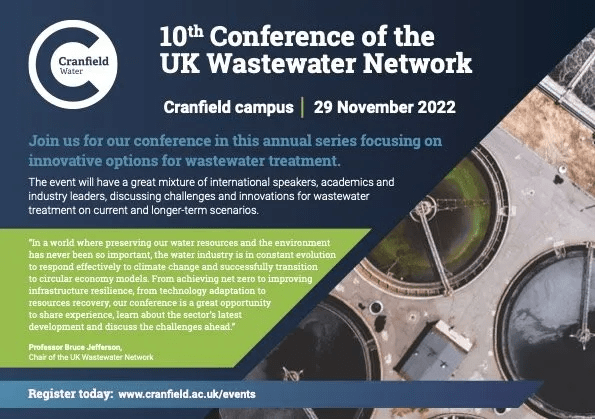
Ecomondo Rimini, Italy November 2022
Event: Ecomondo 2022 – The Green Technology Expo
Date: November 2022
Location: Rimini Expo Centre, Italy
Type of CPD: Keynote speaking / environmental innovation / international collaboration
Duration: Multi‑day event (speaker + participant)
Summary of the Event
I attended Ecomondo 2022 in Rimini, one of Europe’s leading exhibitions and conferences focused on green technologies, circular economy solutions, environmental monitoring and sustainable infrastructure. The event brought together global innovators, utilities, technology companies, environmental agencies and research institutions.
I was invited as a Keynote Speaker, presenting on the role of microbial activity sensing in advancing real‑time monitoring, improving treatment performance and supporting environmental protection. My keynote was delivered in collaboration with Grupo CAP Milan, highlighting shared innovation priorities across Italy and the wider European water sector.
Ecomondo provided a valuable platform to engage with environmental leaders, explore emerging technologies and strengthen international partnerships.
My Contribution: Keynote Speaker with Grupo CAP Milan
Keynote Title: Microbial Activity Sensing: Real‑Time Biological Insight for a Circular and Resilient Water Future
Key points delivered:
Engaged in panel discussions and technical exchanges with European environmental leaders.
Explained the scientific foundations of microbial activity sensing and its relevance to environmental and wastewater monitoring.
Demonstrated how biological data supports early‑warning detection, process optimisation, and treatment stability.
Presented case studies showing improved operational outcomes through continuous microbial monitoring.
Discussed integration with digital platforms, including analytics dashboards, automated alerts and AI‑driven optimisation.
Highlighted the role of biological sensing in supporting circular economy strategies, including resource recovery and energy efficiency.
Collaborated with Grupo CAP Milan to explore opportunities for Italian utilities to adopt advanced monitoring technologies.
WWEM October 2022
Microbial Activity Sensing: The Next Frontier in Real‑Time Environmental Monitoring
Key points delivered:
- Explained the scientific principles behind microbial activity sensing and its relevance to environmental monitoring.
- Demonstrated how real‑time biological data enhances early‑warning detection, treatment optimisation, and regulatory compliance.
- Presented case studies showing improved operational outcomes through continuous microbial monitoring.
- Discussed integration with digital platforms, including analytics dashboards, automated alerts and AI‑driven optimisation.
- Highlighted the growing need for biological monitoring to complement chemical and physical sensors in meeting environmental standards.
- Engaged in Q&A with regulators, utilities and monitoring specialists.
Key Themes Covered
Technology adoption pathways Piloting, validation and scaling of new monitoring tools.
Real‑time environmental monitoring Biological, chemical and physical sensing technologies.
Regulatory compliance and environmental protection Monitoring requirements for water quality, effluent discharge and pollution events.
Digital transformation in monitoring Data integration, analytics, automation and predictive tools.
Laboratory and field measurement innovation Advances in sampling, calibration, QA/QC and instrument performance.
Operational resilience Using high‑resolution data to stabilise processes and reduce risk.
Cranfield Water Network October 2022
Event: Cranfield Water Network Annual Event – IWA Young Water Professionals Pitch Sessions
Date: October 2022
Location: Cranfield University, UK
Type of CPD: Event hosting / innovation leadership / mentoring and sector engagement
Duration: Half‑day event (host + participant)
Summary of the Event
I took part in the Cranfield Water Network Annual Event in October 2022, a gathering that brings together researchers, early‑career professionals, industry leaders and innovators to explore emerging ideas in water science, technology and policy.
I was invited to host the IWA Pitch Sessions, a platform designed to showcase early‑stage research, new technologies and innovative concepts from young water professionals. The session formed part of the wider Cranfield Water Network programme, which promotes collaboration between academia and industry.
My role involved facilitating the pitches, engaging with presenters, providing feedback and helping create an environment that encouraged creativity, confidence and constructive discussion.
My Contribution: Host of the IWA Pitch Sessions
Key responsibilities and contributions:
- Served as session host, introducing speakers, managing the flow of presentations and ensuring smooth delivery.
- Provided technical and strategic feedback to early‑career researchers and innovators.
- Encouraged presenters to articulate the real‑world impact of their work, including operational, environmental and societal benefits.
- Highlighted the importance of innovation pathways, including piloting, validation and commercialisation.
- Facilitated audience Q&A, promoting dialogue between academia, industry and young professionals.
- Represented industry perspectives, helping bridge the gap between research and practical application.
Key Themes Covered
Academic–industry collaboration Strengthening links between universities and the wider water sector.
Emerging water technologies Novel sensors, treatment processes, digital tools and modelling approaches.
Research‑to‑practice translation How early‑stage ideas can be developed into deployable solutions.
Innovation culture and capability building Supporting young professionals in communicating and advancing their work.
Sustainability and environmental protection Research aligned with climate resilience, water quality and resource efficiency.
COP 27 Water Climate Discussion October 2022
Event: COP27 Water & Climate Discussion – High‑Level Thematic Session
Date: October 2022 (pre‑COP27 engagement)
Location: Hybrid / International (Egypt‑linked global event)
Type of CPD: Keynote speaking / climate policy engagement / global water security
Duration: Half‑day event (speaker + participant)
Summary of the Event
I participated in the COP27 Water & Climate Discussion in October 2022, a high‑level international forum convened in the lead‑up to the UN Climate Change Conference (COP27). The event brought together global policymakers, climate scientists, water sector leaders, NGOs and technology innovators to explore the critical links between water security, climate resilience and sustainable development.
I was invited as a Keynote Speaker, presenting on the role of real‑time biological monitoring and microbial activity sensing in strengthening climate resilience across water and wastewater systems. My contribution focused on how advanced sensing technologies can support early‑warning capabilities, protect ecosystems, and improve operational stability under increasing climate pressures.
The event provided a platform for global dialogue on the urgent need to integrate water into climate policy and to accelerate innovation across climate‑vulnerable regions.
My Contribution: Keynote Speaker
Keynote Title: Real‑Time Biological Insight for Climate‑Resilient Water Systems
Key points delivered:
- Highlighted the growing climate‑driven risks to water quality, treatment stability and environmental health.
- Explained how microbial activity sensing provides real‑time biological insight essential for early‑warning detection of pollution, toxicity and process instability.
- Demonstrated how biological monitoring supports climate adaptation strategies, including drought resilience, flood response and protection of sensitive ecosystems.
- Presented case studies showing how continuous microbial monitoring improves operational resilience in extreme weather conditions.
- Discussed the importance of integrating biological data into digital platforms, predictive analytics and climate‑risk modelling.
- Emphasised the need for global collaboration to deploy advanced monitoring tools in climate‑vulnerable regions.
Key Themes Covered
- Water security under climate change Impacts of drought, flooding, temperature shifts and extreme events on water systems.
- Real‑time monitoring and early‑warning systems Biological, chemical and physical sensors supporting climate resilience.
- Nature‑based and technology‑based adaptation Combining digital tools with ecosystem‑based approaches.
- Global climate policy and water governance Integrating water into climate negotiations and national adaptation plans.
- Innovation and resilience building Deploying advanced monitoring technologies in developing and climate‑stressed regions.
- Cross‑sector collaboration Partnerships between governments, utilities, researchers and technology providers.
Event: COP27 Water & Climate Discussion – High‑Level Thematic Session
Date: October 2022 (pre‑COP27 engagement)
Location: Hybrid / International (Egypt‑linked global event)
Type of CPD: Keynote speaking / climate policy engagement / global water security
Duration: Half‑day event (speaker + participant)
Summary of the Event
I participated in the COP27 Water & Climate Discussion in October 2022, a high‑level international forum convened in the lead‑up to the UN Climate Change Conference (COP27). The event brought together global policymakers, climate scientists, water sector leaders, NGOs and technology innovators to explore the critical links between water security, climate resilience and sustainable development.
I was invited as a Keynote Speaker, presenting on the role of real‑time biological monitoring and microbial activity sensing in strengthening climate resilience across water and wastewater systems. My contribution focused on how advanced sensing technologies can support early‑warning capabilities, protect ecosystems, and improve operational stability under increasing climate pressures.
The event provided a platform for global dialogue on the urgent need to integrate water into climate policy and to accelerate innovation across climate‑vulnerable regions.
My Contribution: Keynote Speaker
Keynote Title: Real‑Time Biological Insight for Climate‑Resilient Water Systems
Key points delivered:
- Highlighted the growing climate‑driven risks to water quality, treatment stability and environmental health.
- Explained how microbial activity sensing provides real‑time biological insight essential for early‑warning detection of pollution, toxicity and process instability.
- Demonstrated how biological monitoring supports climate adaptation strategies, including drought resilience, flood response and protection of sensitive ecosystems.
- Presented case studies showing how continuous microbial monitoring improves operational resilience in extreme weather conditions.
- Discussed the importance of integrating biological data into digital platforms, predictive analytics and climate‑risk modelling.
- Emphasised the need for global collaboration to deploy advanced monitoring tools in climate‑vulnerable regions.
Key Themes Covered
- Water security under climate change Impacts of drought, flooding, temperature shifts and extreme events on water systems.
- Real‑time monitoring and early‑warning systems Biological, chemical and physical sensors supporting climate resilience.
- Nature‑based and technology‑based adaptation Combining digital tools with ecosystem‑based approaches.
- Global climate policy and water governance Integrating water into climate negotiations and national adaptation plans.
- Innovation and resilience building Deploying advanced monitoring technologies in developing and climate‑stressed regions.
- Cross‑sector collaboration Partnerships between governments, utilities, researchers and technology providers.
British Water Digital Conference November 2022
Event: British Water Digital Conference 2022
Date: November 2022
Location: Virtual / Hybrid (UK‑based digital event)
Type of CPD: Keynote speaking / digital transformation / innovation leadership
Duration: Full‑day conference (speaker + participant)
Summary of the Event
I participated in the British Water Digital Conference 2022, a major annual event focused on accelerating digital transformation across the UK water sector. The conference brought together utilities, technology companies, regulators, researchers and innovators to explore how data, automation, real‑time monitoring and digital culture can improve performance, resilience and environmental outcomes.
I was invited as a Keynote Speaker, presenting on the role of advanced sensing technologies—particularly microbial activity sensing—in enabling smarter, more adaptive water and wastewater operations. My keynote addressed the intersection of biological insight, digital platforms and operational decision‑making, and how these tools support the sector’s shift toward predictive, data‑driven management.
The event provided a valuable platform for sharing innovation leadership perspectives and engaging with digital specialists from across the industry.
My Contribution: Keynote Speaker
Keynote Title: Biological Data in a Digital Water Future: Microbial Activity Sensing for Predictive Operations
Key points delivered:
- Explained how microbial activity sensing provides real‑time biological insight that complements chemical and physical monitoring.
- Demonstrated how biological data enhances process optimisation, early‑warning detection, and treatment stability.
- Showed how microbial sensing integrates with digital twins, AI‑driven analytics, and automated alerting systems.
- Highlighted the importance of data quality, interoperability and transparency in digital transformation.
- Discussed the cultural and organisational shifts required for utilities to fully leverage digital tools.
- Engaged in Q&A and panel discussions with digital leaders from UK utilities and technology providers.
Key Themes Covered
Technology adoption pathways Piloting, scaling and integrating new digital solutions.
Digital transformation in the water sector Data integration, automation, digital twins and predictive analytics.
Real‑time monitoring and biological insight The growing role of biological sensing in operational decision‑making.
Operational resilience and optimisation Using digital tools to stabilise processes and reduce unplanned events.
Innovation culture and capability building Skills, leadership and organisational change required for digital adoption.
Environmental performance and transparency How digital tools support regulatory compliance and public trust.
AYSA & British Water Liaison Event October 2022
Event: AYSA (Agua y Saneamientos Argentinos) & British Water Liaison Event
Date: October 2022
Location: Institution of Civil Engineers (ICE), One Great George Street, London
Type of CPD: Keynote speaking / international collaboration / strategic sector engagement
Duration: Half‑day event (speaker + participant)
Summary of the Event
I participated in the AYSA & British Water Liaison Event held at the Institution of Civil Engineers in London. The event brought together senior representatives from AySA, one of Latin America’s largest water and wastewater utilities, alongside UK utilities, technology companies, engineering consultancies and British Water members.
The purpose of the event was to strengthen UK–Argentina collaboration on water innovation, operational excellence, digital transformation and environmental performance. It provided a platform for technical exchange, strategic dialogue and exploration of partnership opportunities.
I was invited as a keynote speaker, presenting on the role of advanced monitoring technologies—particularly microbial activity sensing—in improving treatment performance, resilience and environmental protection across large‑scale water and wastewater systems.
My Contribution: Keynote Speaker
Keynote Title: Biological Insight for High‑Performance Water Operations: The Role of Microbial Activity Sensing
Key points delivered:
- Explained the scientific foundations and operational value of microbial activity sensing for real‑time monitoring.
- Demonstrated how biological data enhances process optimisation, treatment stability, and early‑warning detection of toxicity or shock loads.
- Presented case studies showing improved operational outcomes through continuous microbial monitoring.
- Discussed integration with digital platforms, including analytics dashboards, automated alerts and AI‑driven optimisation.
- Highlighted opportunities for UK–Argentina collaboration, particularly in deploying advanced monitoring tools across AySA’s extensive treatment and distribution systems.
- Engaged in Q&A and bilateral discussions with AySA leadership and UK industry representatives.
Key Themes Covered
Urban water management in megacities Challenges and opportunities in delivering services at metropolitan scale.
Operational excellence in large utilities Strategies for improving performance across complex, high‑capacity treatment systems.
Digital transformation and real‑time monitoring Biological, chemical and physical sensors integrated with analytics and automation.
Innovation and technology adoption Pathways for piloting, validating and scaling emerging monitoring tools.
Climate resilience and sustainability Ensuring reliable service delivery under increasing environmental pressures.
International collaboration Knowledge exchange between UK innovators and AySA’s operational expertise.
Cairo Water Week October 2022
Event: Cairo Water Week 2022 – International Water Conference
Date: October 2022
Location: Cairo, Egypt
Type of CPD: International conference / policy engagement / innovation and knowledge exchange
Duration: Multi‑day event (attended selected sessions, forums and bilateral meetings)
Summary of the Event
I attended Cairo Water Week 2022, one of the Middle East and North Africa region’s leading international water conferences. The event brought together ministers, policymakers, utilities, researchers, technology companies and global organisations to discuss water security, climate resilience, transboundary cooperation and innovation.
The 2022 theme focused on water scarcity, climate adaptation, digital transformation and sustainable development, with strong representation from African, Middle Eastern and European institutions. The programme included high‑level panels, technical sessions, ministerial dialogues and international collaboration workshops.
Cairo Water Week provided an important platform to understand regional challenges, share global perspectives and explore opportunities for innovation partnerships across the MENA region.
Key Themes Covered
- Water scarcity and climate resilience Strategies for drought management, groundwater protection, and climate‑driven water stress.
- Transboundary water cooperation Regional dialogue on shared river basins, governance frameworks and conflict‑sensitive water management.
- Digital transformation and real‑time monitoring The growing role of sensors, analytics and data platforms in improving water security.
- Agricultural water efficiency Irrigation optimisation, crop water productivity and sustainable land–water management.
- Urban water management Integrated planning, wastewater reuse and infrastructure resilience.
- Innovation and technology adoption Opportunities for advanced monitoring, treatment and decision‑support tools in the MENA region.
SWCC Saudi & British Water Event October 2022 London ICE
Event: SWCC (Saline Water Conversion Corporation, Saudi Arabia) & British Water – Joint Technical and Strategic Collaboration Event
Date: October 2022
Location: Institution of Civil Engineers (ICE), One Great George Street, London
Type of CPD: Keynote speaking / international collaboration / strategic sector engagement
Duration: Half‑day event (speaker + participant)
Summary of the Event
I participated in the SWCC Saudi & British Water Joint Event held at the Institution of Civil Engineers in London. The event brought together senior leaders from SWCC, British Water, UK utilities, technology companies, engineering consultancies and government representatives to strengthen collaboration between the UK and Saudi Arabia on water innovation, desalination, digital transformation and operational excellence.
I was invited as a keynote speaker, presenting on the role of advanced monitoring technologies—particularly microbial activity sensing—in improving treatment performance, operational resilience and environmental protection across large‑scale water and desalination systems.
The event provided a high‑level platform for strategic dialogue, knowledge exchange and exploration of future partnership opportunities between UK innovators and SWCC, one of the world’s largest desalination operators.
My Contribution: Keynote Speaker
Keynote Title: Biological Insight at Scale: Microbial Activity Sensing for High‑Performance Water and Desalination Operations
Key points delivered:
- Presented the scientific principles and operational value of microbial activity sensing for real‑time monitoring.
- Demonstrated how biological data supports process optimisation, early‑warning detection, and treatment stability in both conventional and desalination systems.
- Highlighted case studies showing improved operational outcomes through continuous microbial monitoring.
- Discussed integration with digital platforms, including analytics dashboards, automated alerts and AI‑driven optimisation.
- Explored opportunities for UK–Saudi collaboration in deploying advanced monitoring tools across SWCC’s large‑scale facilities.
- Engaged in panel discussions with SWCC leadership and UK industry representatives.
Key Themes Covered
Technology adoption and scaling Pathways for piloting, validating and deploying emerging monitoring tools at utility scale.
Desalination innovation and operational excellence Energy efficiency, membrane performance, fouling mitigation and digital optimisation.
Real‑time monitoring and digital transformation Biological, chemical and physical sensors integrated with analytics and automation.
International collaboration Knowledge exchange between UK innovators and SWCC’s large‑scale operational expertise.
Climate resilience and water security Ensuring reliable supply in arid regions through advanced technology and strategic planning.
IWA Digital World Water Congress May 2021
Event: IWA Digital World Water Congress 2021
Date: May 2021
Location: Fully virtual (global online platform)
Type of CPD: International conference / innovation leadership / sector engagement / digital event hosting
Duration: Multi‑day event (speaker, host, and participant)
Summary of the Event
I participated in the IWA Digital World Water Congress 2021, a major global event bringing together water professionals, researchers, innovators and utilities from around the world. Due to the pandemic, the Congress was delivered entirely online, creating a highly accessible platform for international knowledge exchange, technical presentations and digital networking.
As part of the programme, I represented Enebio, showcasing our work in real‑time biological monitoring and digital water innovation. In addition to participating in technical sessions, I also co‑hosted a global film competition and awards ceremony in partnership with Water Industry TV, designed to highlight creativity, storytelling and innovation across the water sector.
My Contribution: Enebio & Water Industry TV Global Film Competition Host
Role: Creator and host of the Enebio & Water Industry TV Global Water Innovation Film Competition, delivered as part of the IWA Digital World Water Congress.
Key contributions:
- Designed and launched an international film competition to showcase innovation, environmental leadership and digital transformation across the water sector.
- Hosted the global awards ceremony, presenting winning films and interviewing contributors from utilities, research institutions and technology companies.
- Promoted the role of creative communication in raising awareness of water challenges and inspiring sector‑wide engagement.
- Represented Enebio as a leader in digital water innovation, highlighting the company’s work in microbial activity sensing and real‑time monitoring.
- Strengthened collaboration with Water Industry TV and expanded the competition’s reach across multiple continents.
Key Themes Covered
Entrepreneurship and technology commercialisation Showcasing Enebio’s role in advancing real‑time biological monitoring.
Digital transformation and virtual collaboration How global events can be delivered effectively through digital platforms.
Innovation in water and wastewater systems Emerging technologies, monitoring tools and data‑driven optimisation.
Creative communication and public engagement Using film and storytelling to raise awareness of water challenges.
Global water governance and sustainability International perspectives on climate resilience, water security and environmental protection.
IWA World Water Congress Copenhagen September 2022
Event: IWA World Water Congress & Exhibition 2022
Date: September 2022
Location: Copenhagen, Denmark
Type of CPD: International conference / global water policy / innovation and research
Duration: Multi‑day event (attended selected sessions, exhibitions and forums)
Summary of the Event
I attended the International Water Association (IWA) World Water Congress & Exhibition 2022 in Copenhagen, one of the most significant global gatherings for water professionals. The event brought together thousands of delegates from utilities, academia, technology companies, NGOs, regulators and international organisations.
The 2022 Congress focused on sustainable urban water management, climate resilience, digital transformation, circular economy approaches, advanced treatment technologies and global water governance. The programme included technical sessions, keynote presentations, utility leader forums, innovation showcases and international networking events.
The exhibition hall featured cutting‑edge technologies across monitoring, treatment, digital water, resource recovery and nature‑based solutions.
Key Themes Covered
- Climate resilience and adaptation Strategies for drought, flooding, extreme weather and long‑term climate pressures.
- Digital water transformation Real‑time monitoring, digital twins, automation, AI‑driven optimisation and integrated data platforms.
- Advanced treatment technologies Membranes, biological processes, decentralised systems and energy‑efficient treatment.
- Circular economy and resource recovery Nutrient recovery, biosolids valorisation, water reuse and low‑carbon operations.
- Global water governance and policy International perspectives on regulation, sustainability and environmental protection.
- Utility leadership and innovation culture Case studies on embedding innovation, improving performance and managing risk.
WEX Valencia June 2022
Event: WEX Global 2022 – Water & Energy Exchange
Date: June 2022
Location: Valencia, Spain
Type of CPD: International conference / technical speaking / innovation and strategic networking
Duration: Multi‑day event (speaker + participant)
Summary of the Event
I attended WEX Global 2022 in Valencia, an international forum that brings together senior leaders from utilities, technology companies, investors, policymakers and environmental organisations. The event focuses on accelerating innovation across the water, energy and environmental sectors through high‑level dialogue, technology showcases and collaborative workshops.
I participated as a speaker, delivering a technical presentation on microbial activity sensing and its growing role in real‑time monitoring for water and wastewater systems. My session explored how biological activity data can support operational optimisation, early‑warning capabilities and improved environmental performance.
WEX Global provided an excellent platform for strategic engagement, enabling discussions with global utilities and innovators on the future of digital water, monitoring technologies and climate‑resilient operations.
My Contribution: Speaker on Microbial Activity Sensing
Presentation Title: Microbial Activity Sensing: Real‑Time Biological Insight for Smarter Water Operations
Key points delivered:
- Explained the scientific foundations of microbial activity sensing, including metabolic indicators and biological response patterns.
- Demonstrated how continuous biological data enhances process stability, treatment optimisation and pollution event detection.
- Presented case studies showing improved operational outcomes through real‑time microbial monitoring.
- Discussed integration with digital platforms, including analytics dashboards, automated alerts and AI‑driven optimisation tools.
- Highlighted opportunities for utilities to adopt biological sensing as part of broader digital transformation strategies.
- Engaged in panel discussions and follow‑up conversations with international delegates.
Key Themes Covered
Global collaboration International perspectives on digital water, innovation ecosystems and future research priorities.
Digital transformation and real‑time monitoring Biological, chemical and physical sensors integrated with analytics and automation.
Operational optimisation and resilience Using biological insight to stabilise processes and reduce unplanned events.
Water quality and environmental protection Early‑warning systems for toxicity, shock loads and treatment failures.
Innovation and technology adoption How utilities evaluate, pilot and scale emerging monitoring tools.
Climate resilience and sustainability The need for adaptive, data‑driven systems in a changing environment.
IFAT Munich May 2022
Event: IFAT Munich 2022 – World’s Leading Trade Fair for Water, Sewage, Waste and Raw Materials Management
Date: May 2022
Location: Munich, Germany
Type of CPD: International exhibition and conference / technology innovation / sector intelligence
Duration: Multi‑day event (attended selected sessions and exhibitions)
Summary of the Event
I attended IFAT Munich 2022, the world’s largest and most influential trade fair for environmental technologies, with a strong focus on water, wastewater, resource recovery and circular economy solutions. The event brought together global technology providers, utilities, researchers, policymakers and industry leaders to showcase cutting‑edge innovations and discuss emerging challenges in environmental management.
The 2022 edition featured extensive exhibition halls, live demonstrations, technical forums, and specialist presentations covering advanced treatment technologies, digitalisation, monitoring systems, sludge and resource recovery, climate resilience and sustainable infrastructure.
IFAT provided a unique opportunity to explore global technology trends, evaluate new solutions, and engage with international experts across the water and environmental sectors.
Key Themes Covered
- Advanced water and wastewater treatment technologies Membranes, filtration systems, decentralised treatment, and energy‑efficient processes.
- Digitalisation and real‑time monitoring Sensor networks, analytics platforms, automation and digital twins.
- Circular economy and resource recovery Nutrient recovery, sludge valorisation, biogas optimisation and materials reuse.
- Climate resilience and infrastructure adaptation Flood protection, drought management and nature‑based solutions.
- Industrial water management Process optimisation, water reuse and zero‑liquid‑discharge systems.
- Global innovation landscape Technology trends from Europe, Asia, North America and emerging markets.
Water UK House of Lords reception May 2022
Event: Water UK House of Lords Reception 2022
Date: May 2022
Location: House of Lords, Palace of Westminster, London
Type of CPD: Policy engagement / sector leadership / strategic networking
Duration: Evening reception (1–2 hours)
Summary of the Event
I attended the Water UK House of Lords Reception in May 2022, an annual gathering that brings together parliamentarians, regulators, water company executives, environmental leaders and technology innovators. The reception provides a platform for high‑level discussion on the strategic challenges facing the UK water sector, including environmental performance, resilience, investment, innovation and public trust.
The event offered an opportunity to hear perspectives from political leaders and industry representatives on the future direction of water policy, regulatory expectations and the sector’s role in delivering national environmental and climate commitments.
Key Themes Covered
- Environmental performance and river health Parliamentary focus on storm overflows, transparency and improving water quality outcomes.
- Climate resilience and long‑term planning Preparing for drought, flooding and infrastructure pressures driven by climate change.
- Innovation and digital transformation The role of new technologies, real‑time monitoring and data transparency in improving environmental outcomes.
- Investment and affordability Balancing long‑term infrastructure needs with customer expectations and regulatory frameworks.
- Public trust and accountability Strengthening communication, transparency and engagement with communities.
- Policy and governance Cross‑party perspectives on the future of water regulation and environmental ambition.
Ozwater Brisbane May 2022
Event: Ozwater’22 – Australia’s Premier Water Conference & Exhibition
Date: May 2022
Location: Brisbane Convention & Exhibition Centre, Australia
Type of CPD: International conference / technical presentation / innovation and applied research
Duration: Multi‑day event (speaker + participant)
Summary of the Event
I attended Ozwater’22 in Brisbane, one of the largest and most influential water conferences in the Asia‑Pacific region. The event brought together utilities, researchers, technology companies, regulators and industry leaders to explore the future of water management, digital transformation, climate resilience and environmental protection.
I participated as a speaker, delivering a technical presentation on microbial activity sensing and its role in real‑time monitoring for water and wastewater systems. My session focused on how biological activity data can enhance operational performance, provide early‑warning capabilities and support more resilient, data‑driven treatment processes.
The conference provided a valuable opportunity to engage with Australian utilities and innovators, understand regional challenges and share global perspectives on emerging monitoring technologies.
My Contribution: Speaker on Microbial Activity Sensing
Presentation Title: Microbial Activity Sensing: Real‑Time Biological Insight for Smarter Water and Wastewater Operations
Key points delivered:
- Explained the scientific principles behind microbial activity sensing, including metabolic indicators and biological response signatures.
- Demonstrated how real‑time biological data can support process optimisation, treatment stability and early detection of toxicity or shock loads.
- Presented case studies showing improved operational outcomes through continuous microbial monitoring.
- Discussed integration with digital platforms, including analytics dashboards, automated alerts and AI‑driven optimisation.
- Highlighted opportunities for Australian utilities to adopt biological sensing technologies to improve resilience and environmental performance.
- Engaged in technical discussions with operators, researchers and technology partners.
Key Themes Covered
Asia‑Pacific water sector challenges Drought, decentralised systems, and the need for robust monitoring in remote areas.
Real‑time monitoring and digital transformation Biological, chemical and physical sensors integrated with analytics and automation.
Operational optimisation and resilience Using biological insight to stabilise processes and reduce unplanned events.
Water quality and environmental protection Early‑warning systems for pollution events and treatment failures.
Innovation and technology adoption How utilities can evaluate, pilot and scale emerging monitoring tools.
Climate and sustainability pressures The need for adaptive, data‑driven systems in a changing environment.
Singapore International Water Week April 2022
Event: Singapore International Water Week (SIWW) 2022 – Global Platform for Water Innovation and Sustainability
Date: April 2022
Location: Singapore (hybrid: in‑person + virtual participation)
Type of CPD: International conference / innovation / policy / technology showcase
Duration: Multi‑day event (attended selected sessions)
Summary of the Event
I participated in Singapore International Water Week (SIWW) 2022, one of the world’s leading global water conferences, bringing together utilities, technology companies, policymakers, researchers and investors to address the most pressing challenges in water sustainability, resilience and innovation.
The 2022 edition focused on climate adaptation, digital transformation, advanced treatment technologies, integrated urban water management and the transition to low‑carbon, resource‑efficient systems. The event featured plenary sessions, technical deep dives, utility leadership forums, technology showcases and international networking opportunities.
SIWW continues to be a major global platform for sharing best practice, exploring emerging technologies and strengthening collaboration across the international water sector.
Key Themes Covered
- Climate resilience and adaptation Strategies for drought management, flood resilience, coastal protection and long‑term climate planning.
- Digital water transformation Digital twins, AI‑driven optimisation, real‑time monitoring, and integrated data platforms.
- Advanced treatment technologies Membranes, desalination, energy‑efficient processes, and resource recovery.
- Integrated urban water management Water reuse, circular economy approaches, and sustainable urban planning.
- Utility leadership and innovation culture Case studies from global utilities on scaling innovation and embedding digital capability.
- Financing and scaling water solutions Investment models, public–private partnerships and pathways for commercialisation.
IWA Leading Edge Technology Reno March 2022
Event: IWA Leading Edge Technology (LET) Conference 2022
Date: March 2022
Location: Reno, Nevada, USA
Type of CPD: International technical conference / keynote speaking / advanced research and innovation
Duration: Multi‑day conference (speaker + participant)
Summary of the Event
I participated in the International Water Association (IWA) Leading Edge Technology (LET) Conference 2022 in Reno, one of the world’s premier events for cutting‑edge water and wastewater technologies. The conference brought together global researchers, utilities, technology developers and academic leaders to explore the latest breakthroughs in treatment processes, digitalisation, energy optimisation and materials science.
I attended the conference as a speaker, delivering a technical presentation on advanced membrane technologies and their role in next‑generation water and wastewater treatment. My session focused on performance improvements, fouling mitigation, real‑time monitoring integration and the future of membrane‑based systems in a resource‑constrained world.
The event provided a high‑level platform for scientific exchange, networking and exposure to emerging research from leading institutions worldwide.
My Contribution: Speaker on Advanced Membrane Technologies
Presentation Title: Advanced Membrane Technologies: Performance, Monitoring and the Future of High‑Efficiency Treatment
Key points delivered:
- Presented recent advancements in membrane materials, including enhanced permeability, selectivity and chemical resistance.
- Discussed fouling mitigation strategies, such as surface modification, hydrophilic coatings and optimised operational regimes.
- Demonstrated how real‑time monitoring and microbial activity sensing can be integrated with membrane systems to improve performance and reduce downtime.
- Highlighted the potential for energy‑efficient membrane processes, including low‑pressure systems and hybrid configurations.
- Explored future directions in membrane bioreactors (MBRs), forward osmosis, nanocomposite membranes and smart membranes with embedded sensing capabilities.
- Engaged in technical Q&A with researchers, utilities and technology developers.
Key Themes Covered
Global research collaboration Cross‑institutional partnerships and emerging international research priorities.
Membrane science and materials innovation Nanostructured materials, surface engineering and next‑generation polymer chemistry.
Operational optimisation and fouling control Data‑driven strategies, cleaning regimes and predictive maintenance.
Hybrid and integrated treatment systems Combining membranes with biological, chemical and physical processes.
Digitalisation and real‑time monitoring Embedding sensors and analytics into membrane systems for continuous optimisation.
Energy efficiency and sustainability Reducing operational costs and environmental impact through advanced design.

Clean Tech Swiss-Canadian Collaboration March 2022
I participated in the Clean Tech Swiss–Canadian Collaboration Forum 2022, an international event designed to strengthen cooperation between Swiss and Canadian innovators, utilities, researchers and technology companies. The forum focused on accelerating clean‑tech adoption across water, energy and environmental sectors, with a strong emphasis on advanced monitoring technologies and collaborative innovation models.
I was invited as a speaker, delivering a technical presentation on microbial activity sensing and its role in real‑time water and wastewater monitoring. My session explored how biological activity data can enhance process optimisation, early‑warning systems and environmental protection, and how these technologies can be integrated into digital water strategies.
The event provided a valuable platform for knowledge exchange and discussion of joint R&D, commercialisation pathways and opportunities for Swiss–Canadian collaboration.
My Contribution: Speaker on Microbial Activity Sensing
Presentation Title: Microbial Activity Sensing: Real‑Time Biological Insight for Water and Wastewater Systems
Key points delivered:
- Explained the scientific basis of microbial activity sensing, including metabolic indicators, oxygen uptake, and biological response signatures.
- Demonstrated how real‑time biological data can support process optimisation, treatment stability, and early detection of pollution events.
- Presented case studies showing improved operational performance through continuous microbial monitoring.
- Discussed integration with digital twins, AI‑driven analytics, and sensor networks.
- Highlighted opportunities for Swiss–Canadian collaboration in scaling biological sensing technologies.
- Participated in Q&A and follow‑up discussions with utilities, researchers and technology partners.
Key Themes Covered
Climate and sustainability drivers How environmental pressures shape investment and innovation priorities.
Advanced microbial sensing technologies Real‑time biological monitoring, sensor design, data interpretation and operational applications.
Digitalisation of water and wastewater systems Integration of biological, chemical and physical sensors with analytics and automation.
Clean‑tech innovation ecosystems How Switzerland and Canada support piloting, validation and commercialisation of emerging technologies.
Environmental monitoring and early‑warning systems Using biological indicators to detect toxicity, shock loads and treatment instability.
Cross‑border collaboration Joint R&D, technology transfer and market expansion opportunities.
Rivers Trust Annual Conference March 2022
Event: The Rivers Trust Annual Conference 2022
Date: March 2022
Location: Hybrid event – UK (in‑person and virtual)
Type of CPD: Keynote speaking / environmental innovation / catchment management / technical leadership
Duration: Full‑day conference (speaker + participant)
Summary of the Event
I took part in the Rivers Trust Annual Conference 2022, a major national gathering focused on improving river health, strengthening catchment‑based approaches, and accelerating innovation across the UK’s freshwater environment. The event brought together environmental NGOs, regulators, water companies, academics, catchment partnerships and technology innovators.
I was invited as a keynote speaker, delivering a session on real‑time river water monitoring technologies. My presentation explored how continuous sensing, telemetry and data analytics can transform the way we detect pollution, understand catchment dynamics and support regulatory compliance.
The conference provided a valuable platform for cross‑sector collaboration and discussion of emerging policy priorities, including storm overflows, agricultural pollution, nature‑based solutions and the increasing public demand for transparency in river health.
My Contribution: Keynote Speaker on Real‑Time River Monitoring
Presentation Title: Real‑Time River Monitoring: Transforming Catchment Insight and Pollution Response
Key points delivered:
- Explained the role of continuous sensing technologies in detecting pollution events, tracking water quality trends and supporting catchment‑scale decision‑making.
- Demonstrated how real‑time data improves early‑warning capabilities, enabling faster responses to spills, storm overflow events and agricultural runoff.
- Presented case studies showing how sensor networks and telemetry systems have improved environmental protection and operational performance.
- Discussed integration with digital platforms, including analytics dashboards, automated alerts and community‑facing transparency tools.
- Highlighted the importance of collaboration between NGOs, regulators and water companies to scale real‑time monitoring across catchments.
- Engaged in Q&A with practitioners, policymakers and environmental groups.
Key Themes Covered
- Real‑time monitoring technologies Sensor networks, telemetry, analytics and early‑warning systems.
- Catchment‑based approaches (CaBA) Strengthening partnerships to deliver integrated water quality improvements.
- Water quality and pollution reduction Tackling storm overflows, agricultural runoff and diffuse pollution.
- Nature‑based solutions Wetlands, riparian buffers, rewilding and natural flood management.
- Climate resilience Preparing catchments for drought, flooding and long‑term hydrological change.
- Data transparency and citizen engagement Making water quality information accessible to communities.
All-Party Parliamentary Water Group February 2022
Event: All‑Party Parliamentary Water Group (APPG) Meeting
Date: February 2022
Location: UK Parliament (hybrid format – in‑person and virtual participation)
Type of CPD: Policy engagement / parliamentary briefing / strategic sector insight
Duration: 1–2 hours (plus preparation and follow‑up)
Summary of the Event
I participated in the February 2022 meeting of the All‑Party Parliamentary Water Group (APPG), a cross‑party forum that brings together MPs, peers, regulators, utilities, innovators and sector experts to discuss key issues affecting the UK water industry. The APPG provides a platform for evidence‑based dialogue between policymakers and the water sector, helping inform parliamentary understanding and future policy direction.
The February session focused on emerging challenges in water management, including climate resilience, water quality, infrastructure investment, innovation, and the regulatory landscape. The meeting also explored how the sector can accelerate progress on environmental outcomes and support national priorities such as net‑zero, nature recovery and resilience to extreme weather.
Key Themes Covered
- Water quality and environmental performance Parliamentary scrutiny of storm overflows, river health, and regulatory expectations.
- Climate resilience and adaptation Preparing for drought, flooding, and long‑term climate pressures across catchments and infrastructure.
- Innovation and digital transformation The role of technology, data and real‑time monitoring in improving environmental outcomes.
- Investment and affordability Balancing long‑term infrastructure needs with customer affordability and regulatory frameworks.
- Nature‑based solutions Opportunities for catchment management, wetlands, and integrated water‑environment strategies.
- Policy and governance How government, regulators and industry can collaborate to deliver better outcomes for people and the environment.
World Water Tech February 2022
Event: World Water-Tech Innovation Summit 2022
Date: 22–23 February 2022
Location: Hybrid – London (in‑person) + global virtual participation
Type of CPD: International conference / innovation / digital transformation / sector leadership
Duration: Two‑day summit (attended selected sessions)
Summary of the Event
I participated in the World Water-Tech Innovation Summit 2022, a leading global event bringing together utilities, technology providers, investors, regulators and innovators to explore the future of water management. The 2022 summit focused on accelerating digital transformation, scaling innovation, strengthening resilience and driving investment into next‑generation water technologies.
The programme included keynote presentations, panel discussions, roundtables, case studies and technology showcases. Key themes included climate resilience, leakage reduction, digital twins, real-time monitoring, decentralised treatment, and the role of finance in scaling innovation.
The hybrid format enabled broad international participation and facilitated high‑quality networking across the global water innovation ecosystem.
Key Themes Covered
- Digital transformation and smart water systems Adoption of digital twins, AI, advanced analytics, and real-time monitoring to improve operational efficiency.
- Climate resilience and adaptation Strategies for utilities to prepare for extreme weather, drought, flooding and long-term climate pressures.
- Leakage reduction and network optimisation Predictive analytics, sensor networks and proactive asset management.
- Decentralised and modular treatment technologies Innovations supporting flexibility, resilience and lower carbon footprints.
- Investment and scaling innovation How utilities, investors and start-ups collaborate to accelerate deployment of new technologies.
- Water quality and public health Strengthening monitoring, early warning systems and regulatory compliance.
- Utility leadership and culture change Embedding innovation mindsets, digital skills and organisational resilience.
5th World Water Summit August 2021
Event: 5th World Water Summit
Date: August 2021
Location: Virtual (global online event)
Type of CPD: International conference / keynote speaking / leadership / policy and innovation
Duration: Multi‑session summit (attended and contributed as speaker and chair)
Summary of the Event
I participated in the 5th World Water Summit in August 2021, an international gathering focused on accelerating progress in global water security, climate resilience and sustainable development. The summit convened policymakers, utilities, researchers, NGOs, technology providers and development organisations to address the world’s most urgent water challenges.
As part of the programme, I served as Keynote Speaker and Chair for the session “Water for All: Water Conservation and Emerging Issues.” My role involved delivering a keynote presentation, framing the strategic context for the session, guiding the discussion, and facilitating contributions from international experts.
The summit’s virtual format enabled broad global participation and encouraged cross‑sector collaboration across continents.
My Contribution: Keynote Speaker & Chair
Session: Water for All: Water Conservation and Emerging Issues
Responsibilities and Contributions:
- Delivered a keynote address on global water conservation trends, emerging risks, and the need for integrated, equitable approaches to water security.
- Chaired the session, guiding expert dialogue and ensuring balanced contributions from speakers across policy, research, technology and community sectors.
- Highlighted the role of real‑time monitoring, digital tools and behavioural change in achieving sustainable water use.
- Facilitated discussion on emerging issues, including climate‑driven scarcity, water quality degradation, governance gaps and the need for inclusive solutions.
- Synthesised key insights and presented closing reflections to support global knowledge exchange.
Key Themes Covered
Policy, governance and global collaboration Strengthening frameworks to support sustainable water management.
Water conservation and demand management Strategies for reducing consumption, improving efficiency and supporting behavioural change.
Emerging global water issues Climate‑driven scarcity, drought, water quality risks, population growth and urbanisation.
Digital transformation Smart metering, sensors, analytics and real‑time monitoring to support conservation and resilience.
Equity and access (“Water for All”) Ensuring vulnerable communities have reliable, safe and affordable water services.
Nature‑based and integrated solutions Catchment management, green infrastructure and ecosystem restoration.
COP 26 Glasgow November 2021
Event: COP26 – 26th UN Climate Change Conference of the Parties
Date: 31 October – 12 November 2021 (attended selected sessions in November)
Location: Glasgow, Scotland (in‑person and hybrid participation)
Type of CPD: International policy conference / climate strategy / sustainability and resilience
Duration: Multi‑day engagement (selected sessions, side events, and sector‑specific briefings)
Summary of the Event
I participated in COP26, the United Nations’ global climate conference hosted in Glasgow in November 2021. COP26 was a landmark event, bringing together world leaders, negotiators, scientists, NGOs, businesses and civil society to accelerate action towards the goals of the Paris Agreement.
The conference focused on limiting global warming to 1.5°C, strengthening national climate commitments, mobilising climate finance, and accelerating adaptation and resilience. Alongside the formal negotiations, I attended water‑sector side events, innovation showcases, and thematic sessions on resilience, net‑zero pathways, and nature‑based solutions.
Water was a central theme throughout COP26, with multiple sessions highlighting the critical role of water security, wastewater management, and climate‑resilient infrastructure in global climate action.
Key Themes Covered
- Global climate commitments (NDCs) Updated national pledges to reduce emissions and accelerate adaptation.
- Water and climate resilience Recognition that water is the primary medium through which climate impacts are felt—flooding, drought, sea‑level rise, and water quality degradation.
- Net‑zero strategies Pathways for utilities, industries and governments to reduce emissions, including methane reduction and energy‑positive wastewater treatment.
- Nature‑based solutions Wetlands, peatlands, reforestation and catchment‑based approaches to enhance resilience and carbon sequestration.
- Climate finance and investment Mobilising public and private capital to support adaptation, infrastructure and innovation.
- Innovation and technology Digital tools, monitoring systems, and low‑carbon technologies to support climate mitigation and adaptation.
- Equity and climate justice Ensuring vulnerable communities are supported in adaptation and resilience planning.
Aquatech November 2021
Event: Aquatech Amsterdam 2021 – World’s Leading Water Technology Exhibition
Date: 2–5 November 2021
Location: RAI Amsterdam, Netherlands
Type of CPD: International exhibition / technical learning / innovation and networking
Duration: Four‑day event (attended selected days)
Summary of the Event
I attended Aquatech Amsterdam 2021, the world’s leading trade exhibition for process, drinking and wastewater technologies. The 2021 edition marked the first major in‑person global water‑sector gathering since the Covid‑19 pandemic, creating a strong sense of reconnection and collaboration across the industry. The event featured 458–850 exhibitors (depending on source), over 100 programme topics, and thousands of international visitors from more than 140 countries.
The exhibition showcased cutting‑edge technologies, innovation forums, live demonstrations, panel discussions, and specialist hubs covering digital water, desalination, industrial water, and water quality. The atmosphere was described as energetic, informative and highly interactive, with strong emphasis on networking and knowledge exchange.
Key Themes Covered
- Innovation in water technology Including advanced treatment systems, robotics, decentralised solutions, and award‑winning technologies such as the Autonomic Inspection Robot (Innovation Award winner).
- Digital transformation Smart water solutions, data analytics, automation, and digital twins featured prominently across the Digital Water Hub.
- Industrial and process water management Technologies for efficiency, reuse, and circularity in industrial applications.
- Desalination and membrane technologies New materials, energy‑efficient systems, and integrated treatment approaches.
- Networking and collaboration Exhibitor receptions, country pavilions, and the Innovation Forum (“Celebrating Water’s Change Makers”) brought together utilities, investors, start‑ups and researchers.
- Skills and sector culture Discussions on workforce development, innovation culture, and the future of water‑sector talent.
Northumbrian Water Festival November 2021
Summary of the Event
I participated in the 2021 Northumbrian Water Innovation Festival, a large‑scale collaborative event bringing together nearly 4,000 participants from over 40 countries to tackle major challenges facing the water sector. The festival uses design sprints, hacks and rapid‑ideation workshops to generate practical solutions to environmental, operational and societal issues.
The 2021 theme, “The Brilliant Get‑Together,” focused on reconnecting people after the disruption of Covid‑19 and accelerating innovation across utilities, technology providers, academia, government and community organisations. Sessions were fast‑paced, creative and highly collaborative, with contributions from global experts and special guests.
Key Themes Covered
- Asset management and resilience
Including tools to predict asset tipping points and optimise investment decisions. - Smart metering and digital transformation
Exploring sustainable meter design, new sensor technologies and enhanced customer engagement. - Customer behaviour and water efficiency
Approaches to shift public attitudes toward water use and promote long‑term behavioural change. - Flooding prediction and prevention
Development of data‑driven models and risk calculators to reduce sewer flooding. - Leakage reduction
Proactive, predictive approaches combining customer education, data analytics and targeted interventions. - Cross‑sector collaboration
Participants from utilities, tech, design, manufacturing, government and NGOs worked together to generate solutions.
IWA Resource Recovery Conference September 2021
Summary of the Event
I participated in the IWA Resource Recovery Conference 2021, a specialist global event focused on advancing the circular economy within the water sector. The conference brought together researchers, utilities, technology providers, regulators and industry partners to explore how wastewater and sludge can be transformed into valuable resources.
The 2021 programme covered scientific advances, full‑scale case studies, policy developments and emerging technologies for recovering energy, nutrients, materials and water from wastewater streams. The virtual format enabled broad international participation and facilitated knowledge exchange across continents.
Key Themes Covered
- Circular economy in the water sector
Strategies for shifting from linear treatment models to resource‑centric approaches. - Nutrient recovery (phosphorus, nitrogen, ammonia)
Technologies such as struvite crystallisation, ammonia stripping, biological nutrient recovery and market development for recovered products. - Energy recovery and carbon reduction
Advances in anaerobic digestion, biogas upgrading, energy‑positive wastewater treatment and carbon‑neutral utility strategies. - Water reuse and advanced treatment
High‑quality reclaimed water for industrial, agricultural and potable applications. - Emerging technologies
Bio‑electrochemical systems, membrane innovations, thermal hydrolysis, and novel biological processes. - Policy, regulation and market development
How regulatory frameworks and economic incentives can accelerate resource recovery adoption. - Case studies from utilities worldwide
Demonstrations of full‑scale implementation, operational lessons and performance outcomes.
Stockholm International Water Week August 2021
Summary of the Event
I participated in the fully digital edition of Stockholm World Water Week 2021, held from 23–27 August. The event brought together over 13,000 participants from 188 countries, with more than 400 sessions co‑created by leading global organisations.
The 2021 theme, “Building Resilience Faster,” focused on how the global water community can accelerate action to address climate change, water scarcity, poverty, biodiversity loss and other interconnected challenges.
Sessions covered scientific, technical, policy and community‑level perspectives, with contributions from researchers, utilities, NGOs, governments, development agencies and private‑sector innovators.
Key Themes Covered
- Climate resilience and adaptation
The conference emphasised that climate‑induced disasters are increasing and that water is central to effective climate action. - Water governance and global policy
Discussions linked water to major UN processes, including food systems, energy transitions and COP26. - Nature‑based solutions
Highlighted as essential for resilience, including wetlands, forests and ecosystem restoration. - Digital transformation and innovation
Sessions explored data, modelling, remote sensing and digital tools for water management. - Equity, inclusion and community resilience
Covid‑19’s impact on water, sanitation and hygiene (WASH), gender equality and vulnerable communities was a major focus. - Scientific seminars
Nine core seminars explored resilience, food security, biodiversity, and transboundary water cooperation.
Queensland Trade Mission August 2021
Summary of the Event
I participated in the Queensland Virtual Trade Mission in August 2021, part of the “Spotlight on Queensland” series designed to introduce UK organisations to commercial, infrastructure and innovation opportunities in the Australian state of Queensland. The mission highlighted Queensland’s rapid economic growth, major infrastructure investment programmes and emerging opportunities across key sectors.
The water‑focused session (19 August) explored Queensland’s priorities in water management, infrastructure development, climate resilience and technology adoption. The mission also provided insight into the state’s long‑term growth trajectory, supported by significant government investment and the announcement of Queensland as host of the 2032 Olympic and Paralympic Games.
The event connected UK participants with Queensland government representatives, industry leaders and potential partners, offering a platform for future collaboration.
Key Themes Covered
- Queensland’s economic and infrastructure growth
Driven by major government investment programmes supporting private‑sector development. - Water sector opportunities
Including digital water technologies, treatment innovation, resilience planning and utility partnerships. - Climate resilience and sustainability
Queensland’s focus on adapting to extreme weather, drought and environmental pressures. - International collaboration and export opportunities
How UK organisations can engage with Queensland’s expanding markets. - Future major projects
Including infrastructure linked to the 2032 Olympic Games, creating long‑term demand for water, energy and environmental solutions.
Singapore International Water Week November 2020
Summary of the Event
I participated in the first-ever virtual edition of Singapore International Water Week (SIWW Online), held on 18–19 November 2020. The event was created in response to Covid‑19 and aimed to bring the global water community together through a digital platform. It featured 10 webinars, over 70 international speakers, a virtual expo with around 100 exhibitors, and dedicated networking tools to connect participants from across the world.
The programme focused on digital transformation, climate resilience, advanced treatment technologies, and future trends in water reuse and resource management. More than 3,000 participants from 90 countries attended the event, demonstrating its global reach and relevance.
Key Themes Covered
- Digital transformation of water utilities
Including smart systems, automation, and data-driven decision-making. - Water reuse and future applications
Global trends in potable and non-potable reuse, advanced treatment technologies, and regulatory developments. - Ceramic membrane technology
A dedicated session explored the role of ceramic membranes as the future of water treatment. - Climate resilience and adaptation
Strategies for building water resilience in the face of climate change, including mitigation and adaptation approaches. - Urban coastal resilience and circular resource management
Building on earlier SIWW webinars from July 2020, which informed the November programme. - Innovation and global collaboration
The virtual expo showcased cutting-edge solutions for sustainable water and urban environments.

WEFTEC October 2020
Summary of the Event
I participated in WEFTEC 2020, which was delivered entirely online as WEFTEC Connect due to the Covid‑19 pandemic. WEFTEC is one of the world’s largest and most influential water‑sector conferences, bringing together wastewater professionals, technology providers, researchers, utilities and regulators.
The 2020 virtual programme included technical sessions, workshops, keynote presentations, exhibitor demonstrations and networking events. The content focused on operational resilience, digital transformation, innovation in wastewater treatment, and the sector’s response to Covid‑19.
Despite the virtual format, the event maintained its strong technical depth and global reach, offering a wide range of sessions across wastewater treatment, biosolids, stormwater, water quality, and utility management.
Key Themes Covered
- Covid‑19 impacts on wastewater operations
Workforce resilience, safety, continuity planning and lessons learned from the pandemic. - Wastewater‑based epidemiology (WBE)
Emerging research on using wastewater monitoring to track SARS‑CoV‑2 trends. - Innovation in wastewater treatment
Advances in biological processes, nutrient removal, energy efficiency and resource recovery. - Digital transformation and smart utilities
Use of sensors, automation, digital twins and data analytics to improve performance. - Climate resilience and sustainability
Strategies for adapting infrastructure to extreme weather, flooding and long‑term environmental pressures. - Biosolids management
New technologies, regulatory updates and best practice in treatment and land application. - Utility leadership and workforce development
Skills, culture and organisational resilience in a rapidly changing sector.

Stockholm Water Week August 2020
Summary of the Event
I participated in Stockholm World Water Week 2020, which was delivered entirely online due to the Covid‑19 pandemic. The event brought together global experts, policymakers, utilities, NGOs, researchers and innovators to discuss the world’s most pressing water challenges.
The 2020 theme focused on “Water and Climate Change: Accelerating Action”, exploring how the water sector must adapt to increasing climate pressures, support resilience, and contribute to sustainable development. The virtual format enabled wide international participation and provided access to a broad range of seminars, panel discussions, workshops and networking sessions.
Key Themes Covered
- Climate resilience and adaptation
How water systems can prepare for extreme weather, drought, flooding and long‑term climate impacts. - Sustainable development and global policy
Links between water security, SDG6, public health, poverty reduction and climate mitigation. - Innovation and digital transformation
Use of data, sensors, modelling and digital tools to improve water management and resilience. - Nature‑based solutions
Wetlands, green infrastructure and ecosystem restoration as tools for climate adaptation. - Water governance and equity
Ensuring fair access to water services, especially in vulnerable and low‑income communities. - Covid‑19 impacts on water systems
The pandemic’s influence on water demand, sanitation, hygiene and global resilience planning.
Covid-19 Lockdown British Water Real Time Monitoring Chair May 2020
Summary of the Activity
During the Covid‑19 lockdown in 2020, I served as Chair of the British Water Real-Time Monitoring (RTM) Group. This period required rapid adaptation to remote working, virtual collaboration and new operational challenges across the UK water sector.
The RTM Group became an important forum for utilities, technology providers and regulators to share intelligence on how the pandemic was affecting wastewater operations, sampling, compliance monitoring and workforce resilience. As Chair, I coordinated virtual meetings, set agendas, facilitated technical discussions and ensured continuity of knowledge exchange at a time when site access, monitoring routines and regulatory expectations were disrupted.
The group also explored how real-time monitoring technologies could support utilities during the crisis—particularly in relation to remote diagnostics, reduced site visits, early warning systems and maintaining compliance under constrained conditions.
Key Themes & Sector Issues Discussed
- Operational continuity during lockdown
Managing reduced staffing, restricted site access and changes to sampling regimes. - Remote monitoring and digital tools
Increased reliance on sensors, telemetry, online analysers and remote diagnostics. - Regulatory flexibility and communication
Understanding how the Environment Agency and other regulators were adapting expectations during the pandemic. - Data quality and reliability
Ensuring robust monitoring despite operational constraints. - Knowledge sharing across utilities
Identifying common challenges and sharing solutions in real time. - Future resilience
Considering how lessons from the pandemic could strengthen long-term monitoring strategies.
World Water Tech London February 2020
Summary of the Event
I attended the World Water-Tech Innovation Summit in London in February 2020. This annual event brings together global leaders from utilities, technology providers, investors, regulators and innovators to explore the future of water management. The summit focuses on accelerating the adoption of advanced technologies and fostering collaboration across the international water sector.
The 2020 programme centred on digital transformation, climate resilience, infrastructure investment and the role of innovation in addressing global water challenges. The event included keynote presentations, panel discussions, case studies, technology showcases and networking sessions with senior industry stakeholders.
Key Themes Covered
- Digital Transformation in Water Utilities
Including AI, machine learning, digital twins, predictive analytics and smart networks. - Climate Resilience and Adaptation
Strategies for managing extreme weather, drought, flooding and long-term environmental pressures. - Investment and Financing Models
How utilities and innovators can work with investors to scale new technologies. - Emerging Treatment Technologies
Novel approaches to wastewater treatment, decentralised systems, energy efficiency and resource recovery. - Utility–Start-up Collaboration
Case studies demonstrating successful partnerships and barriers to innovation adoption. - Cybersecurity and Risk Management
Protecting digital infrastructure as utilities become increasingly data-driven.
IWA Nomination for UK Vice-Chair position February 2020
Summary of the Activity
In February 2020, I was nominated for the position of UK Vice‑Chair within the International Water Association (IWA). This nomination reflected my ongoing involvement in the water sector and my contributions to professional networks, knowledge sharing and industry development.
The nomination process required me to reflect on my professional experience, leadership capabilities, sector contributions and future ambitions for supporting the IWA’s mission. This included preparing a personal statement, outlining my experience in wastewater, biosolids, innovation and sector collaboration, and demonstrating my commitment to advancing best practice within the global water community.
Although the nomination itself is not a training event, it represents a significant professional milestone and an opportunity to engage at a strategic level with an international organisation.
Key Themes & Professional Relevance
- Leadership in the water sector
Understanding the expectations and responsibilities of a national leadership role within an international professional body. - Strategic thinking and sector influence
Reflecting on how professional expertise can contribute to shaping industry direction, knowledge exchange and innovation. - Professional visibility and recognition
Demonstrating credibility, experience and commitment to the wider water community. - International collaboration
Appreciating the role of IWA in connecting global water professionals and advancing sustainable water management.
British Water House of Lords Reception February 2020
Summary of the Event
I attended the British Water House of Lords Reception in February 2020, an annual high‑profile gathering designed to bring together leaders from across the UK water sector, including water companies, supply‑chain organisations, policymakers and industry partners.
The reception provided an opportunity to hear strategic insights on the future of the UK water industry, including challenges around climate resilience, infrastructure investment, environmental protection and supply‑chain capability. Senior speakers typically address the audience on sector priorities, regulatory expectations and the importance of collaboration across the industry.
The event also serves as a platform to raise the profile of the UK water sector within Parliament, highlighting innovation, sustainability and the role of the supply chain in supporting national water infrastructure.
Networking formed a major part of the reception, enabling meaningful engagement with industry peers, technology providers and decision‑makers.
Key Themes & Discussion Points
- Climate resilience and adaptation
Emphasis on strengthening supply‑chain resilience in response to climate‑related risks and extreme weather impacts. - Environmental protection and pollution reduction
Discussion on the need to reduce sewage discharges, tackle microplastics and improve ecosystem health. - Infrastructure investment and long‑term planning
Recognition that ageing assets and population pressures require accelerated investment and innovation. - Collaboration across the water sector
The event highlighted the importance of cooperation between utilities, regulators, suppliers and policymakers to address shared challenges. - Raising the profile of the UK water industry
The reception is designed to showcase the sector’s strengths and promote its contribution to national environmental and economic goals.
Cranfield Waste Water Conference November 2019
November 2019
Summary of the Event
I attended the 2019 Cranfield Wastewater Conference, part of the annual UK Wastewater Network series hosted by Cranfield University. The event brought together researchers, water companies, regulators, technology providers and industry specialists to discuss current and emerging challenges in wastewater treatment and environmental protection.
The conference focused on bridging academic research with real‑world operational needs, highlighting innovative technologies, regulatory pressures and future strategic priorities for the UK wastewater sector.
Key Themes Covered
- Innovation in wastewater treatment technologies
Including low‑energy treatment processes, advanced biological systems and novel monitoring tools. - Operational challenges for UK water utilities
Such as ageing infrastructure, population growth, climate pressures and tightening environmental standards. - Nutrient removal and resource recovery
Exploring phosphorus recovery, circular economy approaches and opportunities for valorising wastewater by‑products. - Digital and data‑driven wastewater management
Use of modelling, sensors and automation to improve process control and reduce operational risk. - Pilot‑scale research and demonstration
The event included access to Cranfield’s pilot hall facilities, showcasing full‑scale research rigs and emerging technologies. - Knowledge exchange and collaboration
Poster sessions and industry presentations encouraged discussion between academics, early‑career professionals and practitioners.
Learning Outcomes
- Improved understanding of emerging technologies that could support more sustainable and energy‑efficient wastewater treatment.
- Gained insight into future regulatory drivers, particularly around nutrient removal, carbon reduction and environmental compliance.
- Enhanced awareness of resource recovery opportunities, including phosphorus recycling and energy generation.
- Strengthened knowledge of digital tools for process optimisation and real‑time monitoring.
- Broadened professional network through engagement with researchers, technology suppliers and water company representatives.
European Biosolids & Organic Resources Conference
Manchester, November 2019
I attended the European Biosolids and Organic Resources Conference held at Emirates Old Trafford, Manchester. The event, organised by Aqua Enviro, brought together professionals from the wastewater, bioresource and biowaste management sectors for two days of technical learning, industry updates and knowledge exchange.
The programme covered a wide range of topics relevant to current and emerging practice in the sector. The conference opened with a keynote presentation by Alexander Madden (Agrivert) on “The future of bioresource management in the UK,” providing insight into strategic direction, regulatory pressures and innovation opportunities.
Across the two days, sessions explored operational efficiencies, best practice, new technologies and ongoing research. Key technical themes included:
- Advances in anaerobic digestion
- Pre‑treatment technologies
- Process modelling and control
- Thickening and dewatering
- Resource recovery and new product development
- Landbank security
- Ammonia management
- Markets for biomethane and CO₂
- Genetic information and its application in operational decision‑making
The second day featured an international perspective with Christian Kabbe (EasyMining Germany) presenting on “Nutrient recycling in Germany: current and future approaches,” highlighting European trends and regulatory drivers.
In addition to the 60 technical sessions, the event included a trade exhibition with around 30 industry stands, a site visit, a conference dinner and a Student and Young Professionals Poster Competition, offering further opportunities for networking and professional development.
Learning Outcomes / CPD Value:
- Gained updated knowledge on regulatory changes and future direction of UK bioresource management.
- Improved understanding of technological developments in anaerobic digestion, nutrient recovery and process optimisation.
- Enhanced awareness of market opportunities for biomethane and CO₂.
- Broadened perspective through exposure to international approaches to nutrient recycling.
- Strengthened professional network through engagement with industry experts, suppliers and researchers.

WWT Drinking Water Quality Conference 2019 – Birmingham
In November 2019 we attended the WWT’s Drinking Water Quality Conference in Birmingham. The conference looked at many topics including funding priorities, the future of pesticide management following the ban on metaldehyde, and customer awareness. It featured presentations, debates, workshops and polling with the aim of offering water professionals advice, inspiration, and networking opportunities.
WQTC 2019 – Dallas
In November 2019 we attended the WQTC conference in Dallas. The conference aimed to educate us and others in the industry on the latest innovations, including more than 60 exhibitions.
Aquatech 2019 – Amsterdam
In November 2019 we attended the Aquatech conference in Amsterdam. The conference allowed us to meet with over 25,000 water experts and 1,000 exhibiting companies to explore the latest innovations.
Sensing in Water 2019 – Nottingham
In September 2019 we attended SWIG’s Sensing in Water conference in Nottingham. The conference allowed us to listen to speeches by Allison Fergusson, Associate Director of OFWAT and Angela Smith, MP for Penistone and Stocksbridge and member of the All-Party Parliamentary Water Group. It also included sessions on multiple topics to help us keep up with the latest innovations in the industry.

WEFTEC 2019 – Chicago
In September 2019 we attended the WEFTEC conference in Chicago. The conference offered water quality education and training, as well as the opportunity to network with other industry professionals.
IWA Resource Recovery Conference 2019 – Venice
In September 2019 we attended the IWA Resource Recovery Conference in Venice. The theme was “Resource Recovery from Water – from concept to standard practice” and aimed to build on previous conferences as well as showing the importance of resource recovery in urban water management. The conference showcased many of the recent innovations of resource recovery.
Party in the Park 2019
In August 2019 we attended the Friends of Memorial Park’s Party in the Park. Tom Williams had a community stall offering tours of the woodland.

Swedish Water Week 2019
In August 2019 we participated in the Swedish Water Week in Stockholm. The event included 9 seminars by industry professionals. It had the theme of “Water and society – including all” and aimed to recognise that not everyone is impacted in the same way by water issues.
Tri-State 2019 – Las Vegas
In August 2019 we attended the 35th annual Tri-State Seminar in Las Vegas. The seminar aimed to provide high-quality education to wastewater professionals over three days.
Aquatech 2019 – Mexico
In September 2019 we attended Aquatech Mexico – Mexico’s largest event for water technology. During the event, we met with experts, regional market experts and worldwide professionals to discuss the future of the industry.
European Waste Conference 2019
In July 2019 we attended the European Waste Conference in Birmingham, UK. The conference allowed us access to more than 50 technical presentations given by industry specialists, exhibitions by 30 companies, showcasing their products, and allowed us to network with over 200 other wastewater professionals.
ACE 2019 – Denver
In June 2019 we attended the AWWA’s annual conference in Denver. The conference focused on “innovating the future of water” and allowed us to view new technologies and water sector innovations. We also attended sessions on asset management, utility risk and resilience, and water quality challenges.
SWAN 2019 Conference – Miami
In May 2019 we attended the SWAN 2019 conference in Miami. The conference allowed us to access a global hub of smart water and wastewater sectors, as well as solution providers, researchers, consultants and regulators. In attending, we hoped to help accelerate the smart water industry.
World Water-Tech Innovation
In February 2019 we attended the World Water-Tech Innovation summit in London. The summit allowed us to build new relationships with the utilities, municipalities, industrial clients, engineering firms, technology companies, and investors, who were in attendance.
British Water House of Lords Reception 2019
In February 2019 we attended the British Water House of Lords Reception. The reception allowed us to network with other attendees and aimed to raise the profile of the water industry in the UK.
British Water 2019 – London
In February 2019 we attended the annual British Water lunch in London. The lunch allowed us to network with key industry members, water chiefs, and government staff.
WWEM 2018 – Telford
In November 2018 we attended the Water, Wastewater and Environmental Monitoring conference in Telford. It included more than 150 companies providing technology and services, and over 80 technical seminars, in order to educate attendees.
British Water International Conference 2018
In November 2018 we attended the British Water International Conference in London. The conference aimed to explore the future of water and wastewater solutions in a post-Brexit world and to allow attendees to gather market research and meet potential partners.
British Water International Reception 2018 – London
In November 2018 we attended the British Water International Reception in London. The reception aimed to build partnerships between those responsible for “developing and delivering water projects” across the globe, in order to share best practice.
WQTC Conference 2018 – Toronto
In November 2018 we attended the WQTC Conference in Toronto. The conference included lots of exhibitions aimed at educating us and others in the water industry on the latest innovations.
ASDWA 2018 – Des Moines
We attended the ASDWA conference in Des Moines from 22nd October to the 25th. Tom Williams was the speaker on behalf of Aqua Metrology Systems.
California-Nevada AWWA Conference 2018
In October 2018 we attended the California-Nevada section of the AWWA’s Fall conference in Palm Springs, where Tom Williams was speaking. The conference theme was sustainability.

WEFTEC 2018 – New Orleans
In September 2018 we attended the WEFTEC conference in New Orleans. The conference allowed us to discuss the latest innovations with other industry professionals as well as viewing various exhibitions.

Tri-State 2018 – Las Vegas
In September 2018 we attended the Tristate 2018 event at the South Point Hotel and Casino in Las Vegas. Tom Williams was the speaker for two papers: “Hexavalent Chromium Remediation System with Online Chromium Monitoring System Provides Affordable and Reliable Cr(VI) Treatment” and “Online Instrument for Raw-Water THM Precursor Analysis”.
New England AWWA 2018
In September 2018 we attended the New England section of the AWWA’s annual conference in Stowe Vermont. The conference included exhibitions and plenty of networking opportunities.
Tifft Water Supply Symposium – West Harrison
In September 2018 we attended the Tifft Water Supply Symposium in West Harrison. The conference included talks from many industry professionals and seated 190 people, allowing us all to learn from one another.
ACE 2018 – Las Vegas
In June 2018 we attended the AWWA’s ACE conference in Las Vegas. There were various exhibitions etc, including a talk by AMS on Chromium. Tom Williams volunteered on behalf of the California-Nevada section.

SWAN Conference 2018 – Barcelona
In May 2018 we attended the SWAN conference in Barcelona. We hosted the roundtable event, allowing us to share information and innovations with others in the industry.
British Water Smart Water Monitoring Day 2018
In May 2018 we participated in the British Water Smart Water Monitoring Day.
Twenty65 Future of Water
In April 2018 Tom Williams presented a talk during the Twenty65 conference on “What is the Future of Water & Public Health?” in the Hilton hotel in Manchester.

TAG North East 2018 – Philadelphia
In April 2018 we attended Isle Utilities’ US North East TAG in Philadelphia where Tom Williams was the speaker. TAG aims to “accelerate the market uptake of ‘step-change’ technologies by engaging the industry during the pre-commercial stages of development, and by leveraging external investment from venture capital investors.”
TAG Southeast 2018 – Atlanta
In April 2018 we attended Isle Utilities’ US Southeast TAG in Atlanta. TAG aims to “accelerate the market uptake of ‘step-change’ technologies by engaging the industry during the pre-commercial stages of development, and by leveraging external investment from venture capital investors.”
New Jersey Section Conference 2018
In March 2018 we attended the New Jersey section of the AWWA’s conference in Atlantic City. The conference had many exhibitions designed to share information and innovations with other industry professionals.

EPA Federal Circle
In March 2018 we were a part of the EPA Federal Circle.
NGWA Fly-In 2018 – Washington DC
In March 2018 we attended the NGWA Fly-In in Washington DC. The Fly-In focussed on “speaking up for groundwater” and had many speakers and meetings in order to help influence policymaking.
EUEC 2018 – San Diego
In March 2018 we attended the EUEC conference in San Diego. The conference had hundreds of speakers sharing their expertise and a range of different exhibitions.
WQTC 2017 – Portland
In November 2017 we attended WQTC in Portland. Tom Williams presented an abstract on behalf of Aqua Metrology Systems.
TAG West Coast 2017
In November 2017 we attended Isle Utilities’ TAG West Coast conference where Tom Williams was speaking. TAG aims to “accelerate the market uptake of ‘step-change’ technologies by engaging the industry during the pre-commercial stages of development, and by leveraging external investment from venture capital investors.”
TAG Northern California 2017
In November 2017 we attended Isle Utilities’ TAG Northern California conference in San Francisco where Tom Williams was speaking. TAG aims to “accelerate the market uptake of ‘step-change’ technologies by engaging the industry during the pre-commercial stages of development, and by leveraging external investment from venture capital investors.”
California-Nevada AWWA 2017
In October 2017 we attended the California-Nevada section of the AWWA’s conference in Reno. Tom Williams presented “Data from Online Chromium-6 Analyzer Helps Drive Effective Chromium Treatment and Blending Schemes.”
ASDWA Annual Conference 2017
In October 2017 we attended the Association of State Drinking Water Administrators’ annual conference in Norfolk, Virginia. The conference had exhibitions by industry professionals in order to showcase the latest innovations.
Channels for Innovation Summit 2017
In October 2017 we attended Isle Utilities’ Channels for Innovation Summit in Nevada. The theme was “the case for innovation” and the summit aimed to showcase successful pilot products.
WEFTEC 2017 – Chicago
In October 2017 we attended WEFTEC 2017 in Chicago. The conference included 138 workshops covering a wide array of topics to educate industry professionals o the latest developments and innovations.

GRA Conference 2017 – California
In October 2017 we attended the Groundwater Resources Association’s conference in California where Tom Williams was the speaker. The conference aimed to “provide policymakers, practitioners, researchers, and educators the opportunity to learn about current policies, regulations and technical challenges affecting the protection, use and management of groundwater in California.”
Tri-State 2017 – Las Vegas
In September 2017, Tom Williams was a speaker at the Tri-State Seminar. The seminar aimed to “provide training and certification classes for water, wastewater and stormwater industry professionals from California, Nevada, and Arizona.”
Groundwater Solutions 2017 – Virginia
In August 2017 we attended the Groundwater Solutions conference in Arlington, Virginia where Tom Williams was a speaker. The conference aimed to “create a forum where all who work in and serve the groundwater, as well as the drinking water, community can discuss and debate appropriate longer-term solutions for the evaluation and restoration of impacted and compromised groundwater.”
IWA Reuse Event 2017 – California
In July 2017 we attended the IWA Reuse Event on Long Beach in California. The aim of the conference was to share knowledge between industry professionals from different countries to foster trust and grow water reuse projects.
GAWP 2017 – Savannah
In July 2017 we attended the GAWP conference in Savannah. The conference included lots of conference by various industry professionals in order to share recent innovations.
ACE 2017 – Pennsylvania
In June 2017 we attended the AWWA’s annual ACE conference in Philadelphia, Pennsylvania where Tom Williams was a speaker. The conference aims to give industry professionals the chance to network and share information.
Texas AWWA Conference 2017
In April 2017 we attended the Texas section of the AWWA’s conference in Austin. The conference had lots of speakers and exhibitions to share the latest innovations with attendees.

New England AWWA 2017
In April 2017 we attended the New England section of the AWWA’s Spring conference in Worcester. The conference was attended by representatives of many companies and allowed us to share information with other industry professionals.
New York AWWA 2017
In April 2017 we attended the New York section of the AWWA’s conference in Saratoga Springs. The conference included presentations by many industry professionals to educate attendees.
WQTC 2016 – Indiana
In November 2016 we attended WQTC 2016 in Indianapolis. The conference included talks and exhibitions to share innovations with other industry professionals.
Tri-State Water 2016 – Maryland
In October 2016 we attended the Tri-State conference on water in Maryland. The conference was to “discuss current water issues and [the] regional water future” and included various presentations.
ASDW Conference 2016 – Milwaukee
In October 2016 we attended the ASDW conference in Milwaukee where Tom Williams was speaking. The conference had many speakers in order to share the latest innovations.
Alabama/Mississippi AWWA Conference 2016
In October 2016 we attended the Alabama/Mississippi Section of the AWWA’s conference in Montgomery. Tom Williams presented “Online Methodology for Determining THM Formation Potential and Predicted Network TTHM Levels.”

WEFTEC 2016 – New Orleans
In September 2016 we attended WEFTEC in New Orleans. The conference had 130 technical sessions and aimed to educate people on the “future of water.”

WaterJAM 2016 – Virginia
In September 2016 Tom Williams presented “Online Methodology for Determining THM Formation Potential & Predicted Network TTHM Levels” at WaterJAM in Virginia.
One Water 2016 – Cincinnati
In September 2016 we attended the Ohio section of the AWWA’s One Water conference in Cincinnati.
Singapore Water Week 2016
In July 2016 we participated in the Singapore Water Week. The week included exhibitions from various industry professionals and aimed to “support the world’s water start-ups.”
ACE 2016 – Chicago
In June 2016 we attended ACE 2016 in Chicago. The conference’s theme was “Building A Better World” and had many exhibitions by representatives of a variety of companies.
IFAT 2016 – Munich
In June 2016 we attended the IFAT conference in Munich. The conference focused on the environment and waste disposal and allowed attendees to present their new products and services.
FWRC 2016 – Florida
In April 2016 we attended FWRC in Kissimmee, Florida.
Texas Water 2016
In April 2016 we attended the Texas Water conference. The conference had exhibitions by many industry professionals in order to share the latest innovations.

New York AWWA Conference 2016
In April 2016 we attended the New York section of the AWWA’s conference in Saratoga Springs.
New England AWWA 2016
In March 2016 we attended the New England section of the AWWA’s spring conference.
Illinois AWWA 2016
In March 2016 we attended the Illinois section of the AWWA’s Watercon in Springfield. The conference had a variety of exhibitions and speeches to educate attendees about the latest innovations.
New Jersey AWWA Conference 2016
In March 2016 we attended the New Jersey section of the AWWA’s conference in Atlantic City.
WQTC 2015 – Salt Lake City
We attended the WQTC in Salt Lake City, 15th -19th November 2015, to hear about the newest developments in monitoring the potential of THM formation.
WEFTEC 2015 – Chicago
In September 2015 we attended WEFTEC Chicago in order to view the cutting edge technology produced in recent times. The conference set a new exhibition record and was the largest showing of the Water Environment Federation in Chicago.

ACE 2015 – California
In June 2015 we attended the ACE15 in Anaheim, California. The focus was on meeting other professionals and forming collaborations to help better America’s water supply.

European Environmental Action Plan
In May 2015 we attended the conference in Barcelona, Spain where the European Environmental Action Plan was decided. The plan hopes to stimulate eco-innovation.
Water & Wastes Digest, May 2014
In May 2014 the Water & Wastes Digest published an article on the use of the THM-100 in Benicia, California. The article concluded that: “the integration of the online THM analyzer at Benicia WTP has become an essential element to avert regulatory breaches and deliver treated water of the highest quality to the city of Benicia.”
Hershey AWWA 2015
During the PA AWWA, 21st – 23rd April 2015, Tom Williams presented ‘The Importance of THM Data and its Role in Selecting a Cost-Effective Remediation Solution’.
New York AWWA 2015
In April 2015 we attended the New York section of the AWWA’s conference in Saratoga Springs.
Kentucky Water & Wastewater Operators Conference
In April 2015, Tom Williams attended the KWWO Conference. He presented “The Benefits of Online THM Monitoring as Part of THM Mitigation Strategy and Optimization Controls”.
New England AWWA 2015
In April 2015 we attended the New England section of the AWWA’s conference in Worchester.
Illinois AWWA 2015
In March 2015 we attended the Illinois section of the AWWA’s conference in Springfield.
New Jersey AWWA 2015
In March 2015 we attended the New Jersey section of the AWWA’s annual conference. 54,000 professionals and vendors joined together with the aim of improving and protecting drinking water.
Illinois Section AWWA Webinar 2015
In March 2015 the Illinois section of the AWWA hosted a webinar on trace metal monitoring engineering presented by Tom Williams.
AECOM Global Webinar 2015
In March 2015, Tom Williams was the guest speaker brought in to present the AECOM Global Webinar.
Auckland, New Zealand Trade Visit 2015
In March 2015 Tom Williams travelled to Auckland, New Zealand for an international trade visit.
Queensland, Australia Trade Visit 2015
In March 2015, Tom Williams travelled to Queensland, Australia for an international trade visit.

Singapore Trade Visit
In March 2015, Tom Williams travelled to Singapore for an international trade visit.

British Water SME Group
In March 2015 we attended the British Water SME Group in London.
UK Water Partnership Launch 2015
On the 26th of February 2015, we attended the launch of the UK Water Partnership. This partnership hopes to unlock a global market and to tackle water security issues through research and innovation.
First TMH-100 Installation, Michigan
In February 2015 we installed the first TMH-100 in Michigan, which will monitor the fluctuation of TMH levels, making treatment more efficient.
British Water Winter Reception 2015
In February 2015 we attended the British Water Winter Reception at the House of Lords. The reception aimed to raise the profile of the UK water industry, in particular, the supply chain.
New England Water and Environment Conference 2015
In January 2015 we attended the New England Water and Environment Conference in Boston.

British Water Exporters House of Parliament Reception 2014
In December 2014 we attended the British Water Exporters House of Parliament Reception in London.
PowerGen 2014 – Florida
In December 2014 we attended PowerGen in Orlando, Florida. The forum allowed “innovative and cost-effective solutions for maintaining, operating and building new power generation” to be easily shared.
Florida AWWA 2014
In December 2014 we attended the Florida Section of the American Water Works Association’s conference. The conference included talks from many industry experts.
All Party Parliamentary Water Group House of Parliament Reception 2014
In November 2014 we attended the All Party Parliamentary Water Group House of Parliament Reception in London.
WQTC conference 2014 – New Orleans
In November 2014 we attended the WQTC in New Orleans. The conference allowed us to share the latest information and innovations with industry professionals.
WEFTEC 2014 – New Orleans
In October 2014 we attended the WEFTEC conference in New Orleans. This conference offered many opportunities to exchange knowledge with other industry professionals.
Alabama/Mississippi AWWA Conference 2014
In October 2014 we attended the Alabama/Mississippi AWWA Conference in Point Clear Alabama.
Illinois Section AWWA Webinar 2014
In 2014 the Illinois section of the AWWA hosted a webinar on the topic of “System Optimization for Stage 2 compliance by Online monitoring”. This was presented by Tom Williams and focussed especially on getting an accurate picture.
One Water 2014 – Ohio
In August 2014 Tom Williams presented “Achieving Stage 2 Compliance by Online Monitoring with Large Distribution and Consecutive Systems” at the One Water conference in Columbia, Ohio.
Kentucky/Tennessee Section AWWA conference 2014
In July 2014 we attended the Kentucky/Tennessee Section of the AWWA’s conference and presented a joint paper.
British Water International SME Group Meeting 2014
In July 2014 we attended the British Water International SME Group meeting.
First TMH-100 Installation, Massachutes
In July 2014 we installed the first TMH-100 in Massachutes, which will monitor the fluctuation of TMH levels, making treatment more efficient.
Global Water Network International Business Meeting
In June 2014 we attended the Global Water Network International Business Meeting.
First TMH-100 Installation, Connecticut
In June 2014 we installed the first TMH-100 in Connecticut, which will monitor the fluctuation of TMH levels, making treatment more efficient.
ACE 2014 – Boston
In June 2014 we attended the ACE conference in Boston. The conference gave us the opportunity to meet other industry professionals who gave presentations.
Escape from Alcatraz Swim 2014
In June 2014, Tom Williams took part in the Shark Fest Escape from Alcatraz Swim in order to raise awareness of Green Energy and Ecotricity.

Florida EPA Labs Conference 2014
In May 2014 we attended the Florida EPA Labs Conference in Clearwater where Tom Williams was a guest speaker.
New York Section AWWA Conference 2014
In May 2014 we attended the New York Section of the AWWA’s conference in Rochester.
First TMH-100 Installation, New Hampshire
In May 2014 we installed the first TMH-100 in New Hampshire, which will monitor the fluctuation of TMH levels, making treatment more efficient.
Pennsylvania AWWA Conference 2014
In May 2014 AMS representative Tom Williams presented a joint paper with Sharon Fillman at the Pennsylvania AWWA conference. The paper was entitled “Utilizing an On-line TTHM Analyzer to Aid in Compliance with DBP Regulations”.

IFAT Conference 2014 – Munich
In May 2014 we attended the IFAT conference in Munich, Germany. The conference was a display of innovations within the world of environmental technology and attracted over 3000 exhibitors.
Texas Water Conference 2014
In April 2014 we attended the Texas Water Conference in Dallas. The conference focussed on the economic reality of meeting the water needs of an increasing population.
ECOTAP Conference 2014
In April 2014 we attended the ECOTAP Conference in Hanover, Germany.
New England Section AWWA Conference 2014
In April 2014 we attended the New England Section of the AWWA’s Conference in Worcester.
Globe Conference 2014 – Vancouver
In March 2014 we attended the Globe Conference in Vancouver, Canada. The conference covered various themes, for example, responsible resource management.

New Jersey Section AWWA Conference 2014
In March 2014 we attended the New Jersey section of the AWWA’s conference in Atlantic City and presented a paper to those attending.
Illinois Section AWWA Conference 2014
In March 2014 we attended the Illinois section of the AWWA’s conference, where Tom Williams was the guest speaker.
Water & Wastes Digest, March 2014
In March 2014 the Water & Wastes Digest published an article on the use of the THM-100 in the town of Old Bridge in New Jersey. The article stated that: “the THM-100 not only provided precise tracking of changes in THM levels, but also enabled a much greater understanding of how the environment, climate, and particularly rainfall and residence time could affect the THM values of the purchased surface water.”
South Carolina Section WEA/AWWA Conference 2014
In March 2014 we attended the South Carolina section of the WEA/AWWA’s conference on Myrtle Beach.

First TMH-100 Installation, Peurto Rico
In March 2014 we installed the first TMH-100 in Peurto Rico, which will monitor the fluctuation of TMH levels, making treatment more efficient.
Georgia Water Tech Conference 2014
In February 2014 we attended the Georgia Water Tech Conference in Athens.
British Water Winter Reception 2014
In February 2014 we attended the British Water Winter Reception, an event held every year to help raise the profile of the UK water industry. It particularly aims to help the industry supply chain.
Florida Section AWWA Conference December 2013
In December 2013 we attended the Florida chapter of the AWWA’s conference. The conference allowed us to meet with many other industry professionals.
British Water International Business Meeting December 2013
In December 2013 we attended the British Water International Business Meeting in London.
First TMH-100 Installation, Florida, December 2013
In December 2013 we installed the first TMH-100 in Florida, which will monitor the fluctuation of TMH levels, making treatment more efficient.
GAWP Conference November 2013
In November 2013 we attended the GAWP conference in Athens, Georgia. The conference allowed us to share recent developments with other industry professionals.
North Carolina Section AWWA Conference November 2013
In November 2013 we attended the North Carolina section of the AWWA’s conference. The conference was full of various presentations and allowed us to share knowledge with other industry professionals.

WQTC California, November 2013
In November 2013 we attended and presented at the WQTC conference on Long Beach, California. This allowed us and other attendees to benefit from our collective years of experience.
Florida EPA Labs Conference November 2013
In November 2013 we attended the Florida EPA Labs Conference on West Palm Beach.
AWWA Journal Article November 2013
In November 2013 the AWWA Journal published an article comparing the THM-100 to the performance of a lab. They concluded that the “performance of an online, automated trihalomethane monitor is as accurate and precise as off‐line commercial laboratories.”

Alabama/Mississippi AWWA Conference, October 2013
In October 2013 Tom Williams attended the Alabama/Mississippi Section of the AWWA’s conference and presented “Achieving Stage 2 Compliance by Online Monitoring and System Management in Surface Water or Consecutive Systems.”
WEFTEC Chicago, October 2013
In October 2013 we attended the WEFTEC conference in Chicago. The conference attracted 971 companies sharing developments in the industry.
Southwest Section AWWA Conference, October 2013
In October 2013 we attended the Southwest section of the AWWA’s conference in Little Rock, Arkansas.
First TMH-100 Installation, West Virginia, October 2013
In October 2013 we installed the first TMH-100 in West Virginia, which will monitor the fluctuation of TMH levels, making treatment more efficient.
First TMH-100 Installation, Pennsylvania, October 2013
In October 2013 we installed the first TMH-100 in Pennsylvania, which will monitor the fluctuation of TMH levels, making treatment more efficient.
Alabama Surface Water Conference October 2013
In October 2013 we attended the Alabama Surface Water Conference in Montgomery.

WaterJAM September 2013
In September 2013 we attended WaterJAM 2013 on Virginia Beach. Whilst there we attended various technical sessions which delved deeper into new information within the industry.
First TMH-100 Installation, Alabama, September 2013
In September 2013 we installed the first TMH-100 in Alabama, which will monitor the fluctuation of TMH levels, making treatment more efficient.
First THM-100 Installation, Kentucky, August 2013
In August 2013 we installed the first TMH-100 in Kentucky, which will monitor the fluctuation of TMH levels, making treatment more efficient.
Kentucky/Tennessee Section Conference July 2013
In July 2013 we attended the Kentucky/Tennessee section of the AWWA’s conference in Louisville.
ACE June 2013
In June 2013 we attended the ACE conference in Denver. The conference focussed on “uniting the world of water” and included presentations by many industry professionals.
British Water International Business Meeting June 2013 – Manchester
In June 2013 we hosted the British Water International Business Meeting in Manchester, UK.
Global Water Network International Business Meeting, June 2013
In June 2013 we attended the Global Water Network International Business Meeting where Tom Williams was the guest speaker.
Texas Water Conference May 2013
In May 2013 we attended the Texas section of the AWWA’s Texas Water conference in Galveston.
Pennsylvania WEA Conference May 2013
In May 2013 we attended the Pennsylvania WEA Conference in Lancaster.
West Virginia Section AWWA Conference May 2013
In May 2013 we attended the West Virginia section of the AWWA’s conference in Daniels.
WATERCON March 2013
In March 2013 we attended WATERCON 2013, which was hosted in Springfield by the Illinois section of the AWWA. The conference included presentations by various industry professionals.
New Jersey Section AWWA Conference, March 2013
In March 2013 we attended the New Jersey section of the AWWA’s conference in Atlantic City. The conference provided the opportunity to educate and to be educated, as well as to network with others in the industry.
First THM-100 Installation, New Jersey, March 2013
In March 2013 we installed the first TMH-100 in New Jersey, which will monitor the fluctuation of TMH levels, making treatment more efficient.
South Carolina Section WEASC/AWWA Conference, March 2013
In March 2013 we attended the South Carolina Section WEASC/AWWA Conference on Myrtle Beach. The conference is held every year and conducts seminars and workshops.
AMTA Conference February 2013
In February 2013 we attended the AMTA conference in San Antonio, Texas. The conference included papers and presentations on membrane technology and how it improves water quality.
British Water International Business Meeting February 2013 – Cranfield
In February 2013 we attended the British Water International Business Meeting in Cranfield, UK.
Texas Water Reuse Conference, February 2013
In February 2013 we attended the Texas Water Reuse Conference in Austin.
British Water International Business Meeting December 2012 – London
In December 2012 we attended the British Water International Business Meeting in London, UK.
International Water Business Meeting Series – Qatar, December 2012
In December 2012 we attended the International Water Business Meeting in Qatar.
International Water Business Meeting Series – China, December 2012
In December 2012 we attended the International Water Business Meeting in Suzhou, China.
AWWA Conference November 2012 – Florida
In November 2012 we attended the Florida section of the AWWA’s conference. There were workshops and nearly 200 exhibitions.
North Carolina AWWA November 2012 – Raleigh
In November 2012 we attended the North Carolina section of the AWWA’s conference in Raleigh. The annual conference allows industry professionals to exchange information about the latest developments.
WQTC Toronto – November 2012
In November 2012 we attended the WQTC in Toronto, Canada. The conference allowed us and other industry professionals to share information and developments within the high-tech water industry.
Alabama/Mississippi AWWA, Mobile, October 2012
In October 2012 we attended the Alabama/Mississippi section of the AWWA’s conference in Mobile. The conference included presentations from many industry professionals.
First THM-100 Installation, Nevada, October 2012
In October 2012 we installed the first TMH-100 in Nevada, which will monitor the fluctuation of TMH levels, making treatment more efficient.
WEFTEC September 2012
In September 2012 we attended WEFTEC 2012. The conference aimed to provide professionals with the best possible education and training.
First THM-100 Installation, Arizona, September 2012
In September 2012 we installed the first TMH-100 in Arizona, which will monitor the fluctuation of TMH levels, making treatment more efficient.
British Water International Business Meeting September 2012 – Cranfield
In September 2012 we attended the British Water International Business Meeting in Cranfield, UK.
Great Britain Infrastructure Olympic Welcome, August 2012
We were proud to be a part of the Great Britain Infrastructure Olympic Welcome for the London 2012 Olympics in Lancaster House, London, UK.

AD Biogas Conference, July 2012
In July 2012 we attended the AD Biogas Conference. The conference focussed on a variety of themes, for example, “the value of AD to the UK: job creation, energy security, food security, air quality, climate change.”
International Water Business Meeting Series – Spain, July 2012
In July 2012 we attended the International Water Business Meeting Series in Barcelona, Spain.
First THM-100 Installation, California, June 2012
In June 2012 we installed the first TMH-100 in California, which will monitor the fluctuation of TMH levels, making treatment more efficient.
British Water Golf Day , June 2012
In June 2012 we participated in the British Water Golf Day in Wiltshire. The day raised lots of money for charity.

IWEX Conference May 2012
In May 2012 we attended the IWEX conference in Birmingham. The conference included seminars on a variety of topics, for example, “innovation in treatment technologies.”
British Water International Liaison Meeting March 2012 – Netherlands
In March 2012 we attended the British Water International Liaison Meeting in the Netherlands.
International Business Liaison Meeting – Israel
In December 2011 we attended the International Business Liaison Meeting in Israel.
WATEC 2011
In November 2011 we attend WATEC in Israel. The conference focussed on presenting the newest Israeli innovations in the field.

Petra Challenge
We took part in the Petra Challenge to raise money for biogas plants in India. With support from Haigh Engineering and Alexander James Menswear we raced from the UK to Petra in Jordan in a car worth less than £50. On the way we managed to raise enough money for Raleigh International to build a anaerobic digestor for a poor village in India.

WEFTEC
We attended WEFTEC in Los Angeles, California. Following a great conference in Chicago in 2009 it was a pleasure to be back at WEFTEC again.
Spanish Desalination and Water Reuse Association
We took part in the Spanish Desalination and Water Reuse Association meeting in Barcelona; sharing best practice on operation of desalination equipment and reuse systems.

Globe 2010
In April 2010 we took part in the Globe 2010 conference in Vancouver, Canada. The international conference promoting a green world through greener communities brought together companies from all over the world to promote green technologies.

Timbuktu challenge
In January 2009 we joined the Timbuktu challenge! A race from the UK to Timbuktu in a car that cost less than £200 which included over 500 miles crossing the Sahara desert without any roads. Money was raised for WaterAid Mali and for local water projects in Mali.

Peru
Spring 2007 was spent working with poor communities in Peru. After school clubs were run for the children of the local market workers.

Raleigh International: Borneo
Summer 2005 was spent deep in the Borneo jungle working with Raleigh International, World Wildlife fund, Shell Malaysia and the MESCOT organisation project managing the build of a eco-lodge. The lodge brought a new sustainable income stream to a poor community while helping preserve areas of rainforest and providing a corridor for wildlife to migrate.

Raleigh International: Costa Rica and Nicaragua
Spring 2003 was spent working with Raleigh International in Costa Rica and Nicaragua working on various community and enviromental projects. We were responsible for running the vehicles, managing deliveries and keeping the radio systems working.